Get in touch with UDTECH Company

Baby Biscuit Production Line: A Buyer’s Guide to Process, Control, and Acceptance

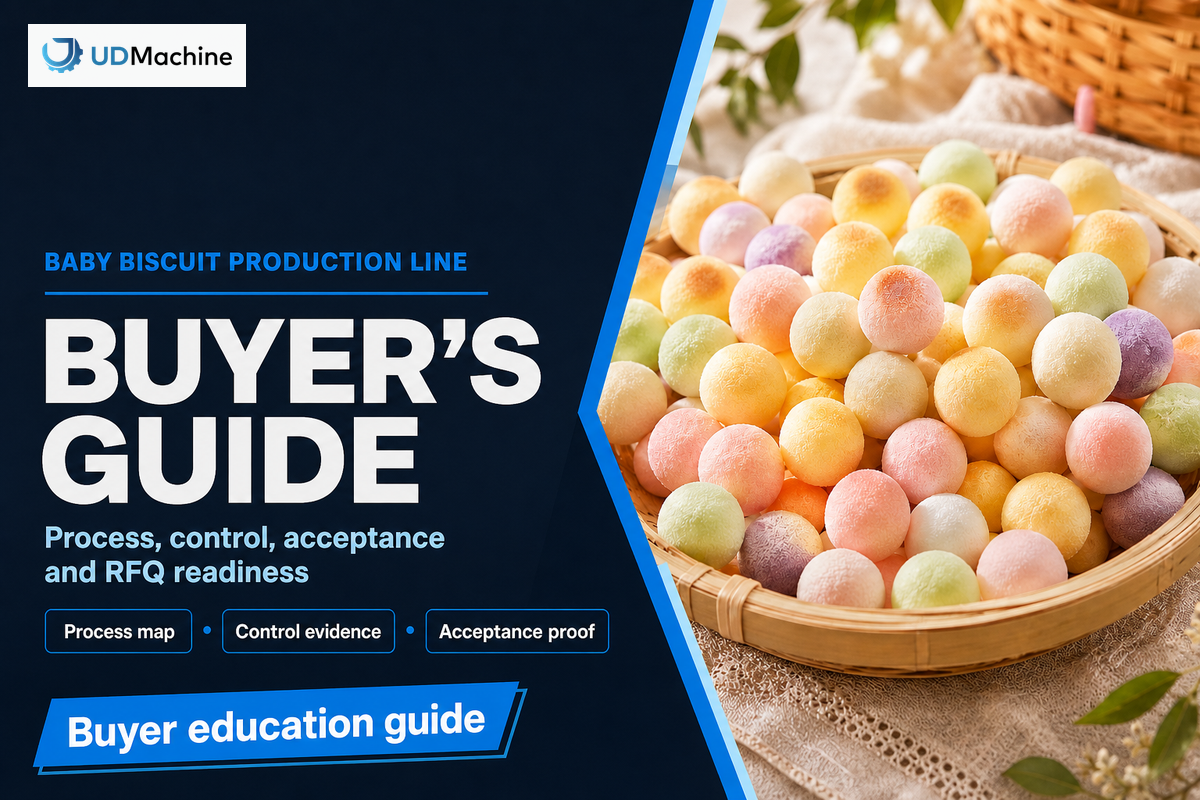
Baby Biscuit Production Line is a connected food-production system, not a solitary machine. Buying starts with product definition, then tests forming, baking, cooling, utilities, hygiene and acceptance as one chain. This guide serves the informational layer beside the commercial solution page, helping plant teams ask precise questions without duplicating models, specifications or prices.
Measure the earliest changed condition and record the acceptance boundary before comparing rates.
The term “baby biscuit” may describe a small-format snack, a product for young children or one intended for infants under local rules. These are legally and technically distinct. Record age, formula, allergens, piece mass, texture and market before comparing equipment. No machine model alone guarantees safety, nutrition or compliance.
Vocabulary alignment for the project team. In supplier conversations, “biscuit making” may refer to the making machine, the wider biscuit making machine or the full automatic biscuit production line. Keep biscuit type, production requirements and production capacity visible, then distinguish soft and hard products, cracker production and a cracker production line. The same discipline prevents “modern biscuit” marketing language from being confused with mass production, food manufacturing sector needs or a claim about successful biscuit production.
What a baby biscuit production line actually covers
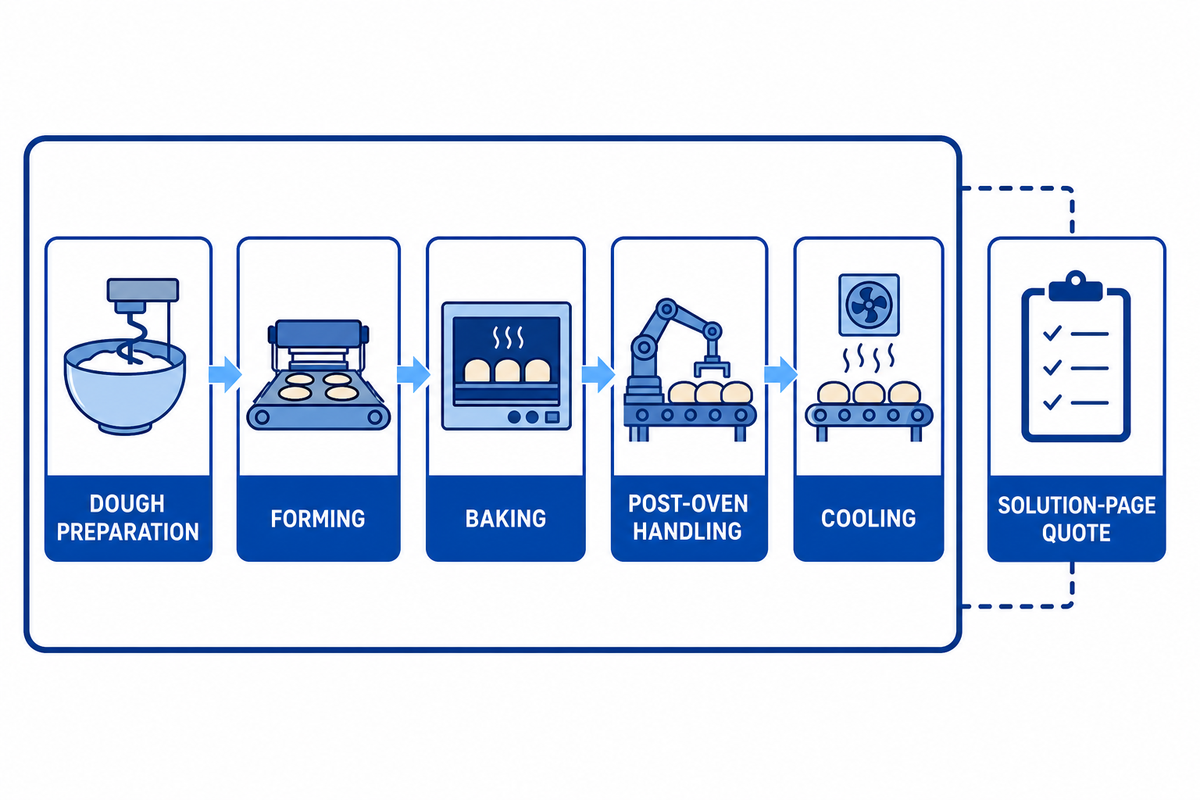
A core line links dough preparation, forming, baking, post-oven handling and cooling. Forming may use sheeting and cutting, rotary moulding, depositing or stamping. Packaging, oil spraying, metal detection, filling and case packing belong in scope only when named. See the UDTECH biscuit and bun lines overview.
The main buying risk is a product-to-equipment mismatch; ask for a factory trial, test report and acceptance criteria.
That boundary separates three very different purchases:
- Integrated production line: synchronized stations with explicit transition control points, utilities and acceptance records.
- Standalone biscuit machine: one operation, such as a single depositing unit, which still requires upstream and downstream interfaces.
- Home or trial formulation equipment: useful for development but not evidence of bulk throughput, cleanability or shift operation.
A linked system also assigns an owner to each transition point. If the oven makes an attractive biscuit but the cooler delivers a damp product to packaging, the “line” hasn’t achieved its real goal. Define the condition the next station must receive, not the longest equipment list.
Clarify the product before choosing equipment
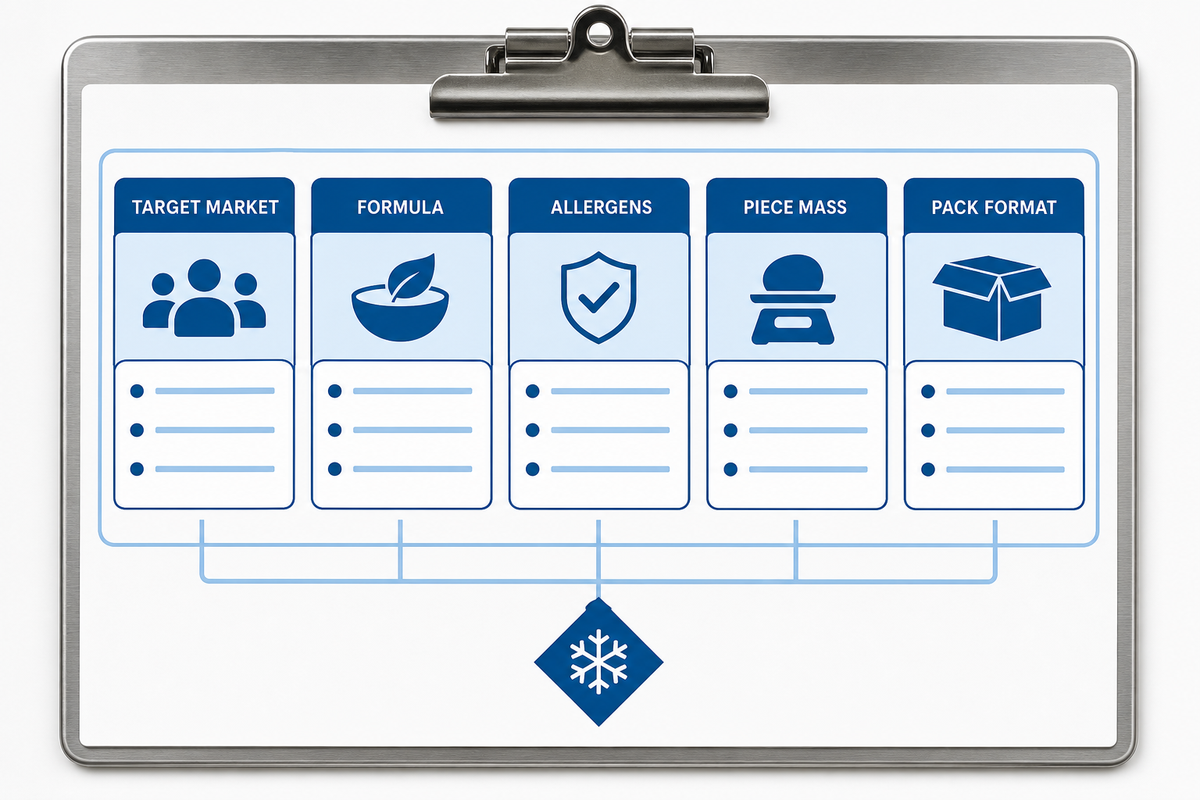
Before requesting a quote, record the target market, age group, formula, allergens, piece mass, dimensions, shape, surface, colour, texture, pack format and saleable output. For infant products, the responsible food-safety team must define the label in the destination market; don’t ask the machine supplier to decide it. The current food-manufacturing rule text is a planning reference for facility and equipment responsibilities.
| Input to freeze | Why the line designer needs it | Evidence to request |
|---|---|---|
| Formula and dough behaviour | Fat, sugar, water, inclusions and leavening change mixing, sheeting and release behaviour. | Approved trial formula, mixing sequence and dough-condition record. |
| Piece geometry and surface | Small relief, holes, embossed marks or a soft bite may need different forming pressure and release handling. | Sample pieces, drawings or photos with tolerances. |
| Market and age statement | “Baby” is a marketing phrase in some markets and a regulated claim in others. | Destination-market rule, label brief and responsible approver. |
| Saleable output | Oven discharge, cooled pieces and packed good product are different measurement points. | Definition of rejects, planned stops and the accepted run window. |
This form fixes the goal and prevents a catalogue item being confused with recipe fit.
Undefined age, allergens or geometry create risk; put the approver, factory trial report and acceptance criteria beside the sample.
For terminology consistency, a biscuit manufacturing process is the working sequence, while biscuit production machinery, biscuit making machinery and machines and equipment describe assets. An automatic biscuit making machine can be one station; automated systems and production systems describe coordinated controls. Proposals should state whether they include a production machine, packaging machine, cookie production line, cookie production or an automatic sandwich biscuit module. Those labels matter because an efficient biscuit production plan must still meet food safety standards and the buyer’s food manufacturing method.
Map the dough-to-cooling manufacturing process
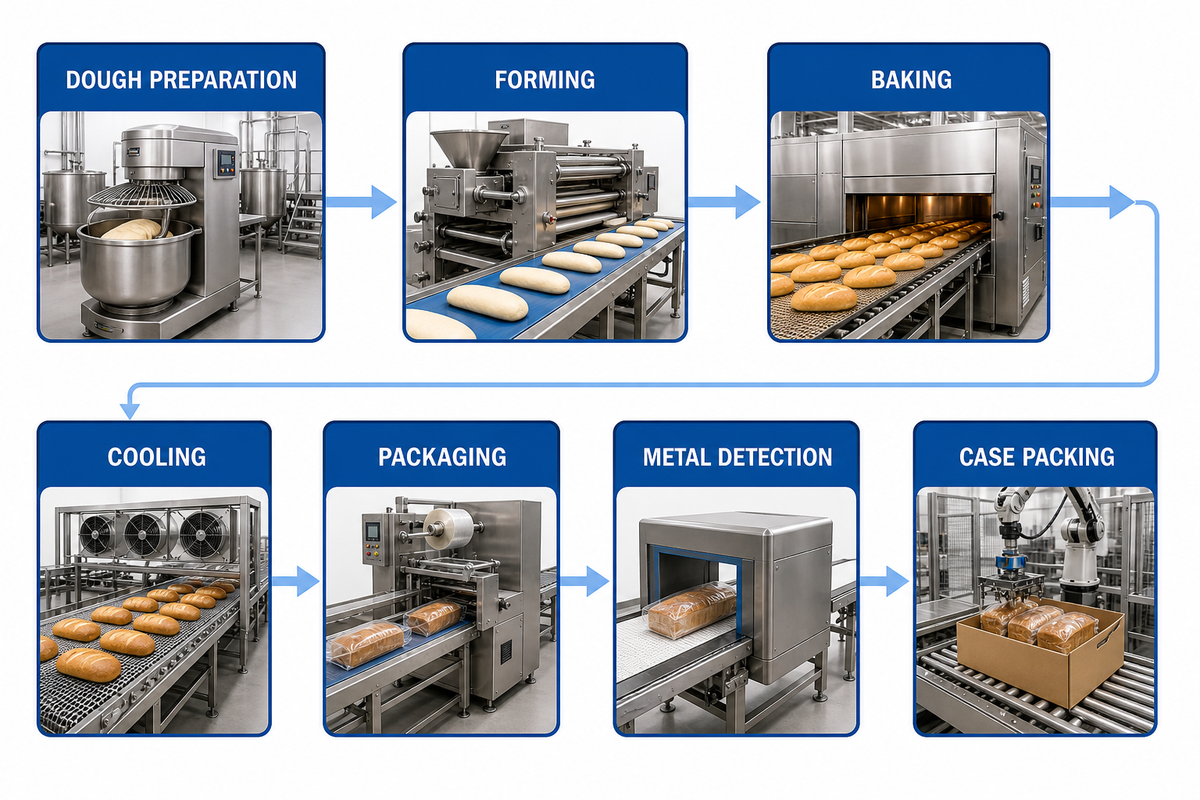
It’s easier to troubleshoot biscuit production when each stage transition has a named owner and a discernible condition. The working route map is:
- Mixing: verify ingredient identity, sequence, dough temperature and consistency.
- Forming: choose the route according to dough condition and geometry; consider dough mass, profile and surface.
- Rounding or arranging: confirm spacing and orientation before the oven, including scrap handling where applicable.
- Baking: control heat input, residence time, exhaust and product loading as a profile, not one temperature number.
- Screening and transfer: prevent breakage and keep product identity linked to the run.
- Cooling: reach the agreed handoff condition before wrapping, stacking or further inspection.
The core map may be followed by packaging, checkweighing, metal detection, coding and case packing. Keep those stations visible as included or excluded scope. A line drawing that hides the downstream constraint makes supplier offers look comparable when they aren’t.
A missing handoff is a failure point; request a factory route map, test report and acceptance record naming the first changed station. For safeguarding context while mapping interfaces, consult OSHA bakery-equipment guidance.
ASBE’s biscuit process reference is useful for product-family orientation, while the existing UDTECH solution page is the commercial handoff for configuration and quotation. Neither should be read as a universal route for every baby-biscuit formula.
When a team compares biscuit production line manufacturers, ask each one to name the biscuit forming machines and production line equipment included in the route. The biscuit making process should show how a dough mixer feeds the former and how soft biscuit production differs from a biscuit and cookie program. This is the practical meaning of biscuit production requirements: a documented path to consistent product quality, not a list of search labels.
Match the forming route to dough behaviour and geometry
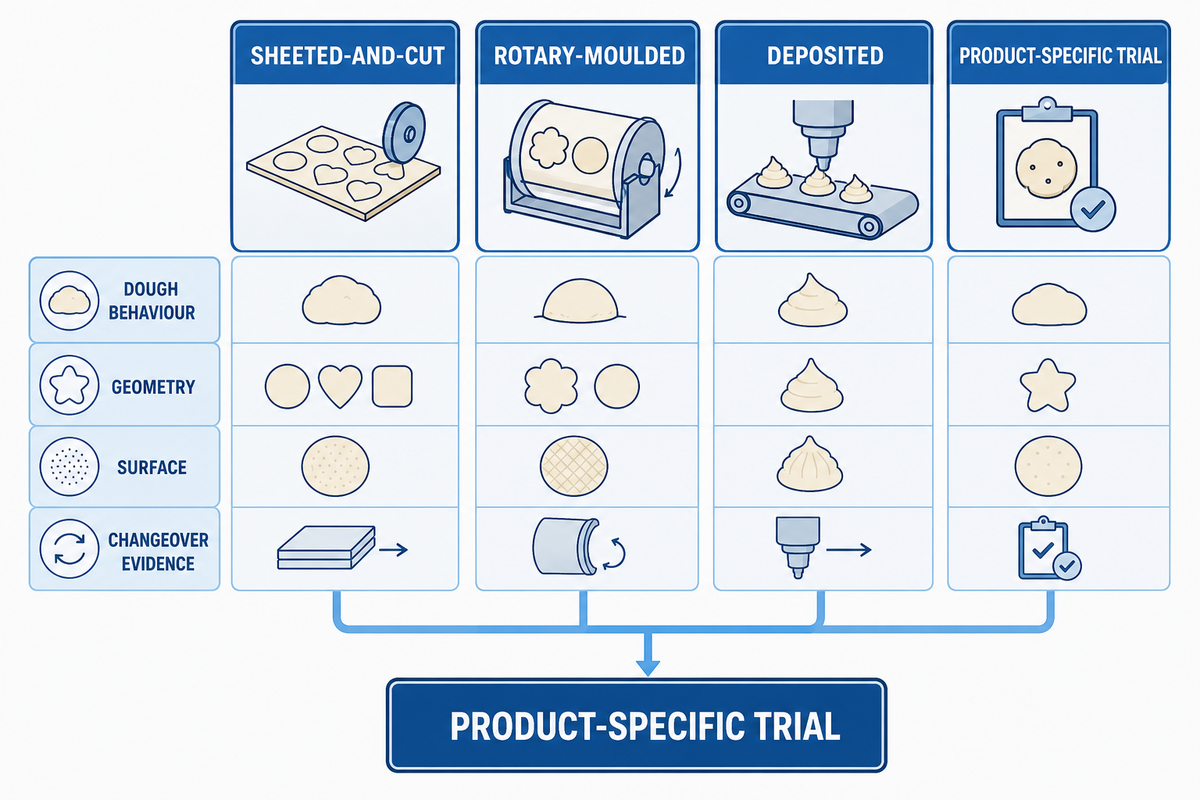
Hard biscuit, soft biscuit, cracker and cookie are product families, not machine specifications. Patent literature on forming routes describes distinct options, including laminated sheeting and cutting, so product-to-equipment mapping can’t be taken for granted.
| Route concept | Often fits when | Repeatability check | Limit to discuss |
|---|---|---|---|
| Sheeting and cutting | A continuous sheet and clean outline are part of the product intent. | Sheet thickness, piece mass, edge definition and scrap return. | Very soft or sticky dough may distort during gauging or cutting. |
| Rotary or stamped forming | Relief, repeated shapes and controlled release matter. | Impression depth, release rate, weight spread and die changeover. | Dough temperature and fat behaviour can change release. |
| Depositing or wire cutting | Portioned dough, rounded edges or a softer deposited texture is intended. | Deposit mass, tailing, spacing, oven loading and breakage. | Surface definition and very thin sheet geometry may need another route. |
Use the Route-Fit Failure Atlas during your development trials. For every route, document the dough condition, surface target, geometry, changeover task and first unacceptable result. That evidence shows where the route stops fitting.
Route mismatch is a practical risk; keep the failed-trial test report and acceptance criteria with the route decision.
Treat baking and cooling as one control problem
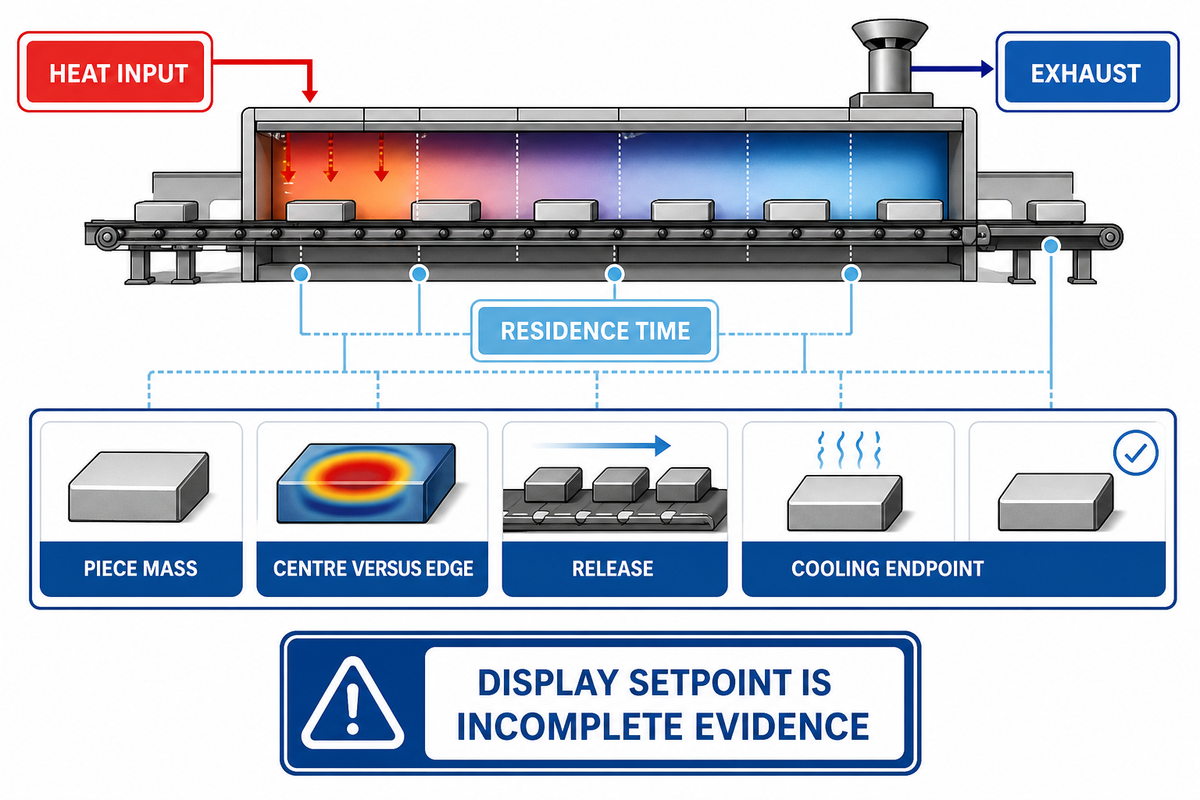
Direct answer: heat input, residence time, exhaust, piece mass, centre-versus-edge condition, release and cooling endpoint interact. Colour problems may begin with dough thickness; breakage may begin with release or transfer; condensation at packaging may indicate an incomplete cooling handoff. Diagnose the earliest changed condition instead of adjusting the final symptom blindly.
| Observed symptom | Measurements to compare | First question |
|---|---|---|
| Uneven colour | Piece mass, belt loading, zone setpoints, exhaust and position across the band. | Did the product or loading change before the oven setting changed? |
| Under-baked centre | Thickness, residence time, centre moisture proxy and cooling dwell. | Is the oven being asked to correct a forming variation? |
| Edge breakage | Release, transfer speed, edge geometry and product temperature. | Where is the first crack visible: die, oven exit or conveyor? |
| Warm or damp handoff | Cooling dwell, airflow, product temperature and pack-room condition. | Is packaging receiving the agreed endpoint, or only oven discharge? |
Installed power is not the same as measured operating energy. Ask for the measurement point, product basis and run window if energy is part of the business case. Don’t publish a universal temperature, moisture or efficiency limit without a validated recipe and local acceptance method.
In a snack food industry project, optimizing production means balancing the full route and its evidence. Larger production line equipment packages may add stations without improving accepted output; the right answer depends on the defined production process, facility and handoffs.
Energy or cooling constraints create quality risk; tie the operating condition to the accepted product in a factory test report. Equipment and facility responsibilities can be cross-checked against 21 CFR Part 117 during the review.
Size the line from saleable output and facility limits
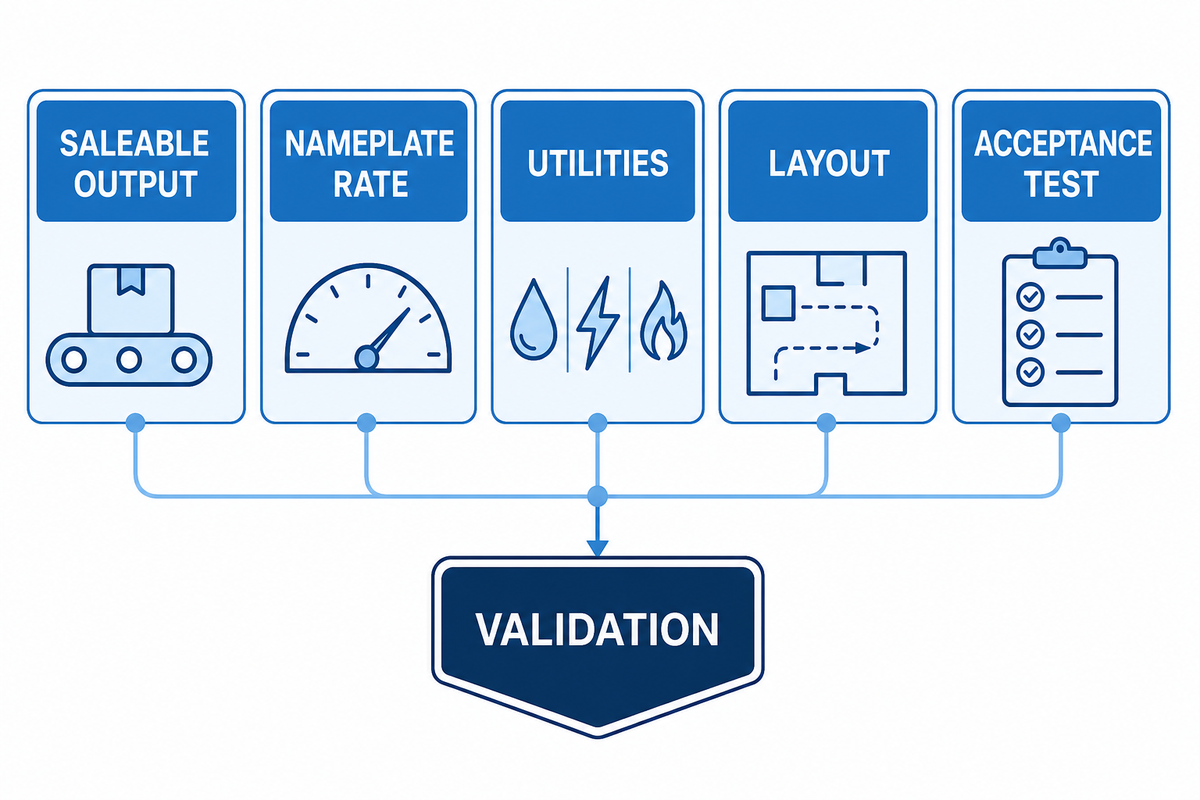
Building on the oven-and-cooling balance above, define capacity as a product-and-evidence statement: name product, measurement point, run duration, operating hours, planned stops, rejects, buffer, changeover and downstream constraint. A nameplate rate can be useful for comparison, but it isn’t a saleable-output guarantee.
Overstated capacity is a procurement risk; ask UDTECH or another supplier for the factory acceptance report, method and owner.
Before approving the layout, check electrical voltage, frequency, phase and available capacity; heating source and exhaust; compressed air where applicable; water and drainage; floor loading; access routes; maintenance clearances; cleaning access; material flow; and connection space for downstream machines. A worksheet may reserve 9 m² for service access, but the site drawing must verify the actual clearance. The machine envelope is only one rectangle in the building plan.
Use a simple bottleneck equation in the project brief: saleable output = accepted pieces at the chosen measurement point after planned stops and defined rejects. The equation is deliberately plain. It forces the buyer and supplier to agree what is counted before comparing rates or return-on-investment assumptions. If units are converted between pieces, kilograms and hours, record the assumptions with a capacity unit conversion worksheet.
Worked planning example (illustrative): a worksheet may list 2 lanes, 45 kg/h, 85% uptime, 30 min changeover, 10 min recovery, 8 m cooling, 7 kW, 6 operators, 3 shifts, 12 samples, 5% reject, 14 ppm, 12 mm spacing, plus 16 m/min, 17 min, 18 °C, 19 kg, 20 samples, 21 ppm, 22 kW, 23 mm and 24 kg/h. These values illustrate fields only, not recipe limits or a supplier guarantee.
Finally, connect quality control, control systems, production efficiency, productivity and market demand to an owner. The goal isn’t to repeat keywords; it is to ensure the food industry brief, the manufacturing process and any fully automatic option are evaluated on the same evidence.
Review hygiene, allergen changeover, and operator safety
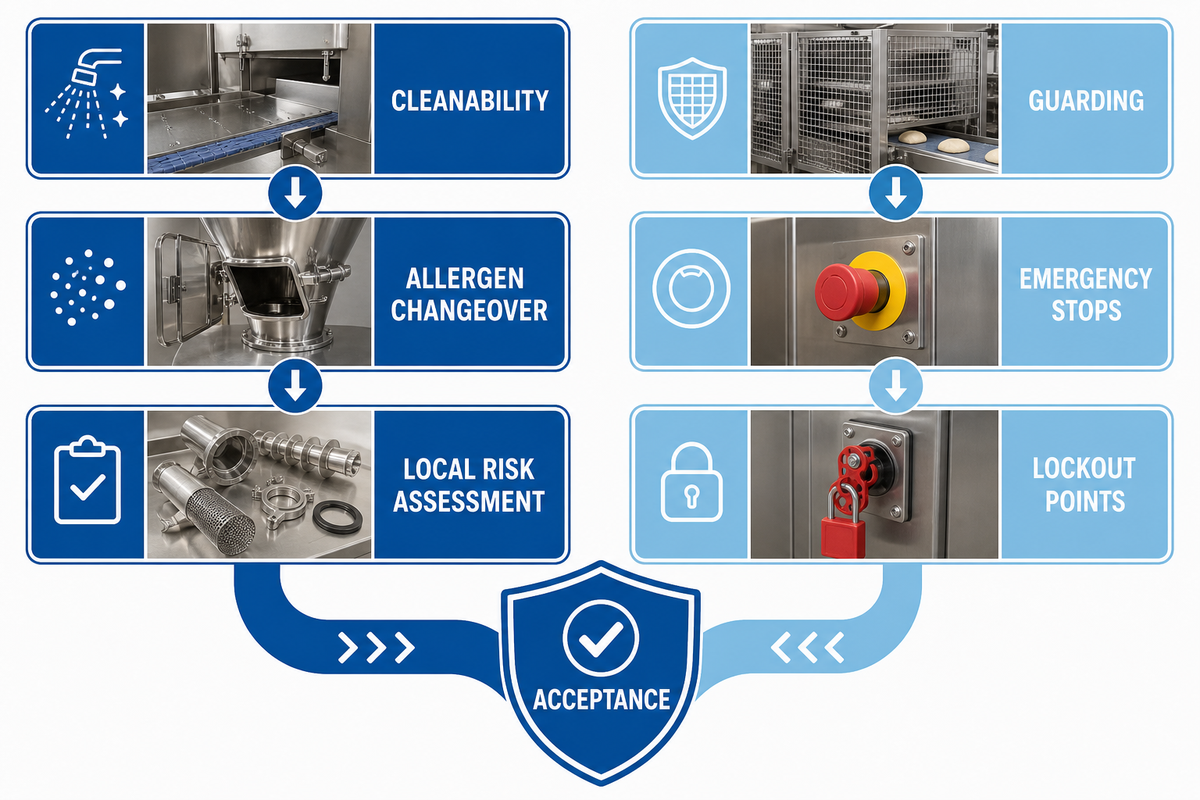
Once capacity and utilities are bounded, ask how a food-production line’s food-contact surfaces are cleaned, how residue-harbouring areas are prevented, how allergen changeover is verified and how cleaning access is documented. Where applicable, 21 CFR Part 117 can guide planning for equipment and facility responsibilities; it isn’t a certification of UDTECH equipment or a finished product.
Guarding, emergency stops, safe access and lockout points belong in the same review. OSHA 29 CFR 1910.263 provides bakery-equipment safeguarding context, and OSHA 29 CFR 1910.212 covers general machine guarding. Local law and the site risk assessment still govern the installation. Put the destination-market rule, allergen list, cleaning method, guarding review and required records into the RFQ instead of leaving them for a late handover conversation.
For products marketed to infants or young children, keep product safety, nutritional claims and equipment hygiene as separate approval tracks. Cleanable equipment doesn’t make a label claim true, and a compliant label doesn’t make unsafe equipment acceptable.
4-card control framework for repeatability
Use four linked cards—product brief, route-fit trial, factory sign-off and drift trace—to keep decisions auditable. Any figures written on a card, such as an illustrative 100 kg/h worksheet rate, a 30 minute sample window, 180°C zone notation or a 2% reject flag, are project inputs to verify, not universal targets. Blank worksheets can also accept fields such as 0.5 mm, 1.0 mm, 2 hours, 3 shifts, 4 samples, 5% reject, 6 kg/h, 7 kW and 8 °C; these numbers illustrate units only and don’t set a recipe limit.
Use the Factory Sign-Off Evidence Card before comparing rates
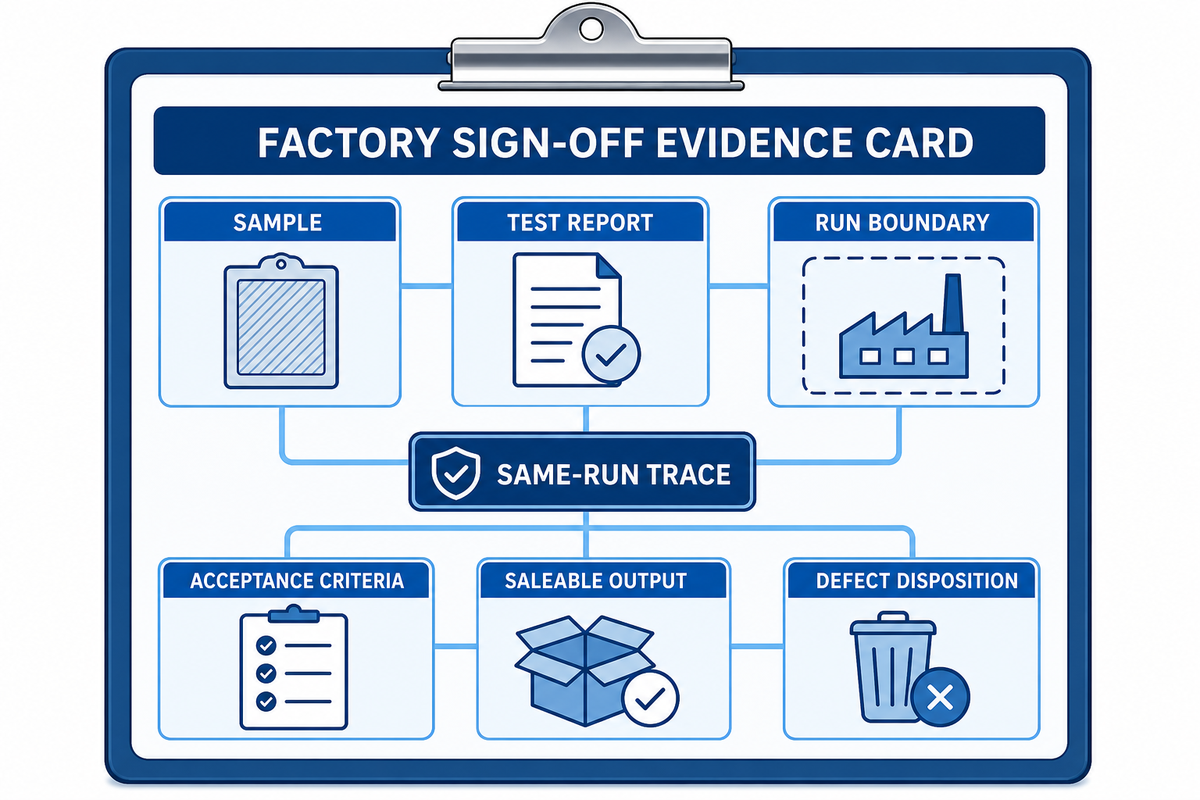
The Factory Sign-Off Evidence Card turns “capacity” into a record another supplier can understand. Use one card per agreed product and trial:
The card is evidence only when its sample, test report, boundary and acceptance criteria point to the same run. Keep the equipment and facility responsibility record aligned with the applicable food-manufacturing rule text.
| Field | Record | Why it matters |
|---|---|---|
| Product identity | Formula revision, sample ID, piece mass, dimensions and pack format. | Prevents a rate being quoted for a different product. |
| Measurement boundary | Oven discharge, cooled output or saleable packed output; run start and end. | Makes offers comparable. |
| Quality limits | Colour, texture, moisture method, breakage, weight spread and cooling endpoint. | Defines what “accepted” means. |
| Operating context | Planned stops, changeover, utilities, belt speed and oven profile. | Explains the conditions behind the result. |
| Exceptions and sign-off | Deviation, corrective action, retest, responsible owner and signatures. | Preserves decisions instead of relying on memory. |
Repeat the card across the agreed samples or periods. Record the agreed 30-minute run window beside the sample identity. It doesn’t prove every future recipe, shift or market claim; it proves what was tested under the written conditions. That distinction keeps a factory acceptance test honest.
| Control point | Measurement | Owner | Acceptance evidence |
|---|---|---|---|
| Ingredient identity | Lot and formula revision | Quality | Signed material check |
| Dough temperature | Start and end reading | Mixing lead | Batch log |
| Dough consistency | Method and observation | Process engineer | Trial sheet |
| Forming weight | Sampled piece mass | Forming lead | Weight record |
| Piece geometry | Length, width, thickness | Quality | Drawing or photo check |
| Oven profile | Setpoints and residence | Oven operator | Profile printout |
| Cooling endpoint | Handoff condition | Cooling lead | Release signature |
| Reject treatment | Reason and disposition | Quality | Deviation record |
| Utilities | Supply and operating readings | Site engineer | Utility log |
Commission with a Drift-Origin Trace Sheet
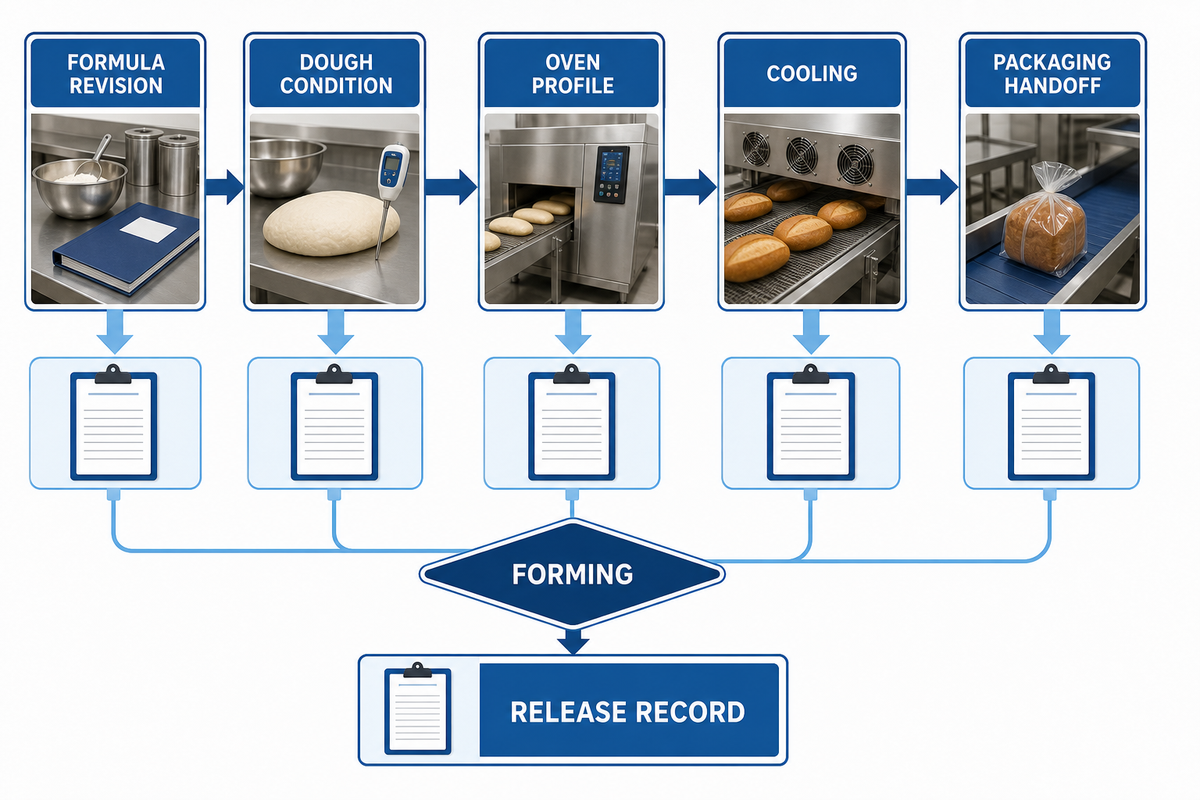
With sign-off evidence captured, commissioning should progress from utility confirmation to dry run, product trial, parameter lock, operator training, cleaning and changeover, then documented handover. The Drift-Origin Trace Sheet is the practical companion to the sign-off card.
Commissioning risk appears when a defect lacks its upstream condition; use the factory report before changing a setpoint. OSHA safeguarding context also belongs in the documented handover and site-risk review.
- Write the first observed defect, time, sample and person who noticed it.
- Mark the first station where evidence changed: mixer, former, oven, transfer or cooler.
- Record the upstream input, corrective action, owner and retest.
- Close the item only when the agreed product and measurement point pass again.
This prevents “turn the oven up” from becoming the default answer to every drift. It also gives operators a usable training record. Commissioning validates the agreed product and conditions; it doesn’t silently validate every future formula or pack.
Know when a complete line is the wrong purchase
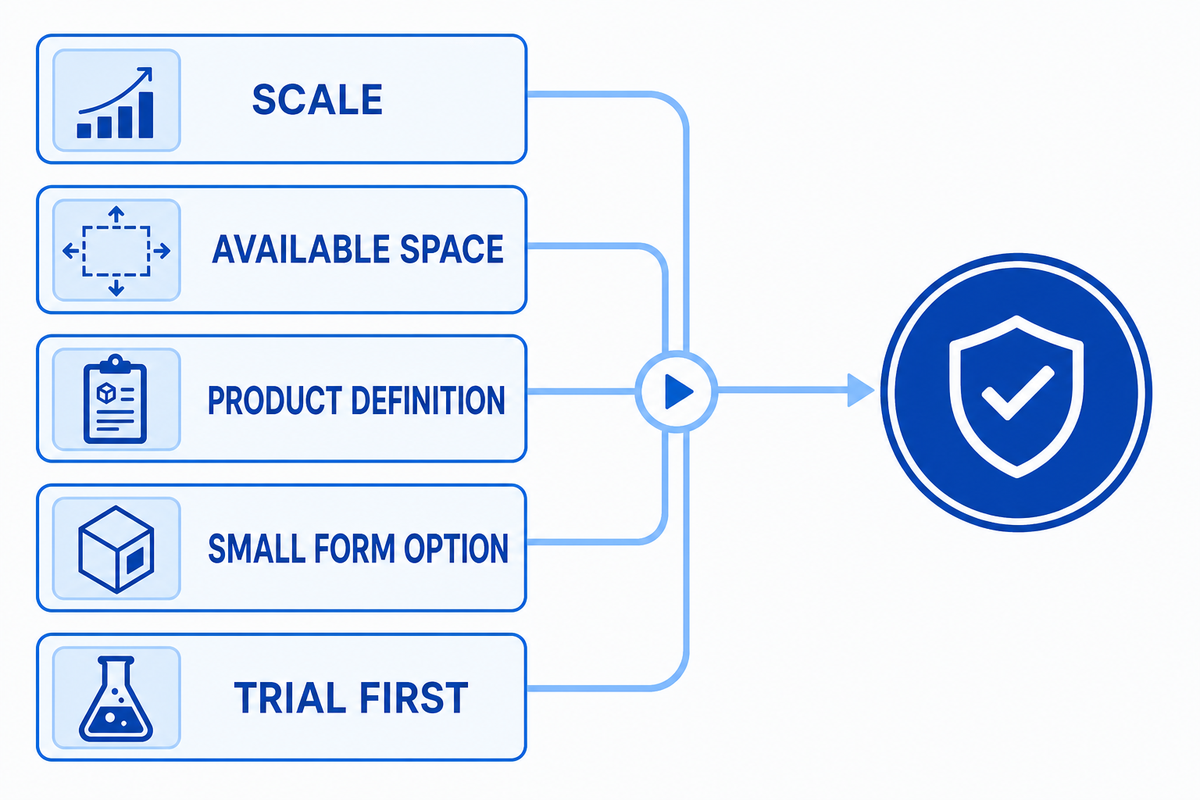
Those process and commissioning checks also show why a complete line isn’t automatically the best purchase. Use the Route-Fit Failure Atlas to challenge the project early:
| Failure mode | Why it happens | Evidence to request | Better next move |
|---|---|---|---|
| Output exceeds the real order book | Capacity is compared at nameplate speed, while cooling or packing becomes the constraint. | Accepted-output basis and planned-stop assumptions. | Re-size the balanced line or phase the investment. |
| Wrong forming route | A product label is treated as an exclusive machine category. | Trial pieces, dough state and changeover record. | Run route-fit trials before freezing the former. |
| Utilities are discovered late | Only the machine footprint was checked. | Electrical, heat, exhaust, air, drainage and service-clearance schedule. | Complete a site walk and interface drawing. |
| Downstream scope is missing | “Complete line” means different things to each party. | Included/excluded station list and handoff conditions. | Write boundaries into the RFQ and acceptance card. |
| Acceptance is written after purchase | Quality limits and measurement points were never agreed. | Signed test method, samples and deviation process. | Freeze acceptance evidence before the order. |
A small form or stand-alone machine might be the appropriate project type if scale, available space or product is still fluid. Bakery-equipment safeguarding guidance remains relevant regardless of which project type is selected. That’s a decision about scale, not an equipment-level recommendation.
Build a supplier-comparable RFQ with the Dough-to-Data Control Canvas
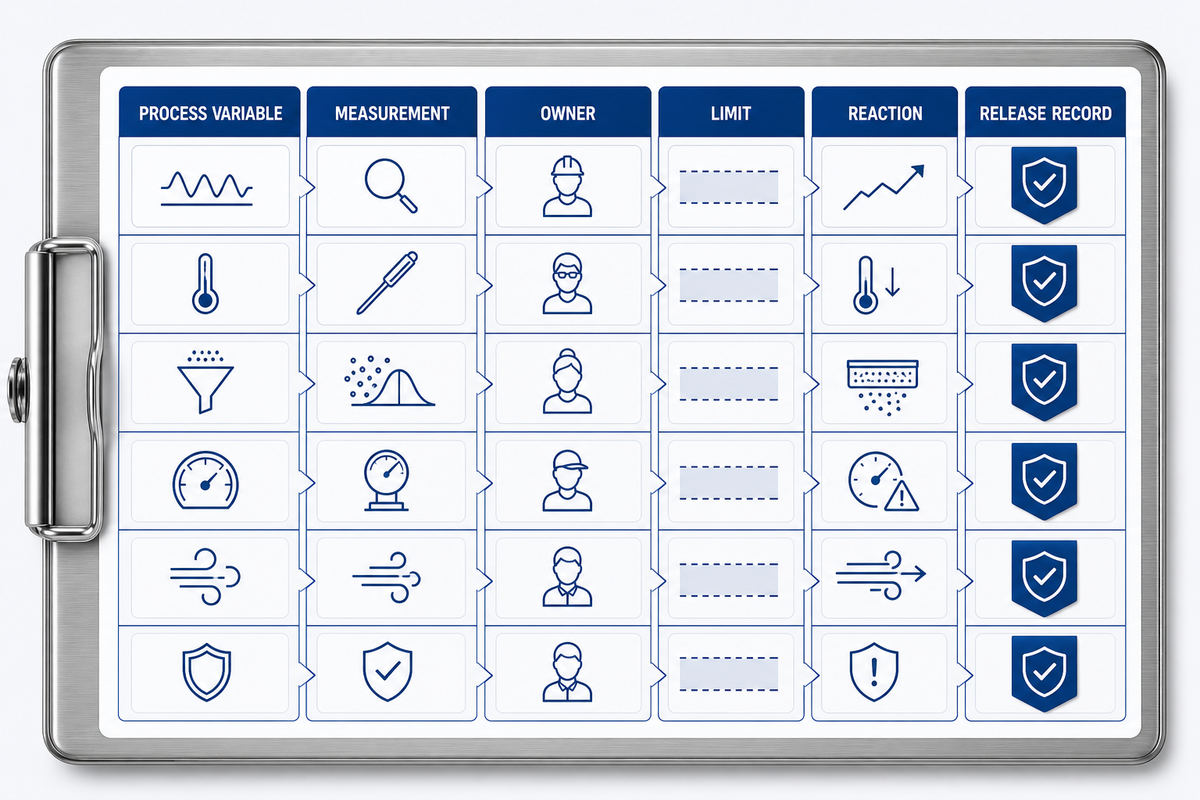
After the route, capacity and acceptance decisions are written down, the Dough-to-Data Control Canvas links every important process variable to a measurement, an owner, a limit, a reaction and a release record. Include these fields in the RFQ:
The canvas closes the evidence gap by giving each supplier the same test method, boundary, owner and deviation response.
- Product sample or photo, formula boundaries, allergens and piece attributes.
- Saleable-output definition, operating window, shift pattern, planned stops and reject treatment.
- Site utilities, floor plan, service clearances, material flow and downstream connection points.
- Included and excluded stations, controls responsibility, data access and alarm history.
- Cleaning, changeover, guarding, lockout, documentation and destination-market requirements.
- Trial method, factory acceptance evidence, site acceptance, training, spare parts and handover boundary.
For configuration, equipment selection and quotation discussion, continue to UDTECH’s baby-biscuit production line solution. That commercial Page owns models, configurations, specifications, price and conversion. This guide remains the education and acceptance layer around it.
Ready to prepare an RFQ?
Bring the product brief, Factory Sign-Off Evidence Card and Dough-to-Data Control Canvas to the discussion. Open the project enquiry form.
Bring the product brief, Factory Sign-Off Evidence Card and Dough-to-Data Control Canvas to the discussion. Open the project enquiry form.
Frequently asked questions
What is a baby biscuit production line?
A baby biscuit production line is a connected industrial process that converts a defined dough or batter into formed, baked, cooled pieces ready for the agreed downstream handoff. The phrase doesn’t identify one universal machine route, and it doesn’t by itself prove that the food is suitable for infants. Buyers should define the product, intended age group, market, formula, output basis and acceptance evidence before selecting equipment.
What are the steps in a biscuit manufacturing process?
The usual process family includes ingredient and dough preparation, forming, arranging, baking, post-oven handling and cooling. The exact sequence changes with dough behaviour, piece geometry and product target. Packaging, oil spraying, metal detection or filling may sit outside the core line unless the purchase scope names them. A defensible process map therefore shows each handoff, its owner and the condition the product must meet.
How do hard and soft biscuit forming routes differ?
Hard, soft, cracker and cookie labels describe product families, not interchangeable equipment specifications. Dough consistency, fat and sugar behaviour, lamination or cutting needs, geometry and surface target determine whether sheeting, rotary moulding, stamping or wire cutting is appropriate. Buyers should test the named product and record piece mass, dimensions, appearance and breakage before accepting a route; a supplier catalogue category alone isn’t proof of compatibility.
How should capacity be defined for a factory acceptance test?
Capacity should name the product, operating window, measurement point, run duration, planned stops, reject treatment and quality limits. It must also say whether the figure is oven discharge, cooled output or saleable packed output. That boundary makes two offers comparable and prevents a line rating from being mistaken for guaranteed saleable production.
Which utilities and clearances should be checked before ordering?
Confirm electrical service, heating and exhaust, compressed air where applicable, drainage, floor loading and maintenance clearance. The machine envelope isn’t the building clearance.
What information should a supplier receive before preparing an RFQ?
Send a finished-product sample or photo, formula constraints, piece attributes, saleable-output basis, shift pattern, utilities, layout, included and excluded stations, destination-market rules, documentation, acceptance criteria, delivery boundary and training expectations. Add the measurement method, sample identity, planned stops, reject treatment, cleaning evidence and the deviation approver. A complete input package makes supplier replies more comparable and reduces late scope disputes.
Evidence register for a supplier conversation
| Source | Setting | Finding | Use |
|---|---|---|---|
| eCFR Part 117 | Food CGMP | Equipment and facility duties | Hygiene questions |
| OSHA 1910.263 | Bakery safeguarding | Guarding and access | Safety review |
| ASBE biscuit reference | Product family | Route orientation | Brief definition |
| Patent literature | Forming sequence | Routes are distinct | Trial design |
| DataForSEO snapshot | Search demand | Exact term has no stable volume | Expectation setting |
| Competitor SERP pages | Market format | Process topics dominate | Content scope |
| Factory trial card | Acceptance setting | Measurement point is explicit | Rate comparison |
| Drift trace sheet | Commissioning setting | First changed station is logged | Root-cause review |
| User-supplied UD brief | Company context | Background only | Attribution boundary |
References & Sources: evidence boundaries
These links provide planning context, not certification: U.S. eCFR 21 CFR Part 117, OSHA bakery equipment safeguarding, ASBE biscuit reference and Google Patents forming-route literature. Competitor pages only map search format and gaps; no price, capacity, certification, patent number or baby-food compliance guarantee is asserted. See the baby biscuit production line blog archive for related articles.
For site-specific scope questions, contact UDTECH’s project team with the evidence card and RFQ fields.
UD Company background is limited to the user-supplied brief: established in 2003, reported investment and Xinyu production bases, and a food-automation focus. This is attributed context, not baby-biscuit performance evidence.




![Egg Roll Machine Energy Consumption [Calculation Guide]](https://udmachine.com/wp-content/uploads/2026/09/electric-egg-roll-machine-guide-featured-150x150.png)