Get in touch with UDTECH Company

How Nori Wrapping Works: From a Hand-Wrapped Sheet to a Controlled Production Process

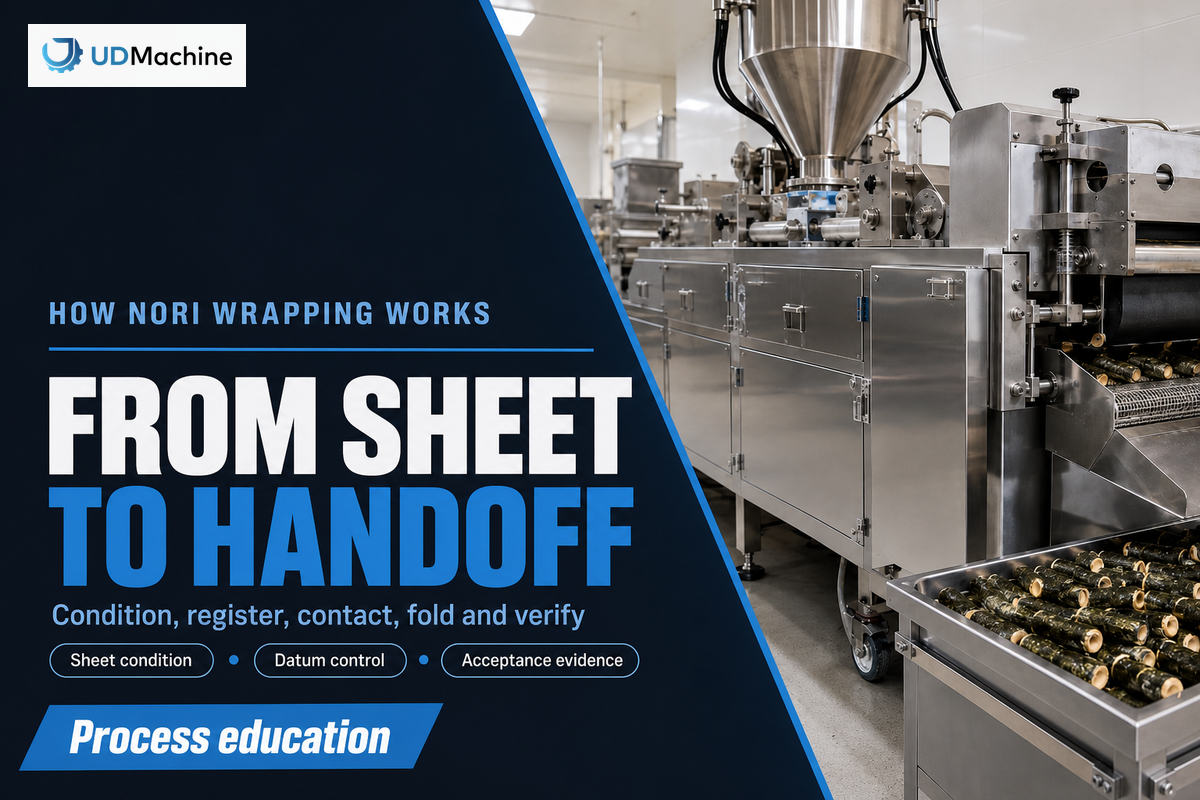
Process guide for food-production teams
How Nori Wrapping Works is easiest to understand as a sequence: condition the sheet, locate the product, bring the surfaces together, close the fold, and verify the result at the handoff. That sequence applies to a home-made onigiri and to a food line, but the control questions become very different at production scale.
Written by CYH · Updated September 2, 2026 · UD Company background is included only as attributed context.
Key takeaway
A reliable nori wrap is not created by speed alone: sheet condition, datum registration, contact timing and repeatable acceptance checks must agree at one defined handoff point.
What “How Nori Wrapping Works” Actually Means
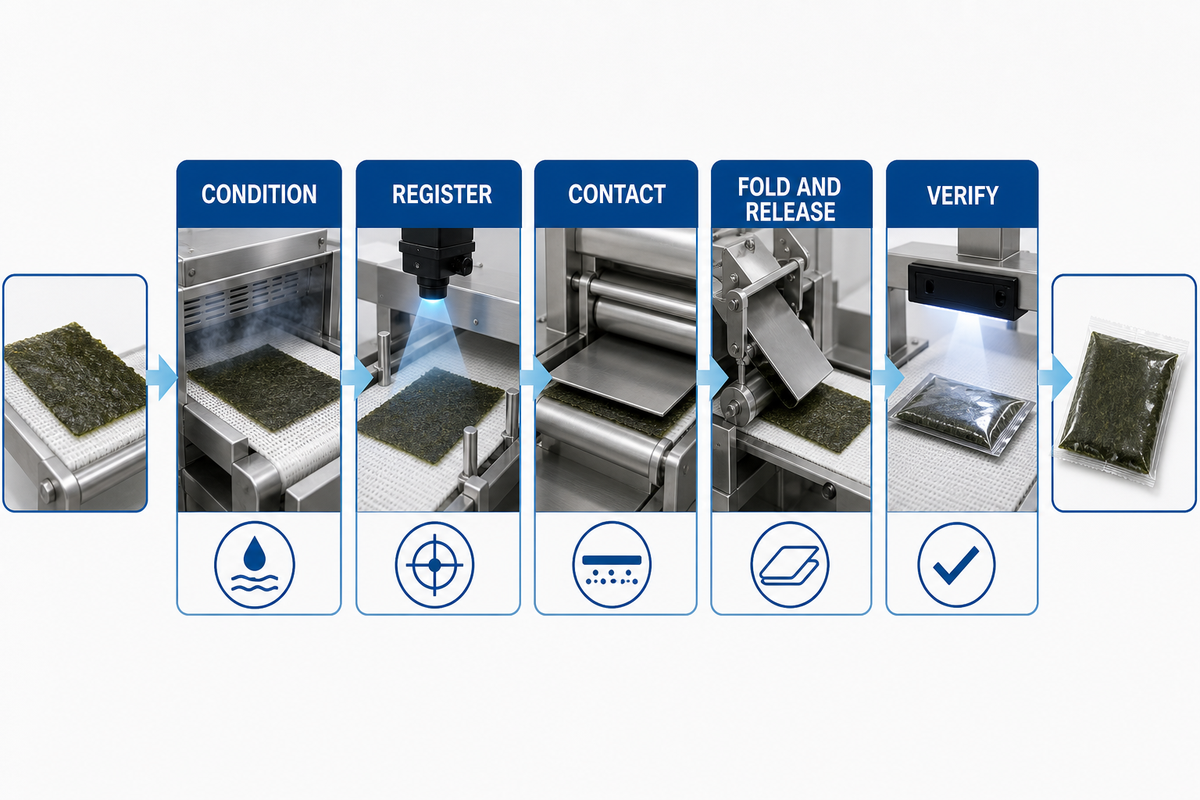
“Wrapping” describes the relationship between a flat, fragile sheet and a three-dimensional product. Nori has to arrive in a usable condition, meet the product on the intended face, bend without tearing, and leave a seam or overlap that survives handling. Moisture is part of that story, but it is not the whole story. A sheet can be crisp and still be misregistered; a correctly registered sheet can still wrinkle if contact happens too early.
For an engineer, the mechanism can be written as five linked events:
- Condition: protect the sheet from uncontrolled moisture, static and mechanical damage.
- Register: establish the sheet edge and the product datum before the fold starts.
- Contact: bring the sheet and product together with enough, but not destructive, contact.
- Fold and release: close the overlap, then release without pulling the seam open.
- Verify: check position, coverage, texture and defect class at a defined handoff.
This is an educational process model, not a claim that every line uses the same mechanism. Equipment architecture, product geometry and local food-safety rules still have to be tested in context.
For material context rather than a machine specification, compare the peer-reviewed seaweed-packaging review with the lot and handoff conditions measured on the actual line.
For a production-line scenario, the risk is treating this sequence as a promise of capacity; a factory team should verify each event with its supplier and quality owner.
Company context is available in the UD Company food-production automation overview; keep that background separate from measured trial evidence.
When a failure is reported, the record may use example fields such as 2 mm offset and 30 s dwell; replace those illustrations with measured trial values.
How a Nori Sheet Becomes a Wrapper
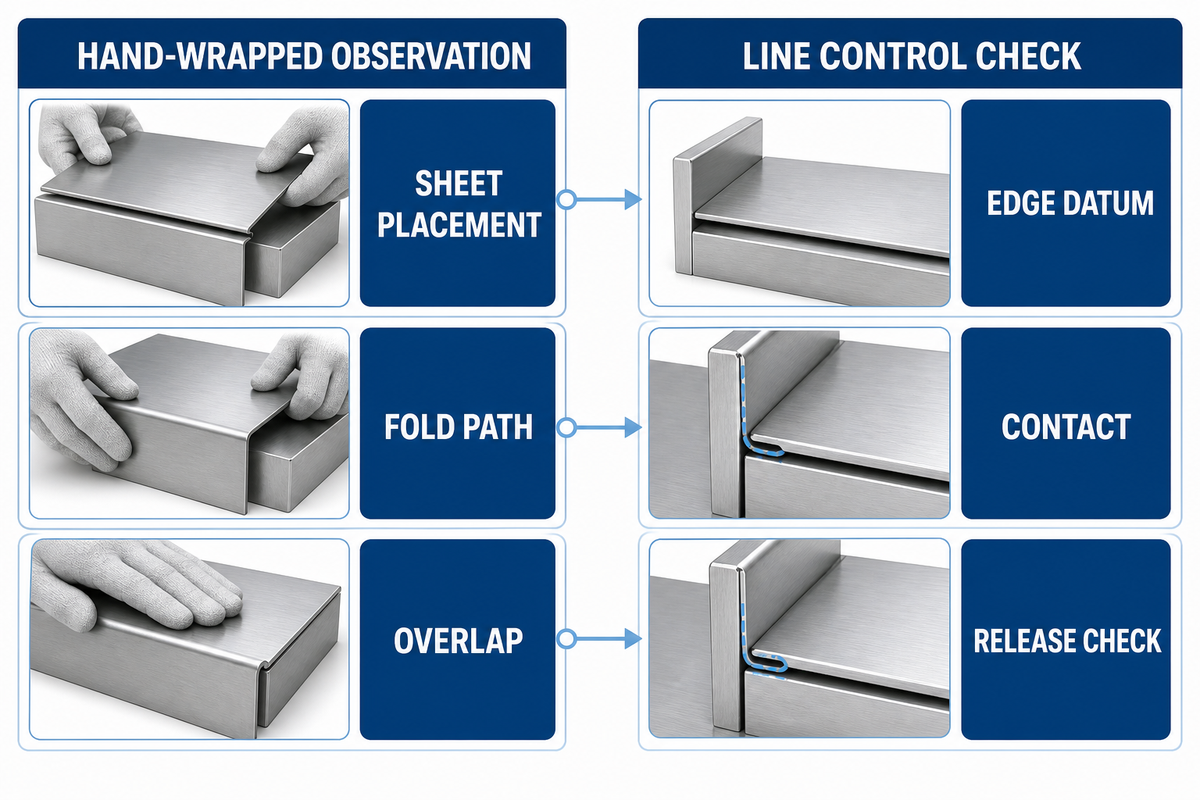
Hand wrapping makes the sequence visible. During hand wrapping, a person places a sheet, sets a rice ball or filling near a reference edge, folds one side, folds the other, and presses the overlap. The hand supplies feedback continuously: if the sheet feels brittle, the fold angle changes; if the filling is wet, the person changes the contact order. At production scale, the line has to replace that continuous judgement with defined surfaces, guides and checks.
Start by defining the wrapper outcome rather than the machine motion. Is full coverage required?
Is one corner visible okay?
Is an exposed corner acceptable? Does the package need a dry, crisp bite immediately, or is a softer texture expected after a controlled dwell?
Which seam is cosmetic, and which seam prevents the product from opening?
Those questions determine what the feeder and fold station must actually control.
The Sheet-to-Fold Registration Ladder is the shop-floor map: edge detected, sheet squared, product datum confirmed, first contact made, overlap closed and release confirmed. Recording the first failed rung is more useful than labelling the whole result “bad wrap.” A third-party Nestec SA patent on staged edible-sheet forming is linked in the references only as process context; it does not support this ladder or establish suitability for a nori line.
Readers may arrive through questions such as “how to wrap onigiri in nori,” “how to wrap nori around onigiri,” “how to wrap nori,” or “how to wrap onigiri with nori.” Related searches—“How nori wrapping works for sushi,” “How to wrap onigiri with seaweed,” and “How to use onigiri wrapper”—describe the consumer entry point; this article carries the same mechanism into process control.
In a factory scenario, an operator can compare the hand-fold sequence with a supplier’s production method and a buyer’s acceptance record, without confusing consumer recipe advice with machine evidence.
The same seaweed-packaging review is useful background for moisture and barrier questions; it does not certify a particular wrapper or line.
Log the observed failure with a numeric edge value such as 2 mm and a timing field such as 30 s only as template labels, never as a machine limit.
Why Moisture and Crispness Decide Whether a Wrap Holds
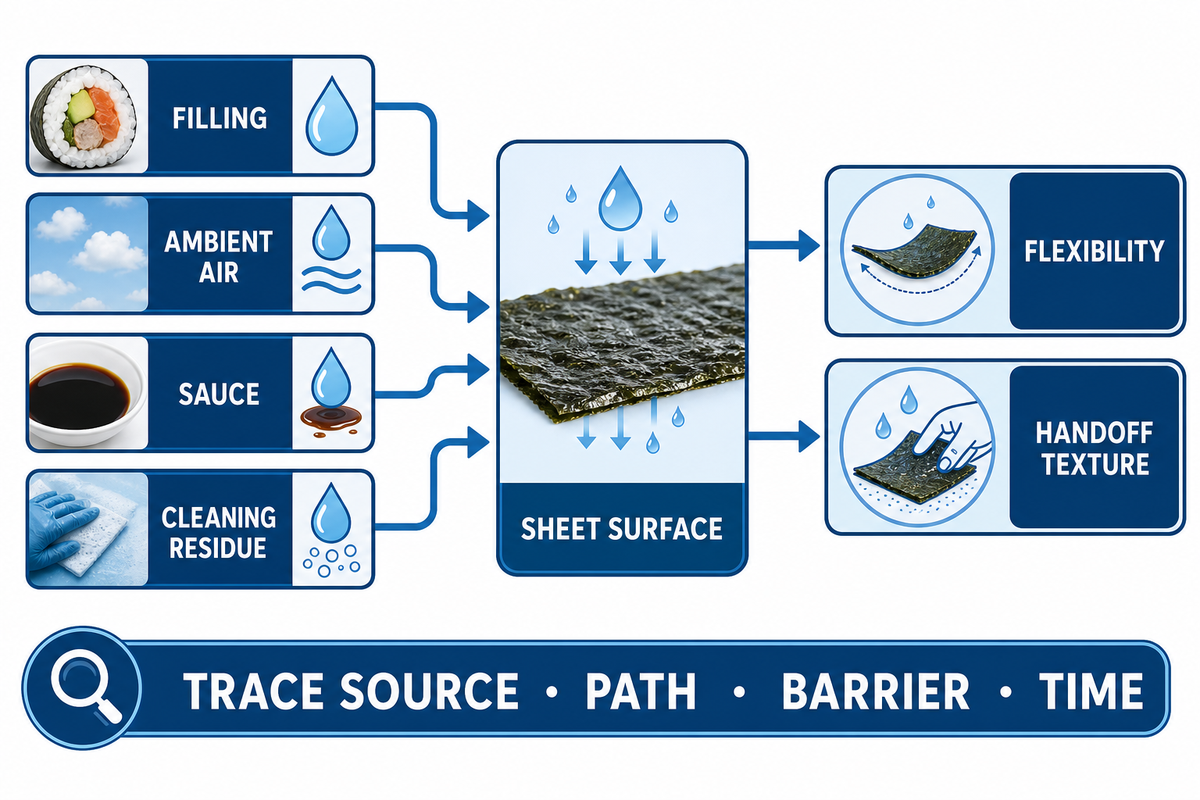
Seaweed films and wraps are sensitive to their environment. One peer-reviewed review of seaweed packaging materials explains that barrier and mechanical behaviour vary with formulation and conditions. In practical terms, water vapour can change flexibility and texture; the same sheet may move from crisp to tough or soft as it takes up moisture. That evidence supports a qualified process window, not one universal moisture number.
Separate three questions that are often collapsed into one:
- Flexibility: Is it possible to bend the sheet around the shape of the product without cracking?
- Surface Condition: is the contact face dry enough to avoid premature sticking?
- Handoff Texture: Is crispness evaluated upon contact, after a dwell, or after final packaging?
Map moisture migration from the wettest component outward. Rice, sauces, fillings, ambient air and cleaning residues can all contribute. The Nori Moisture Migration Map should identify the source, the path, the barrier or delay, and the observation time. Pair it with a Crispness Retention Decision Tree: if the sheet is flexible but not crisp, follow the moisture path before changing a feeder setting. It is a troubleshooting tool, not a replacement for product-specific testing.
Do not “fix” chewy nori by simply adding heat or pressure. Heat may alter colour, cell structure, texture or adhesiveness, while pressure can polish a wrinkle into a permanent crease. First isolate the source of moisture and define the texture requirement at the point where the customer receives the product.
Barrier and mechanical behaviour vary with formulation and conditions.
How Industrial Lines Register and Feed Nori Sheets
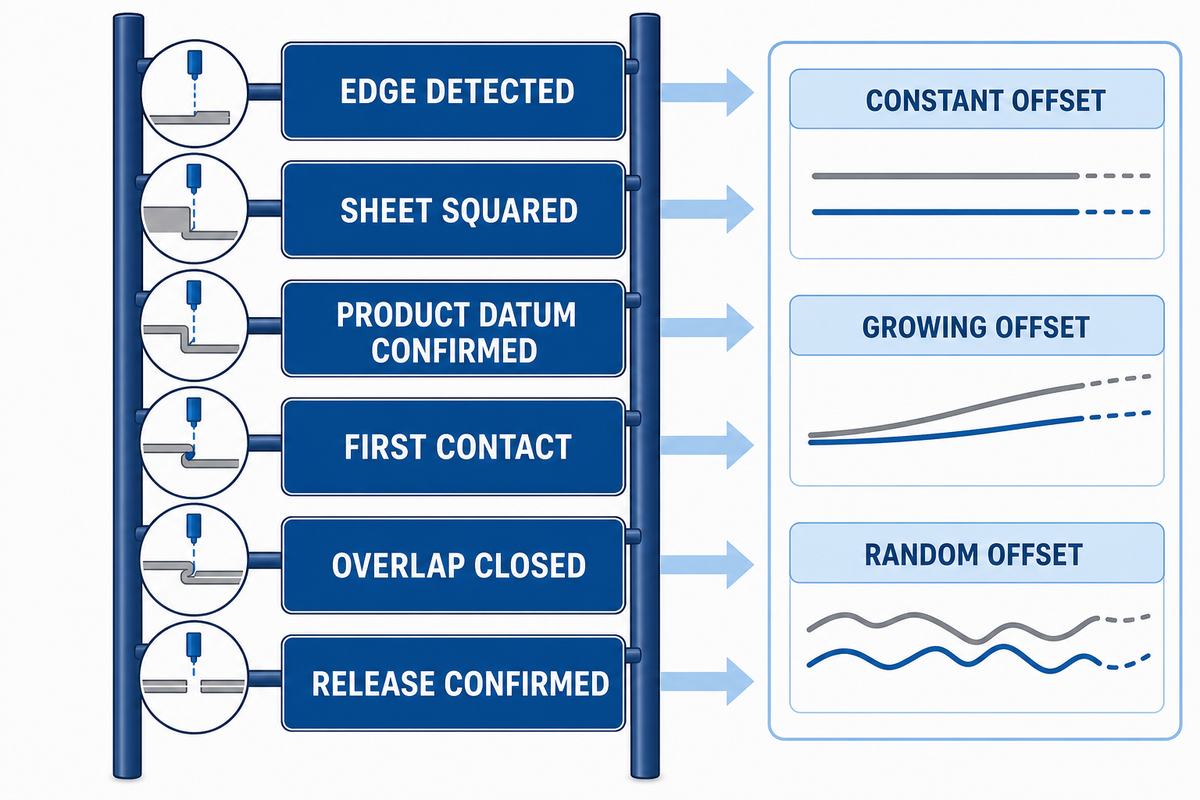
Registration is the transition from a loose sheet to a located sheet. The line needs a repeatable datum: an edge, corner, printed mark or carrier reference that can be sensed or physically guided. Product location needs its own datum. Only then can a fold path be described without guessing.
Registration errors are not all the same. A constant offset suggests a guide or recipe reference. A growing offset suggests slip, accumulation or a timing drift. A random offset may indicate sheet variation, static, sensor noise or inconsistent product presentation. Capture the pattern before changing hardware.
For the evidence record, a NIST control-chart reference helps separate a persistent registration shift from random sheet variation; it does not set a universal alignment tolerance.
Keep the feeder and fold station mechanically honest. Guides should not scrape a brittle edge. Vacuum, air or friction devices should be validated for the actual sheet surface and coating. The third-party Nestec SA patent listed in the references describes staged edible-sheet forming, so it is useful context for why sheet handling may include thickness adjustment, drying and separation; it is not evidence that a particular nori feeder, sensor or alignment tolerance is suitable.
When evaluating a line, request a short registration trial with several lots, not one perfect stack. Record sheet dimensions, lot identity, product datum, detected edge, registration error and the condition at release. That record tells you whether a guide, a sensor, a recipe parameter or the incoming material is the first variable to investigate.
For a factory production scenario, retain the supplier trial report and the quality owner’s sign-off so a registration issue is not hidden by a later recipe change.
Use an illustrative 2 mm registration offset and 30 s observation dwell as record fields; the actual values must come from the lot and line under test.
How Contact, Adhesion and Heat Affect the Fold
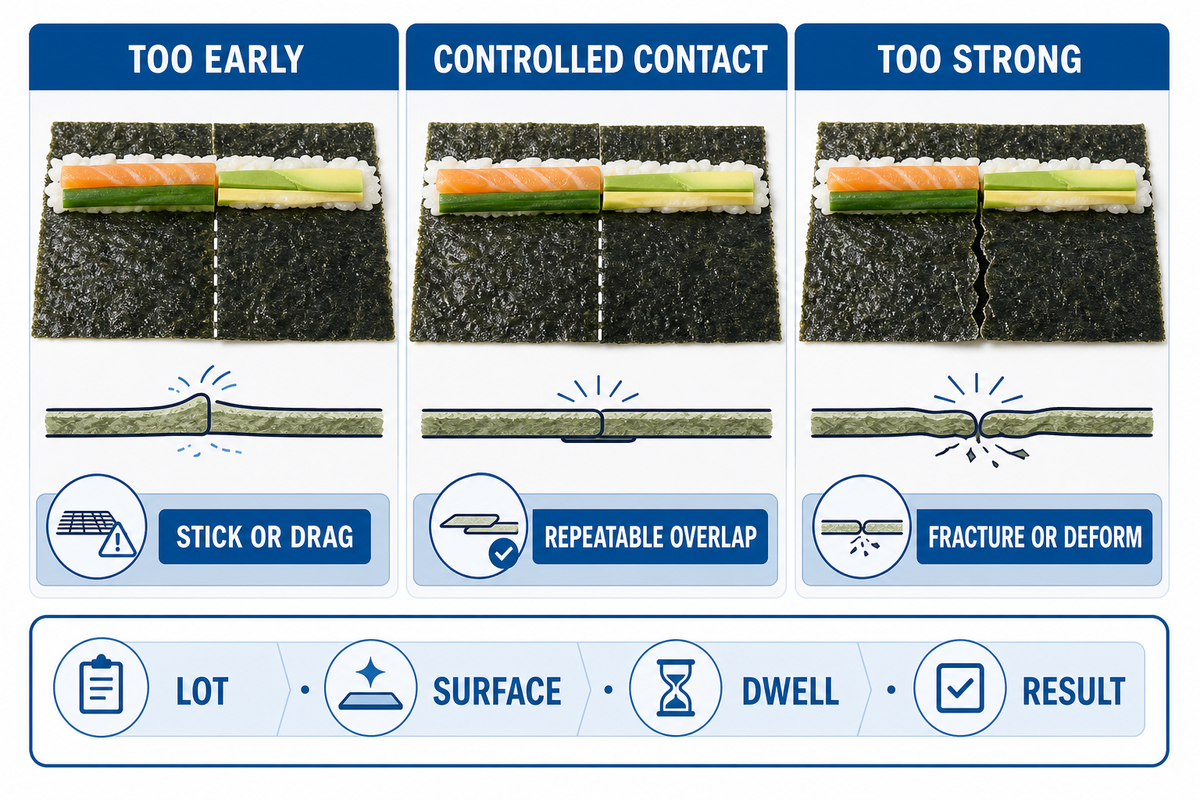
Contact is a timed event. If the sheet touches a wet filling before the intended fold, it can stick, drag or tear. If contact is too light, the overlap may open. If contact is too strong, a crisp sheet can fracture or a soft product can deform. The question is not “what pressure does a machine use?” but “what contact result must be repeatable for this product and lot?”
In a factory trial, record the lot, production line, supplier sheet format and acceptance owner before adjusting a guide.
Adhesion can come from product tack, a designed overlap, a film or a downstream closure. Document which mechanism is expected. Do not infer a food-contact adhesive approval from a visually closed seam. Verify material suitability and changeover cleaning with the responsible food-safety team.
Heat belongs in a controlled trial matrix. Keep the product, sheet lot and dwell visible while varying one thermal input at a time. Inspect colour, texture, seam opening and odour. If the line does not need heat to complete the fold, do not add it merely to compensate for poor registration or excess moisture.
The evidence boundary is simple: a trial report can document a result for one product and lot, but it cannot become a universal thermal specification for every production line.
If a contact failure is suspected, list the measured value in mm and the dwell in s; example labels like 2 mm and 30 s are placeholders for the factory trial.
How Timing and Synchronization Prevent Miswraps
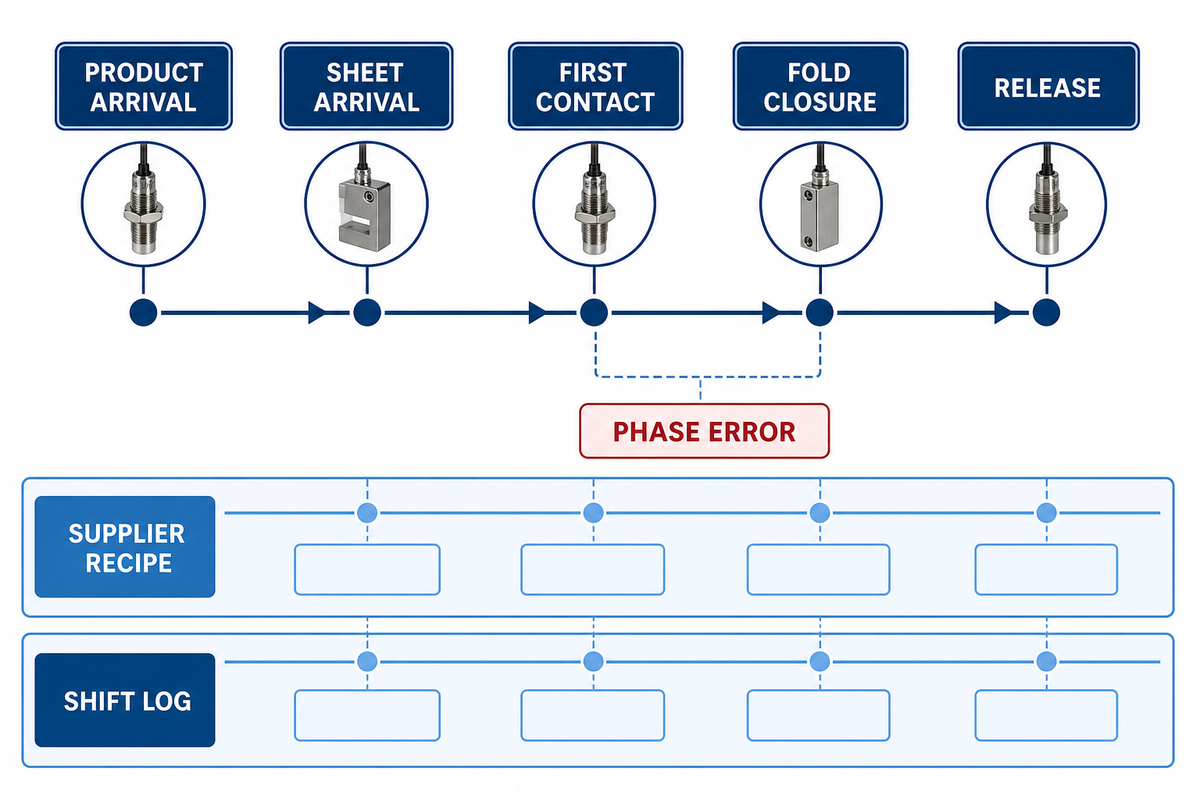
Timing links the sheet, product, gripper or guide and release point. Even a small phase error can look like a material problem because the sheet reaches the product at a different angle. Synchronization should therefore be checked in sequence: product arrival, sheet arrival, first contact, fold closure and release. For a production line, an engineer can compare the event trace with the supplier’s recipe and the factory handoff record.
Use event traces or timestamped observations where available. A stable average can hide a non-random run of slips at a shift change, after a reel splice or as humidity rises. NIST control-chart guidance is relevant here because it focuses on process behaviour over time and on non-random patterns, not a single pass/fail observation.
Make one change at a time during diagnosis. If a guide position, feeder speed and contact delay all change together, the team cannot identify which change helped. Preserve the old recipe, record the reason for the change and retain representative samples.
Factory engineers can pair that event trace with a supplier test report and a production-line shift log to distinguish a timing fault from material variation.
Record the fault with measured timing and offset fields, using examples such as 2 mm and 30 s only to show the units expected in the report.
How to Diagnose Wrinkles, Slips, Tears and Chewy Nori
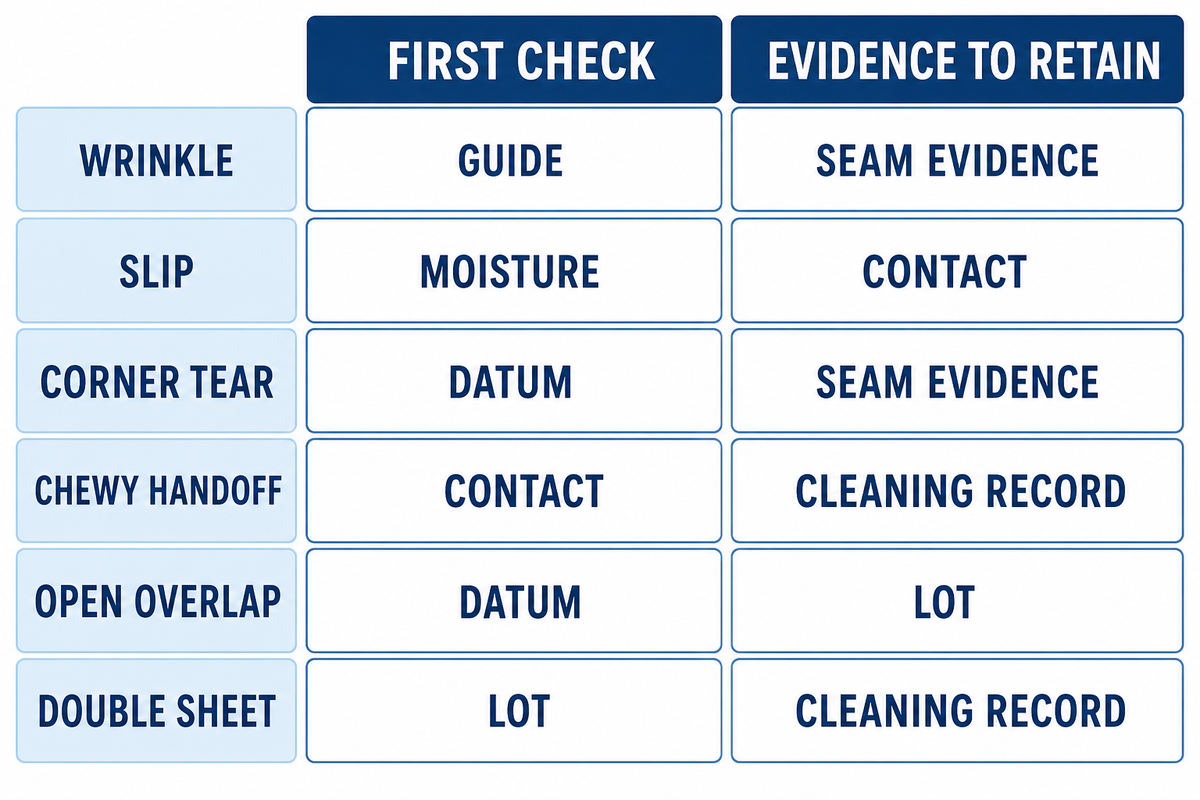
The Miswrap Cause-and-Check Matrix separates symptoms from causes. Start with the defect’s location and direction, then check material, alignment, contact, timing and environment before changing the wrapping method.
| Defect class | First checks | Evidence to retain |
|---|---|---|
| Wrinkle at one edge | Guide parallelism and sheet squareness | Photo and edge offset in mm |
| Sheet slip | Surface moisture and datum timing | Dwell in s and seam-open count |
| Corner tear | Brittle lot, sharp guide and stretch | Lot history and corner image |
| Chewy handoff | Moisture path and packaging dwell | Humidity in % and evaluation time |
| Open overlap | Contact timing and product tack | Contact delay in ms and seam photo |
| Double sheet | Stack separation and static | Feeder count and lot identifier |
| Offset datum | Sensor reference and carrier position | Registration error in mm |
| Colour change | Heat exposure and dwell | Temperature in °C and time in s |
| Contamination mark | Surface release and changeover status | Cleaning record and release owner |
Raw-material heterogeneity deserves its own check. Species, harvest region, season, thickness, protein composition and drying history can change tear behaviour and moisture response. Treat lot identity as a process input, not a footnote.
Do
- Photograph the defect at the defined handoff.
- Trace one variable to one observation.
- Compare more than one material lot.
- Keep calibration and cleaning status with the record.
Don’t
- Declare a moisture number universal.
- Increase speed to hide an alignment error.
- Use a consumer recipe as a machine setting.
- Call a closed seam proof of food-safety compliance.
How Hygiene and Changeover Fit Around Nori Wrapping
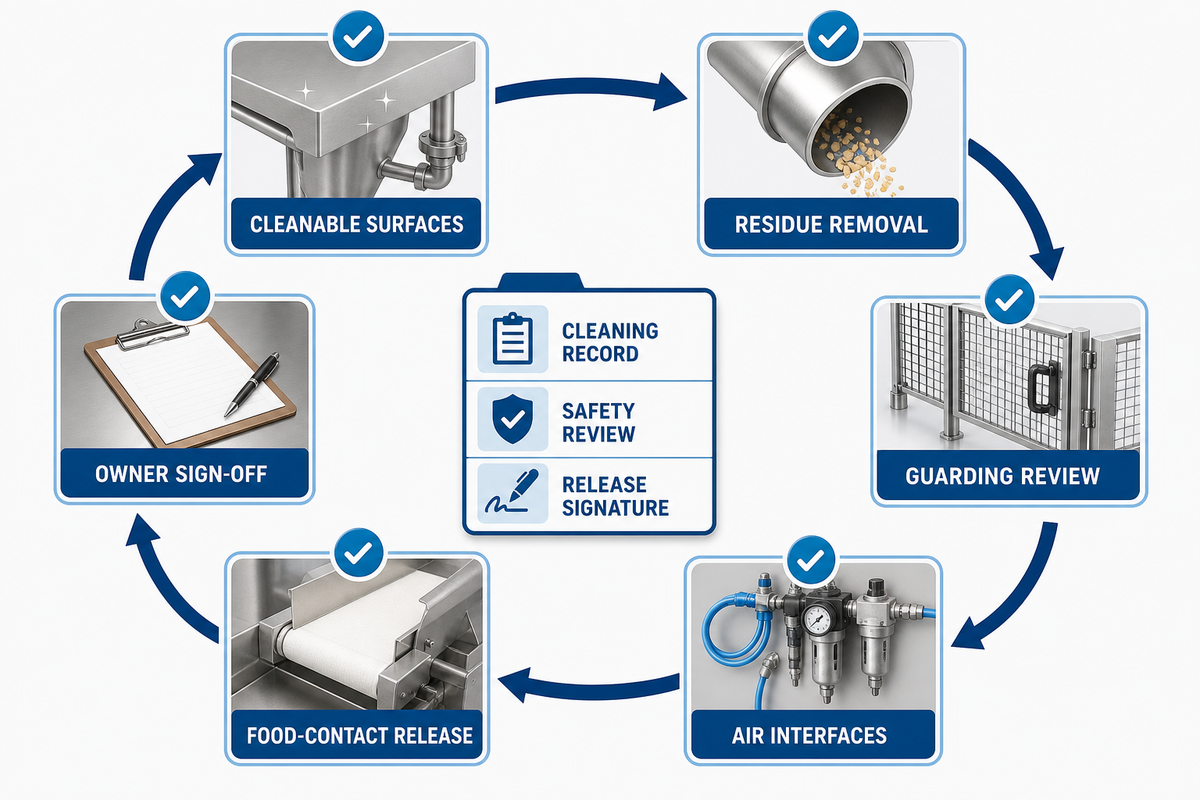
Food-contact design is part of the wrapping mechanism because residues can change adhesion, moisture and microbial risk. Where applicable, 21 CFR 117.40 is a planning reference for equipment and utensils that are adequately cleanable and maintained. It is not a blanket certification for a machine or an installation.
Inspect seams, corners, conveying surfaces, air interfaces and areas hidden by guards. Define how a sheet path is opened, what tools are permitted, how residues are removed and how the release decision is documented. Treat residues as potential secondary contamination pathways, and place incoming-material checks and environmental controls beside the cleanability review.
Separate sanitation from occupational safety. OSHA 1910.212 provides a general guarding reference for points of operation and moving parts, while local rules and the responsible safety professional govern the actual installation. A changeover cannot be considered complete until the line is safe to access and the food-contact release is documented.
Keep an evidence packet with the eCFR reference, cleaning record, guarding review and factory release signature; a tidy surface alone is not proof of compliance.
Include measured cleaning dwell and surface observations in the packet; 30 s or 2 mm are illustrative unit labels, not sanitation or clearance requirements.
How to Accept a Nori-Wrapping Process Before Buying Capacity
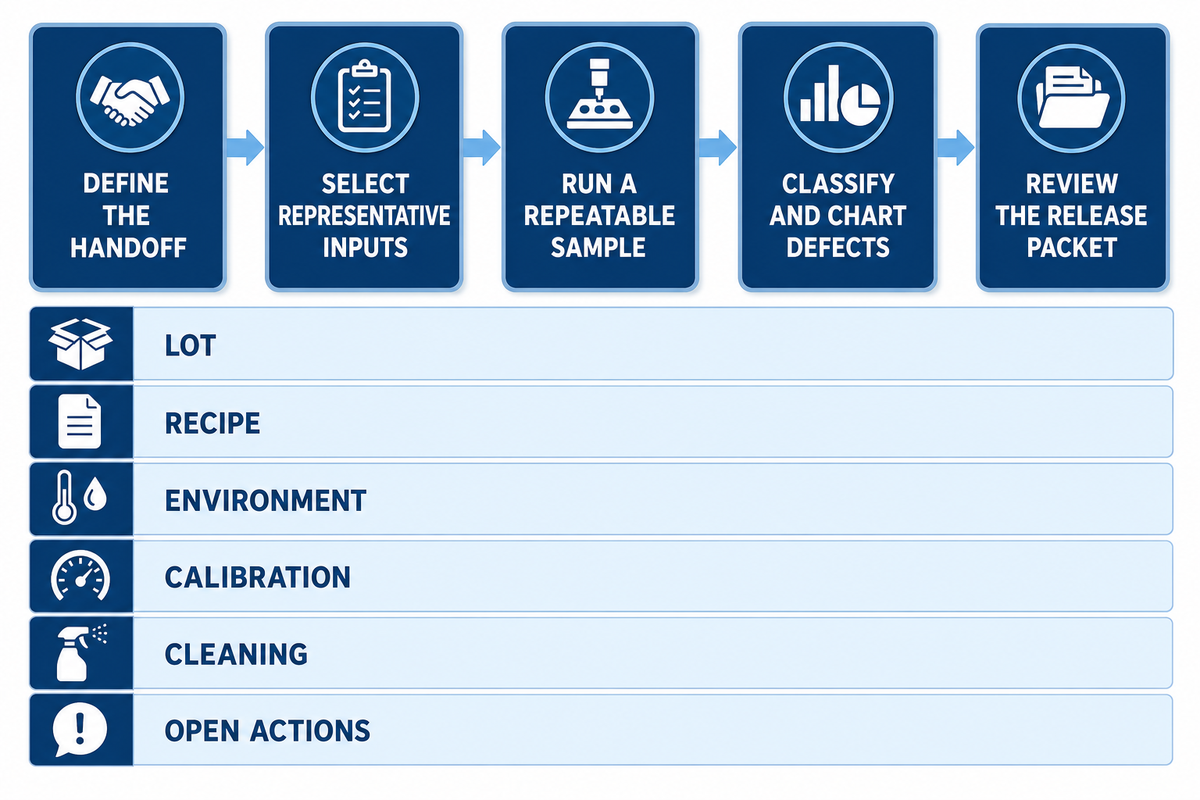
Acceptance should answer whether the process makes saleable output repeatedly under agreed conditions. A one-off demonstration can show that a sheet wraps; it cannot show stability across lots, shifts, humidity or cleaning cycles. A supplier, factory quality owner and procurement lead should sign the same handoff record.
- Define the handoff — state where position, seam, texture and defect class are judged.
- Select representative inputs — include normal lots, expected product variation and the intended packaging dwell.
- Run a repeatable sample — preserve recipe, operator, environment, lot and calibration status.
- Classify and chart defects — separate wrinkles, slips, tears, open seams and texture deviations.
- Review the release packet — sign off cleaning, guarding, utilities, training, open actions and re-test triggers.
NIST control-chart guidance supports repeated observations and checks for non-random patterns. It does not provide a magic sample count or a nori capability limit. Agree the sampling adequacy, measurement method and calibration status with the quality owner before using capability language.
What to Ask When Integrating Nori Wrapping Into a Food Line
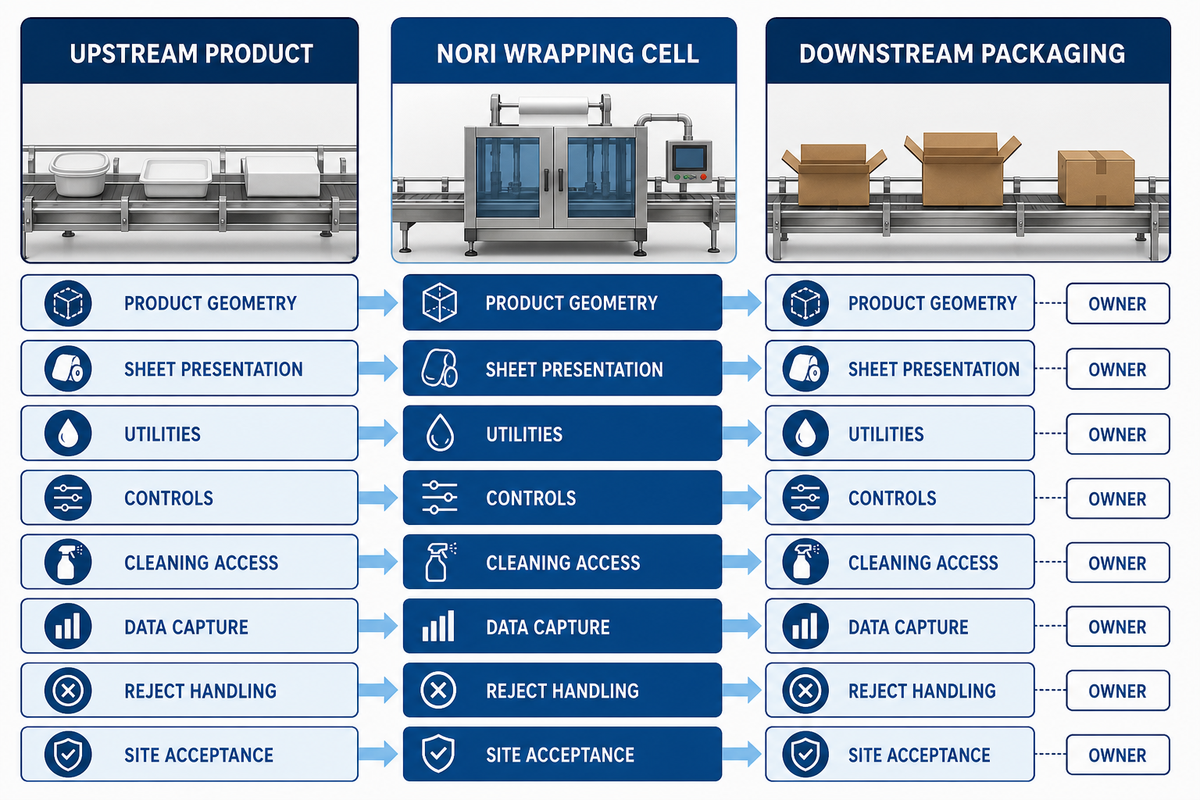
Ask for interfaces, not just a machine name. Confirm upstream product geometry, sheet presentation, line speed range, utilities, guarding, cleaning access, data capture, reject handling and downstream packaging. Define what happens when a sensor loses the datum or when a sheet is missing. A controlled stop is often more valuable than an unrecorded recovery.
For a quotation request, provide the sheet dimensions and lot variation, product dimensions and temperature, expected moisture contributors, target handoff texture, available footprint, cleaning method, safety jurisdiction and the evidence you expect at factory and site acceptance. Keep model specifications and commercial terms on the solution page; this guide is for making the request technically testable.
For company context before a supplier discussion, review the UD Company food-production automation overview and keep its background separate from measured trial evidence.
Use a NIST-style control chart and the supplier test report as evidence to compare, while the RFQ remains a planning document rather than a certification.
Supplier RFQs should name the test report, calibration record and production scenario that will decide acceptance, so a commercial quote is not mistaken for technical evidence.
The RFQ can request numeric fields such as registration in mm and dwell in s, while leaving the values open for the buyer’s measured trial.
If you require a machine overview once these parameters are specified, see the seaweed egg-roll machine wrapping guide. This destination remains as the linked internal target; check its current validity prior to publication.
What 2025–2026 Search Signals Change for Nori Wrapping
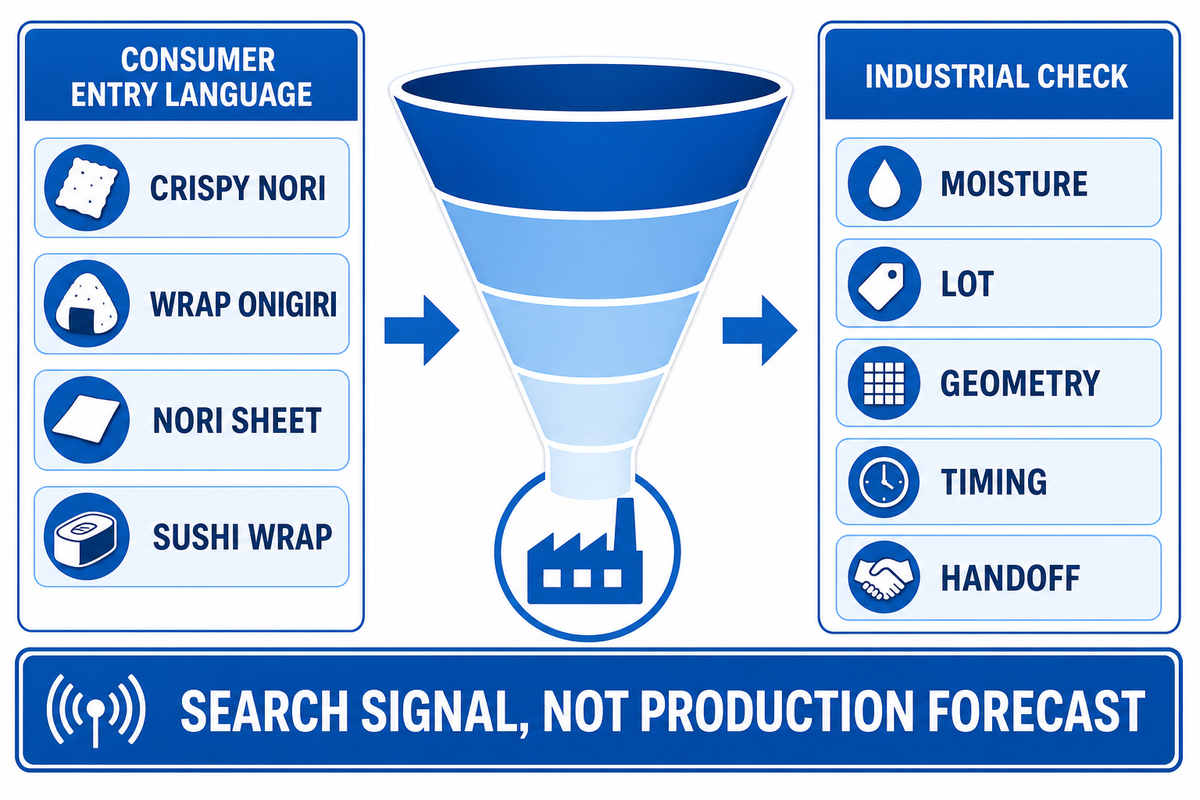
Current search results remain dominated by consumer onigiri and recipe demonstrations. The captured DataForSEO snapshot recorded 1,300 searches/month for “nori wrapper,” 1,600/month for “onigiri wrapper,” 390/month for “nori application” and 70/month for “how to wrap onigiri with seaweed”; the exact focus term had no reported volume. These are directional demand signals, not a production forecast.
That consumer vocabulary often mentions sushi, salmon, tuna, cucumber, sesame and a crispy bite. Those ingredients explain why searchers care about the wrapper, but they are examples of filling context—not recipes or equipment specifications for this guide.
An industrial response is not to copy consumer language into a specification. It is to make the process observable: separate moisture zones, register the sheet edge, time contact, document the handoff and test variation. Treat emerging methods as trial questions until a validated line record exists.
One risk is overfitting a search trend to a factory decision; use the source review, supplier trial and production evidence before changing a line design.
Any trend-led hypothesis should be checked with measured fields—for example, an offset in mm and a handoff dwell in s—before a production change is approved.
Search-language map: consumer readers may ask about nori seaweed, using nori, make onigiri, sushi rice, ways to use nori, japanese convenience store, onigiri with nori, learn how to wrap, ways to wrap onigiri, avocado, add nori, seaweed paper or nori seaweed sheets. Those phrases describe entry intent, not the industrial answer.
They may also ask whether nori is soggy, how to keep crispy nori, use furikake or pickle around the filling, stop nori from getting soggy, choose japanese rice, roasted nori, sesame seeds, dried seaweed, sheets of nori, an airtight container, keep the nori dry or form a cone. In process terms, these become moisture, lot, geometry and handoff checks.
Other recipe-oriented wording includes shape the rice, wrapped in nori, fold the rice, make the rice ball, learn how to wrap onigiri, boiled eggs, seaweed around, kombu, place the rice, sticking to the rice, prevents the rice from sticking, absorbs moisture, crisp texture, using plastic, wet your hands, side facing, bowl of water, stickiness, best texture, umami, make nori, miso, shiny side, optional topping, bonito flakes, umeboshi, salted salmon, kelp, need to be refrigerated, rice vinegar, gently fold, dry place, step-by-step, sesame oil, japanese people, toasty, original packaging, sweet potato, scallion and tofu. This article names them to clarify scope; it does not provide a recipe.
Frequently Asked Questions
Do you wet nori sheets before wrapping?
Short answer
Usually, uncontrolled wetting is a risk. Moisture can soften the sheet and change its surface behaviour; if flexibility is required, validate the amount, source and timing for the specific product instead of wetting by guesswork. In a production trial, record the sheet lot, ambient humidity, contact delay and handoff texture so a result can be repeated and audited rather than described only as “easier to fold.”
Why does nori become chewy?
Short answer
Moisture uptake and dwell are common contributors, but packaging, filling temperature, ambient humidity and lot history also matter. Record when texture is judged and trace the moisture path before changing machine speed. A useful check compares the same sheet lot at two defined handoff times, while keeping filling temperature, packaging barrier and evaluation method fixed; otherwise a texture complaint can be mistaken for a feeder fault.
Can a stable average prove the wrapping process is controlled?
Short answer
No. A stable average can hide a run pattern or a shift-related drift. Use representative repeated samples, control limits and a consistent measurement method before describing the process as stable. Confirm that samples are representative and that the measurement system is calibrated; a convenient handful of units or a changing operator scale can’t support a capability claim. Keep the chart with the recipe and lot record.
What should be tested before buying capacity?
Short answer
Test representative sheet lots and product variation at the agreed handoff. Record registration, seam integrity, texture, defect classes, cleaning release, guarding review and downstream handoff, not just nameplate speed.
Does a patent prove a nori wrapping machine will work?
Short answer
No. Patent literature can explain a process idea, but it doesn’t prove suitability, ownership, capacity, certification or customer results for a particular nori line.
Sources and Scope Notes
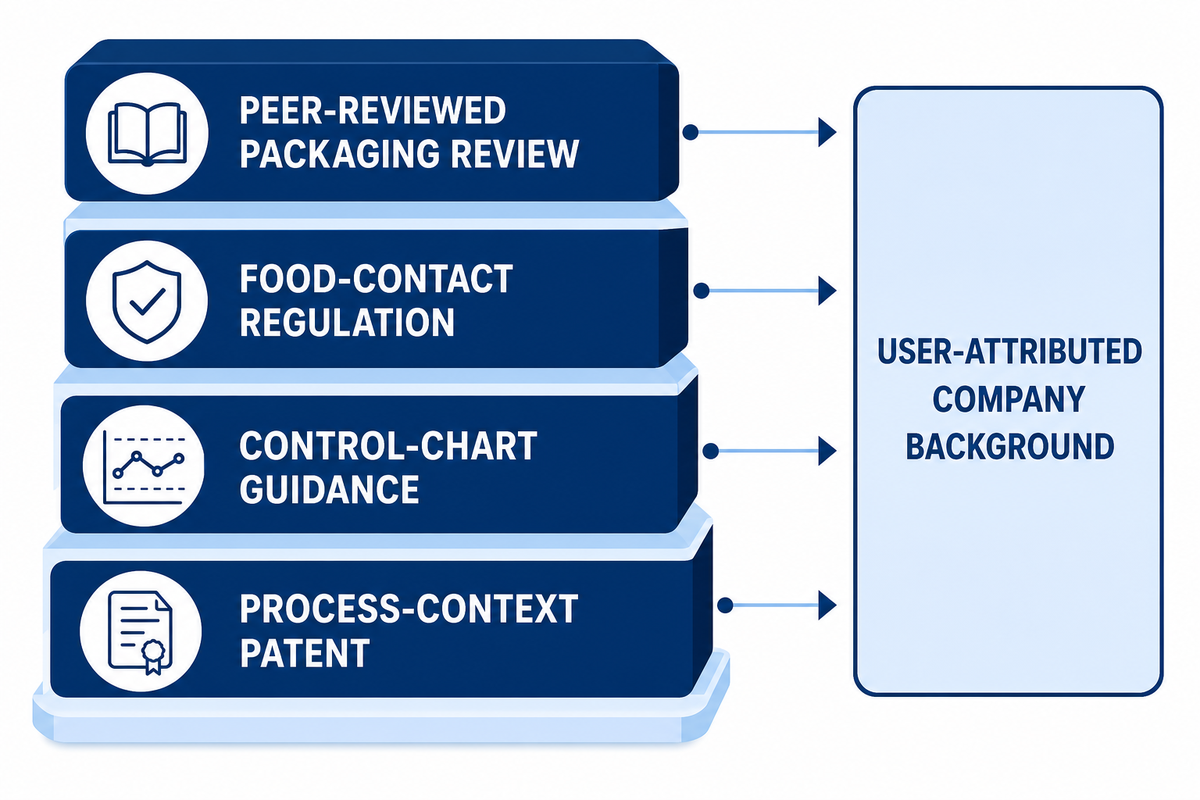
References & Sources: the following sources support material behaviour, safety, sanitation and measurement boundaries. Consumer competitors’ pages have contributed to format analysis only, not to authoritative statements above.
- UD Company food-production automation overview, supplied brand context and site hub.
- Seaweed as a Valuable and Sustainable Resource for Food Packaging Materials, peer-reviewed review in Foods / PubMed Central.
- 21 CFR 117.40 Equipment and utensils, Electronic Code of Federal Regulations.
- OSHA 1910.212 General requirements for all machines.
- NIST/SEMATECH e-Handbook: Control Charts.
- EP1897445A1 edible wafer extrusion and sheet-forming process, cited for process context only.
The user-supplied brief says UD Company was established in 2003, and the history data provided for this article covers investment, production facilities and independent food-automation innovations. Those points are left in place as user-attributed background; this article does not turn them into a machine specification, certification, patent-register finding or customer outcome.
Ready to make the wrapping question testable?
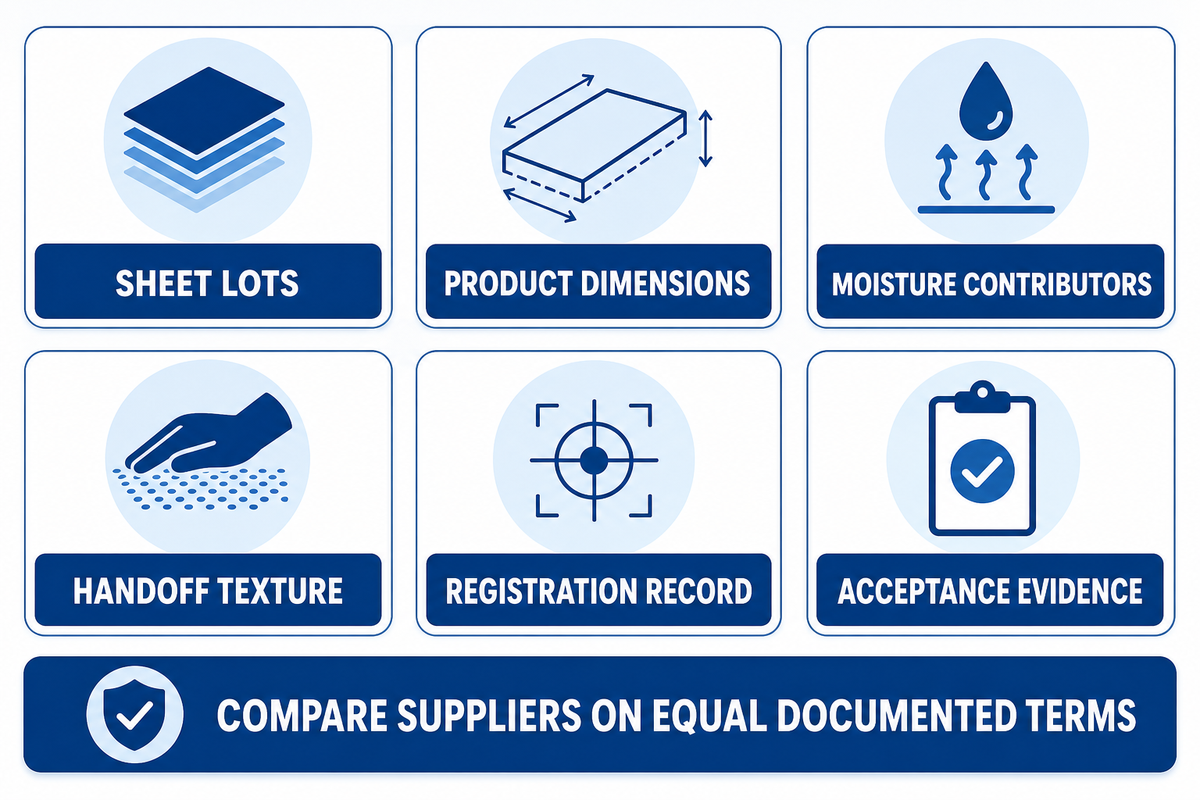
Bring your sheet lots, product dimensions, moisture contributors, handoff texture and acceptance evidence requirements to a technical discussion. Map registration, contact timing, cleaning release and site-acceptance records before comparing any machine-specific configuration. Use the resulting record to compare suppliers on equal, documented terms.