Get in touch with UDTECH Company

Industrial food machinery project planning
Sachima & Specialty Snack Lines
Industrial Sachima & Specialty Snack Production Lines
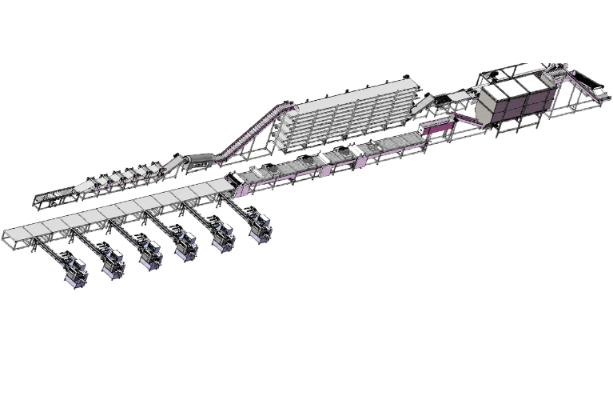
Sachima & Specialty Snack Lines is an industrial food machinery category for reviewing a product route before equipment is configured. It organizes the product format, target output, available space, utilities, upstream and downstream interfaces, process stages, and acceptance evidence that an industrial project needs.
Product definition
Recipe family, geometry, texture, inclusions, raw material and accepted finished product.
Line configuration
Process route, automation, forming equipment, thermal step, conveyor and packaging boundary.
Acceptance basis
Measurement point, qualified-product rule, test window, evidence and responsible party.
The Configuration Boundary
We set the confirmed Sachima route apart from specialty snack projects that require an engineering route review. “Specialty snack” is a screening boundary: fried, baked, extruded, puffed, seasoned, and combined processes are not interchangeable routes.
01
Confirmed route
Sachima project path
Use the exact product card for the named Sachima production equipment route.
02
Screened route
Specialty snack evaluation
We review product structure and manufacturing process before proposing modules.
03
Input basis
Recipe and target product
Raw material, finished product, quality attributes, hazards and cleaning inputs belong in the brief.
04
Interface basis
Utilities and packaging
We map electrical, fuel, air, exhaust, space, conveyor and packaging equipment boundaries.
05
Output basis
Qualified production capacity
We define the point, product state, test period, reject rule and record before comparing output.
06
Evidence basis
Factory and site records
We separate supplier-site evidence from installed-site acceptance and open-item closure.
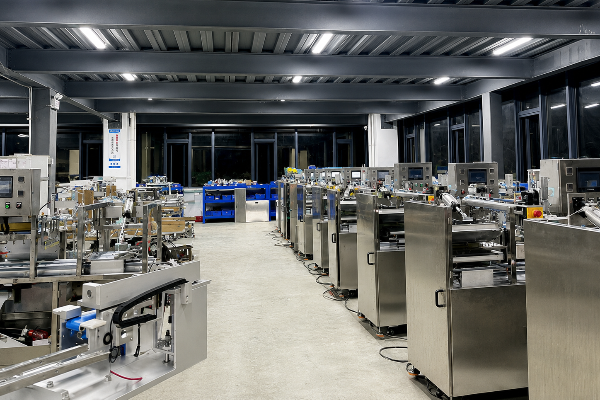
Choose the Project Route Before Equipment
A product name is not enough to select a specialty snack production line. The risk is a route mismatch, so we review product format, material state, forming method, thermal route, binding or flavoring step, cooling need, and final processing and packaging boundary.
Sachima line review
The visible child-page route covers a named sequence from dough handling and forming through proofing, frying, sugar preparation and mixing, shaping, and cutting. Model specifications and exact transaction intent stay on that child page.
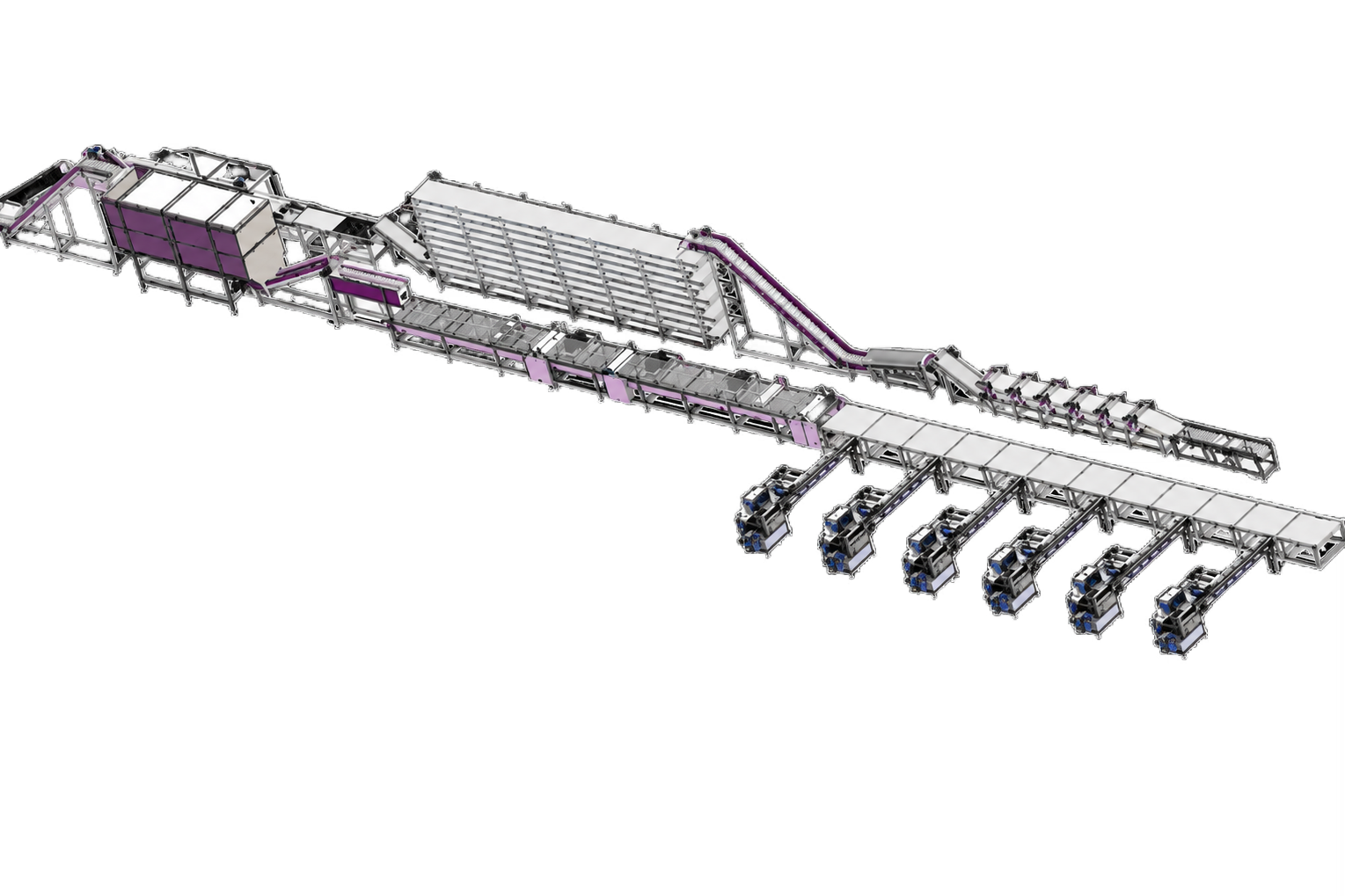
Sachima Production Line
Open the dedicated product page when your project follows the named Sachima route and you need model-level information. This category sits below broad snack food production line planning and routes model-specific Sachima decisions to that child page.
Review Sachima Production LineMatch Raw Materials to Product Structure
One target recipe is not necessarily equivalent to another for dough handling or the finished-product characteristics used in quality control. A PubMed-indexed Sachima study, for example, reported changes in dough behavior, crust hardness, color, specific volume, and oil when the flour system changed, which is why recipe and target-quality inputs should be fixed before configuration.
Map Product Targets to Process Stages
The manufacturing process should be written as a product-specific route, not copied from a generic snack food processing equipment list. For an industrial buyer, the trade-off is between a modular route aligned to the product and a production line that only looks complete on a generic equipment list; we map each stage to its input, decision, evidence, and boundary.
Route-control note
Extrusion is a separate processing route
NC State Extension describes an extruder as part of a thermomechanical and die-forming route that combines operations such as conveying, mixing, shearing, cooking, texturizing, and forming. For this project screen, extrusion stays on a separate route rather than being inserted into the named Sachima line.
Preparation and forming
Material conditioning, mixing, dough or feed transfer, forming equipment, geometry and change parts.
→
Thermal and flavor route
Proofing, frying, baking, extrusion, puffing, binding, coating, seasoning or flavoring only where the selected route requires it.
→
Finish and transfer
Cooling, cutting, buffering, conveyor transfer, inspection and packaging interface.
Plan Utilities, Space, and Line Interfaces
Utility pressure, service access, exhaust, and sanitation space can change the installed result even when the machine envelope fits. We review every interface as provided, to confirm, or owned by another party before the configuration is treated as complete. For United States planning, 21 CFR Part 117 makes plant conditions and equipment cleanability relevant inputs to facility and sanitation review.
SPEC.01 // MATRIX
Interface
Project input
Status to record
Responsible party
01 Electrical supply and control system
Available voltage, frequency, distribution, isolation and controls boundary
Provided / to confirm
Buyer electrical lead / supplier
02 Fuel or thermal service
Available source, pressure, ventilation and heat-rejection conditions
Provided / to confirm
Buyer utilities lead
03 Compressed air
Pressure, flow, treatment and contact boundary
Provided / to confirm
Buyer utilities and food safety leads
04 Exhaust, drainage and cleaning
Extraction, drainage point, cleaning method and chemical compatibility
Provided / to confirm
Buyer facility and sanitation leads
05 Available space
Scaled floor plan, columns, doors, aisles, service access and hygiene zoning
Provided / to confirm
Buyer project lead
06 Upstream interface
Ingredient preparation, dough or feed delivery, buffer and controls handshake
Included / excluded / open
Named package owner
07 Downstream interface
Cooling, inspection, accumulation, packaging equipment and target handoff rate
Included / excluded / open
Named package owner
08 Operator and maintenance access
Staffing concept, access, lifting, removal route and safe intervention space
Provided / to confirm
Buyer operations lead
Prepare Scope, Quotation, and Schedule Inputs
Project price and project schedule follow the product definition, route, module boundary, automation, utilities, layout, packaging interface, evidence plan, and open issues. A low quoted equipment price is not always the lowest project cost when integration or verification work is left outside the quotation scope.
- Product format and recipe family
- Target output and qualified-product rule
- Target quality attributes and samples
- Changeover and product-family range
- Included process modules and automation
- Upstream and downstream boundaries
- Available utilities and floor plan
- Packaging handoff and control signals
- Factory acceptance conditions
- Installed-site acceptance conditions
- Records, approvers and punch-list owners
- Open items that affect quotation
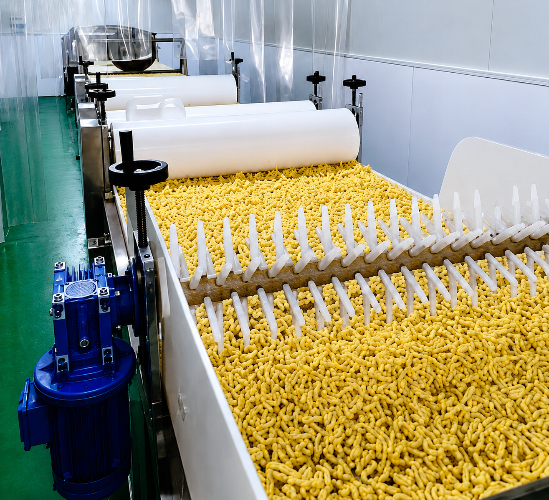
Build the Configuration Evidence Matrix
The risk is an evidence gap because acceptance criteria cannot be closed without a named measurement point, owner, and record. UDTECH builds the Sachima & Specialty Snack Line Configuration Evidence Matrix around each requirement, route decision, reviewable record, responsible party, and open issue. Applicable FDA food-safety inputs remain buyer-owned inputs to the matrix, not equipment certification.
SYS.CFG // US-FDA
United States planning context
Food safety inputs remain facility-specific
FDA regulation 21 CFR Part 117 covers equipment cleanability, allergen cross-contact, sanitation, hazard analysis, preventive controls, monitoring and verification for covered food facilities. Allergen changeover and cleanability inputs need assigned owners and project evidence; facility compliance is established through the buyer’s relevant food-safety plan.
How We Work: Configure the Project Through Defined Review Gates
We drive the project through documented review gates so assumptions about product, interface ownership, and acceptance evidence do not remain hidden. Each gate concludes with a defined output and an owner for unresolved matters.
01
Submit the product inputs.
The buyer supplies product format, recipe family, target output, quality targets, samples, available space, utilities, and upstream or downstream systems.
02
Validate the route boundary.
We separate the explicitly named Sachima route from another specialty snack route that needs a separate engineering assessment.
03
Map modules and interfaces.
We link each process step to automation, conveyor, utility, sanitation, and packaging boundaries.
04
Specify output and evidence.
The gate names the measurement point, product state, test window, qualified-product condition, records, and approvers.
05
Examine the configuration proposal.
Buyer and supplier review included modules, exclusions, owner assignments, and unresolved technical or food-safety inputs.
06
Verify open-item resolution.
Each open interface is assigned an owner, needed evidence, and approval point before it changes the project baseline.
Acceptance Evidence Output
Factory acceptance evidence
Use the agreed recipe, output basis, utility conditions, run record, observations, accepted and rejected quantities, and a punch list with named owners.
Installed-site acceptance evidence
Recheck utilities, installed interfaces, line performance under buyer conditions, operator readiness, and closed punch-list items at the buyer site.
Projects That Need a Different Route
A category page should not compel all items into the closest existing machine family. When the product composition or process boundary shifts, the better next step is a distinct route assessment rather than an unsupported extension of the Sachima configuration. NC State Extension describes extrusion as a distinct thermomechanical and die-forming route.
01
Extruded or die-expanded product
Why the Sachima route cannot be assumed
Material plasticization, screw processing, die forming and downstream conditioning define a different route.
Next decision
Evaluate an extrusion-specific process and equipment boundary.
02
Baked or hot-air-expanded product
Why the Sachima route cannot be assumed
Heat transfer, moisture removal, residence time and product support differ from a fried and syrup-bound route.
Next decision
Build a baking or expansion route from product targets.
03
Packaging rate below upstream output
Why the Sachima route cannot be assumed
Unbalanced accumulation and handoff can cap accepted packaged product.
Next decision
Balance the complete processing and packaging line before comparing output.
04
Recipe or quality target not yet fixed
Why the Sachima route cannot be assumed
Trials cannot be compared when formulation and qualified-product criteria change together.
Next decision
Fix the trial basis and acceptance method first.
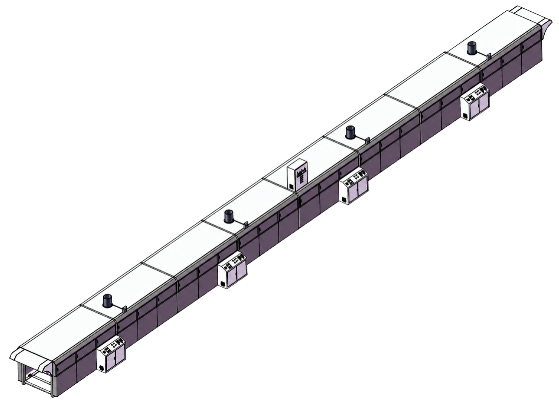
Sachima & Specialty Snack Line Tools
[ 01 ]
Snack Route Screen
Visualize the optimal routing for your sachima production. Evaluate layout efficiency and material flow.
OPEN TOOL
[ 02 ]
Qualified Output Definition
Calculate and define exact production yields based on input parameters. Ensure precise capacity planning.
OPEN TOOL
[ 03 ]
Quotation Readiness Checklist
Verify technical and commercial requirements before requesting a quote. Streamline project evaluation.
OPEN TOOL
01
How is a Sachima route different from an extrusion route?
The named Sachima child route uses dough handling, forming, proofing, frying, sugar preparation and mixing, shaping, and cutting. Extrusion uses screw-driven thermomechanical processing and die forming, so it requires a separate product and equipment review.
02
Which product inputs should we send first?
Send a representative sample plus the product format, recipe family, raw materials, inclusions, target geometry, quality attributes, and output requirement. Add allergen, cleaning, and food-contact requirements from the buyer's food-safety team. Identify which inputs are confirmed and which remain open so the route screen does not treat an assumption as a project fact.
03
Why does the measurement point matter for production capacity?
Input rate and accepted packaged output are different bases. Name the point, product state, timed window, reject rule, and packaging boundary before comparing suppliers.
04
How should qualified output be defined?
Record the recipe revision, product state, acceptance attributes, timed window, accepted and rejected quantities, planned stops, startup material, rework rule, evidence record, and approver.
05
Which utilities and layout information belong in the inquiry?
Provide the electrical supply, fuel or thermal service, compressed air, exhaust, drainage, cleaning conditions, and a scaled floor plan. Mark columns, doors, hygiene zones, service aisles, upstream equipment, packaging handoff, and maintenance access. If a value is unknown, keep it as an open item rather than copying a supplier default.
06
Can an existing packaging machine be connected to the line?
An existing packaging machine can enter configuration review after its infeed geometry, product condition, sustained rate, accumulation, controls handshake, and reject handling are documented. Compatibility remains unconfirmed until both equipment owners agree on the interface.
07
What evidence should be requested for factory acceptance?
Request the agreed recipe, protocol, measurement point, timed-run log, utility conditions, accepted and rejected quantities, quality observations and records, approvers, and punch-list owners. Record the actual conditions used rather than copying the rated input. Keep factory evidence separate from installed-site acceptance, because utilities, interfaces, operator actions, and the downstream boundary can change after installation.
08
Does the equipment page establish United States food safety compliance?
No. A category page cannot replace a facility- and product-specific hazard analysis, food-safety plan, sanitation program, monitoring, or verification. Use applicable 21 CFR Part 117 topics as project inputs, while the buyer assigns each decision to its responsible food-safety, quality, engineering, or operations owner.
09
When should we open the Sachima Production Line product page?
Open it when the route is confirmed as Sachima and model-level information is needed.
10
What should be resolved before requesting a quotation?
Resolve the product route, target output basis, module boundary, utilities, floor plan, upstream and downstream interfaces, quality criteria, acceptance evidence, and owner of each open item. Those fields make supplier quotations more comparable without relying on a generic price.