Get in touch with UDTECH Company

Mini Steamed Bun Production Line — UDTECH YT-XMT800
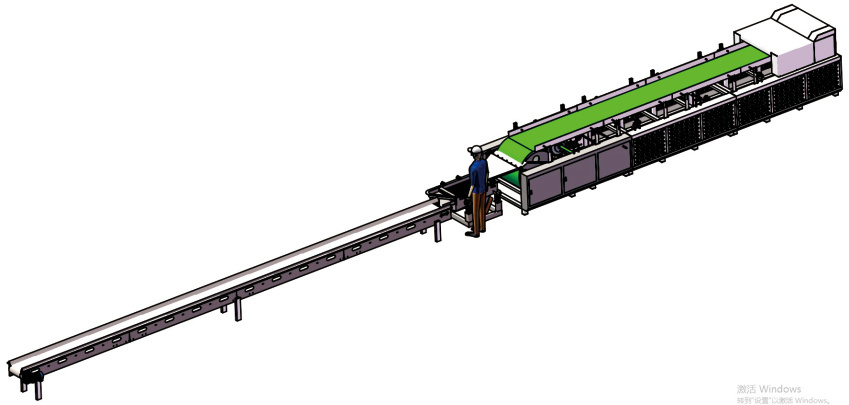
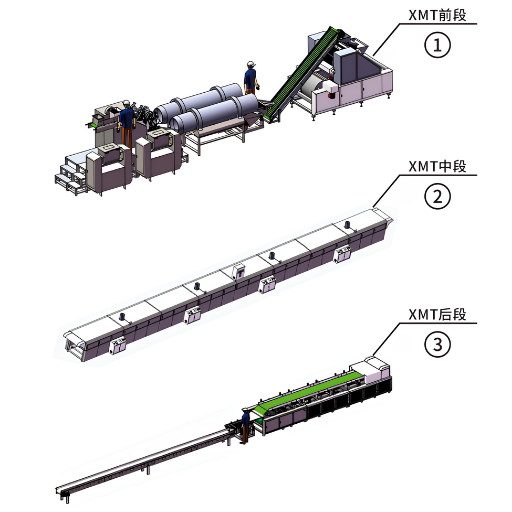
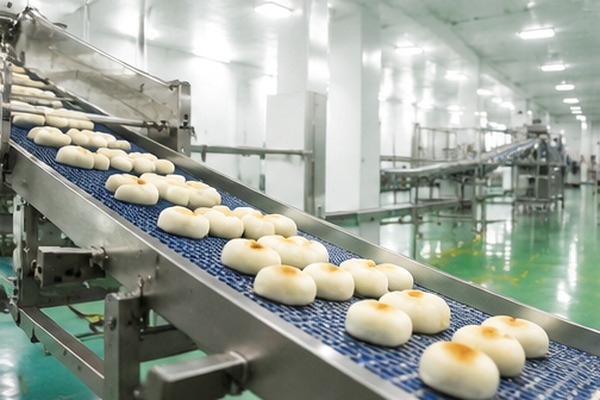
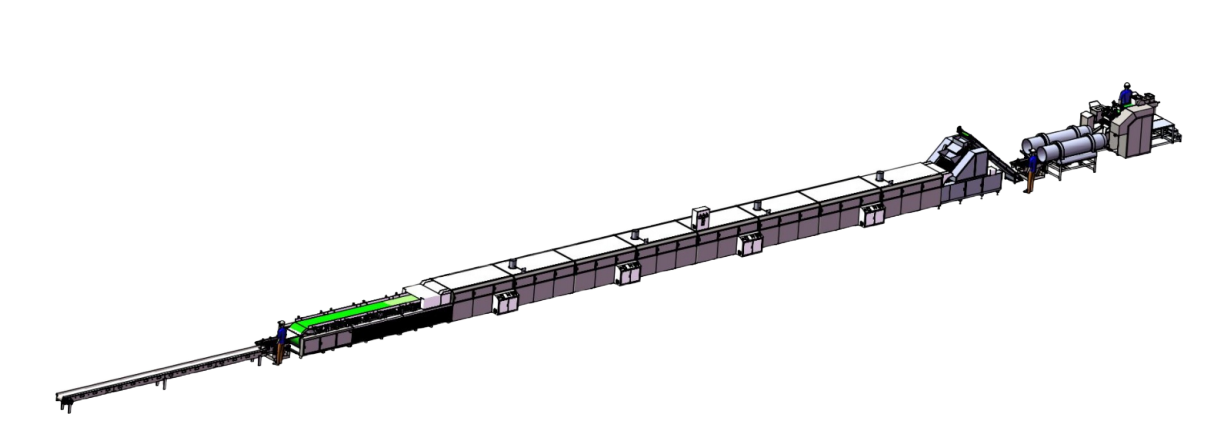
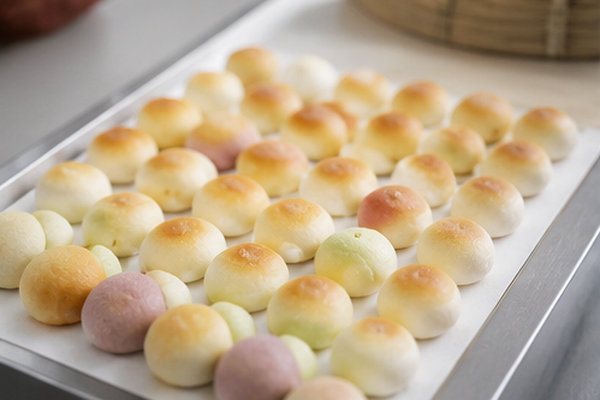
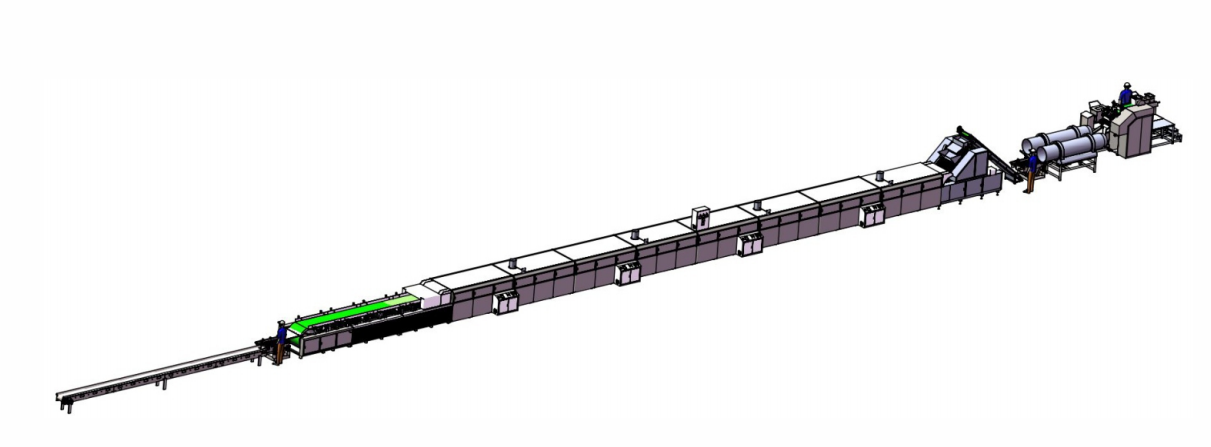
The Mini Steamed Bun Production Line shown here is an electrically heated baked mini-bun snack line rated at 4,000 kg/24 h in UDTECH’s supplied product data. It combines dough preparation, automatic forming, controlled baking, and cooling in a 55,000 mm line.
Process boundary:YT-XMT800 does not include steaming, proofing, or filling equipment. Baked and steamed lines are not interchangeable; choose this food processing line for small round baked snacks, not for traditional steamed bread, filled bao, or mantou production.
SECTION // 03
- Rated Capacity 4,000 kg/24 h
- Line Length 55,000 mm
- Heat Source Electric heating
YT-XMT800 at a Glance
Early fit check: the trade-off for a straight 55 m equipment line is a factory-level planning burden. The wrong choice is to treat the equipment rectangle as the finished plan; operator aisles, cleaning access, maintenance clearances, utilities, ingredient movement, and packaging interfaces must be added.
YT-XMT800 Baked Mini-Bun Production Capabilities
The mistake is to treat every bun making machine as the same process. Heat treatment determines the line category: YT-XMT800 shapes dough and bakes it on a continuous line, so it cannot replace machinery built around steam, proofing, or filled-product handling.
Public Process Reference
The published CN113598206A application names YT-XMT800 and describes forming, arranging, tunnel baking, screening, and cooling. It supports the process-category distinction, not a claim that a particular delivered line has passed acceptance.
Dough preparation
We supply the configured mixer as the first process module. Your flour system, ingredient dosing method, recipe ownership, and upstream feeding arrangement remain quotation inputs.
Sheeting and cutting
We configure the dough sheeter and cutter to prepare pieces for the downstream forming machine. Product trials must establish whether the buyer’s dough handles cleanly through this sequence.
Rounding and transfer
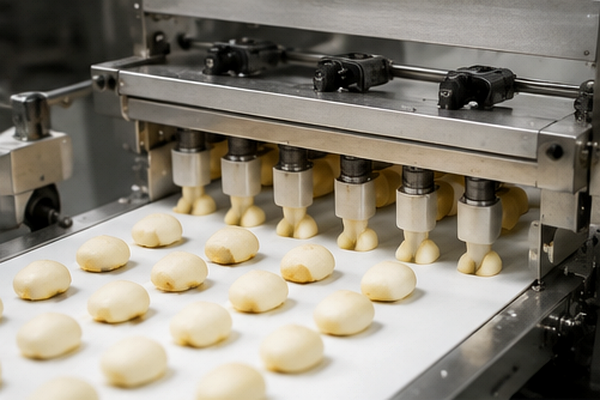
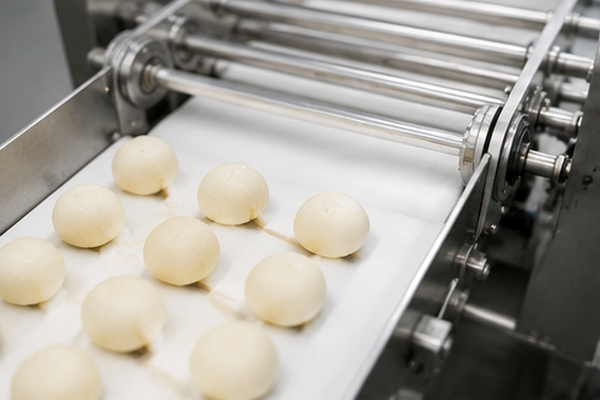
We integrate the rounder, lifting conveyor, and high-speed arranger named in the supplied configuration. These modules control product shape and presentation to the baking stage without implying a filled or encrusting process.
Thermal processing and cooling
We provide temperature-controlled baking with electric heating, followed by vibrating screens and integrated cooling. The exit condition needed for packaging must be defined in the acceptance plan.
Acceptance Plan Input
Use the 4,000 kg/24 h rating as an acceptance-plan input, not as a shortcut to an hourly guarantee. Product recipe, running schedule, planned stops, cleaning, changeover, maintenance, yield, and acceptance criteria have to be closed around the buyer’s actual product.
From Product Sample to Configured Production Line
A useful factory trial starts with a defined product target, not a generic request for automatic production. As the buyer, you supply the raw materials or product samples so the trial can check the intended dough behavior, shape, bake, and cooling result.
PHASE_01
///
Flour and ingredient system
Provide flour type, major ingredient categories, allergen constraints, and the intended mixing sequence. UDTECH does not infer a formula or nutritional claim from a sample.
PHASE_02
///
Reference product
Send a physical sample, clear product photos, or both. Include target piece weight, diameter, height, color, texture, and acceptable variation.
PHASE_03
///
Dough behavior
State the dough temperature, hydration window, resting practice, and any sticking or breakage observed on current making machines.
PHASE_04
///
Production target
State the required daily output and operating pattern. Identify planned shifts, breaks, cleaning windows, and product changes.
PHASE_05
///
Factory and utilities
Provide hall dimensions, electrical supply, and floor constraints. The layout review checks the 55m envelope against the real factory.
PHASE_06
///
Downstream handoff
Define the required product condition before packaging, the conveyor interface, and the packaging machine location.
Trial Policy // Factory trials use your supplied raw materials or product samples; a complete production-line sample is not shipped.
Hygiene Review // Use ISO 14159 as a machinery-hygiene review framework when defining product-contact areas, cleaning access, and trial inspection points.
Line Modules and Finished-Product Scope
Procurement risk rises when a supplier’s product name is treated as a complete bill of equipment. We therefore separate the modules stated in the supplied YT-XMT800 materials from interfaces that must be confirmed in the written quotation.
Corroboration limit: The client-attributed CN113598206A application describes the model’s forming-to-baking architecture, but the signed quotation—not the application—must control the delivered modules, quantities, and interfaces.
01
Mixing Phase
Documented module or function
Mixer
Quotation control
Confirm batch inputs, feeding, and discharge connection.
02
Dough Preparation
Documented module or function
Dough sheeter and cutter
Quotation control
Confirm product geometry and recipe trial conditions.
03
Forming Architecture
Documented module or function
Rounder
Quotation control
Confirm target piece weight, dimensions, and acceptable shape.
04
Transfer Mechanism
Documented module or function
Lifting conveyor
Quotation control
Confirm elevations and upstream/downstream connection points.
05
Arrangement Stage
Documented module or function
High-speed arranger
Quotation control
Confirm product spacing for the quoted configuration.
06
Thermal Baking
Documented module or function
Steel-belt tunnel oven
Quotation control
Confirm temperature profile and product acceptance measures in trials.
07
Screening Process
Documented module or function
Vibrating screens
Quotation control
Confirm screen purpose, mesh specification, and cleanability.
08
Cooling & Control
Documented module or function
Integrated cooling & platforms
Quotation control
Confirm discharge condition, controls scope, access, and local requirements.
SPREAD 1 / 4
YT-XMT800 Technical Specifications
Factory suitability is usually lost during layout and utilities review, not in the machine name. The figures below retain UDTECH's supplied basis, while the acceptance plan adds the conditions not quantified in the source documents.
Nominal rectangular equipment envelope
104.5 m²
Calculated as 55 m × 1.9 m; excludes aisles, cleaning zones, maintenance clearance, utilities, and staging.
Process functions
Integrated Line Process
Automatic forming, temperature-controlled baking, and integrated cooling.
Layout & Utilities Verification
Check Layout, Power, and Product Inputs
Model
YT-XMT800
Rated output
4,000 kg/24 h
Overall dimensions
55,000 × 1,900 × 3,000 mm
Equipment length
55,000 mm (55 m)
Equipment width
1,900 mm (1.9 m)
Equipment height
3,000 mm (3.0 m)
Installed power
418 kW
Heat source
Electric heating
Rated output acceptance basis
- Define product recipe, piece geometry, and target finished condition.
- Define the operating day, planned downtime, cleaning, changeover, and maintenance windows.
- Define yield, reject handling, and packaging-line handoff.
- Record the agreed trial method and acceptance measurements in the contract documents.
Quotation, Lead Time, and Order Terms
The price follows the target product, configured modules, control scope, plant layout, utilities, test plan, acceptance documentation, delivery terms, and destination. We prepare a written quotation once we have those inputs; we do not provide a fixed public price.
LAYOUT & QUOTE //
Product & Recipe
Why it changes quote
Controls the trial plan and forming/baking review.
Buyer input required
Samples, photos, ingredient categories, target geometry, and finish.
Line Interfaces
Why it changes quote
Defines feeding, transfer, elevation, and packaging handoff.
Buyer input required
Existing machine data and interface drawings.
Factory Layout
Why it changes quote
Controls arrangement, access, cable routing, and utility connection points.
Buyer input required
Dimensioned floor plan and utility locations.
Acceptance Scope
Why it changes quote
Defines trials, measurements, documents, and responsibility boundaries.
Buyer input required
Target metrics, jurisdiction, and required evidence.
Acceptance Planning and Configuration Control
The model number does not define who is responsible for product outcomes, machine safeguards, sanitation, or site integration. The risk exists because every factory, product, and jurisdiction changes the acceptance evidence; UDTECH turns each open requirement into a named document, test, inspection point, or written exclusion before manufacture.
Freeze the product goal
Record the sample, ingredient system, piece geometry, finished condition, output basis, and packaging handoff.
Freeze the line scope
Review and approve the module list, layout, utilities, interfaces, controls boundary, access space, and buyer-supplied items.
Freeze the acceptance plan
Specify test materials, test period, sampling plan, measurements, permitted deviations, records, and sign-off authority.
Freeze the evidence package
Gather the required drawings, declarations, manuals, component records, risk information, and shipment documents for the destination jurisdiction.
Sanitary-design & machine-safety items for written confirmation
Food-contact materials
Material identification and applicable declarations for product-contact parts
Reason: Material suitability belongs to the actual machine and destination rules, not a generic food-industry assumption.
Cleaning access
Cleaning method, access drawings, removable-part list, and inspection points
Reason: ISO 14159 addresses hygiene requirements in machinery design where product-consumer hygiene risks can occur.
Guards and interlocks
Guard layout, interlocking logic, risk assessment, and applicable standard mapping
Reason: OSHA bakery-machine rules and ISO 14119 provide questions for hazardous moving parts and interlocking devices.
Emergency stop
Device locations, circuit concept, reset behavior, and applicable ISO 13850 design evidence
Reason: An emergency stop is a complementary protective measure, not the same as hazardous-energy isolation.
Energy isolation
Isolation-point list, energy sources, stored-energy controls, and buyer procedure inputs
Reason: OSHA 1910.147 addresses hazardous-energy control during servicing and maintenance.
Responsibility boundary UDTECH supplies the quoted machine configuration and the agreed evidence package. The buyer identifies destination regulations, site utilities, employer procedures, building constraints, upstream/downstream equipment, and acceptance authority so the parties can close gaps before order release.
Start ReviewProject Workflow from Sample to Shipment
Phase 01
Prepare the product and site brief
Provide samples or photos, ingredient categories, target output, factory plan, electrical conditions, destination, and packaging interface.
Phase 02
Complete the technical review
We review baked-product fit, module scope, utilities, layout constraints, trial requirements, and outstanding compliance evidence.
Phase 03
Approve the configuration
The parties lock in the layout, interface schedule, quoted inclusions, buyer-supplied items, and acceptance plan.
Phase 04
Confirm the order
We issue the written quotation; payment is T/T, 30% deposit and 70% balance before shipment.
Phase 05
Manufacture and run the agreed trial
We manufacture the approved configuration and run the agreed trial with the buyer's raw materials or product samples under the recorded test method.
Phase 06
Accept and release the line
The parties compare results with the written criteria, close agreed actions, confirm the evidence package, and release shipment under EXW, FOB, or CIF terms.
Handoff control
Carry the line's energy sources and isolation points into the shipment and site-handover package. OSHA 29 CFR 1910.147 is a useful hazardous-energy review framework for servicing and maintenance; it does not establish compliance for the quoted machine or the buyer's site.
Operating issues carried into the handoff
- Conveyor sanitation can consume more time than the production plan allows unless access and cleaning windows are designed together.
- Operators changing previously stable setpoints can make a fault harder to trace, so permissions and change records belong in the control review.
- Cleaning, greasing, and debris removal need planned time; denied planned-maintenance windows can turn short work into unplanned downtime.
YT-XMT800 Equipment and Product Evidence
Two client-controlled records define the baseline used on this page: the UDTECH product brochure and the supplied specification workbook. Both identify YT-XMT800, the 55,000 × 1,900 × 3,000 mm dimensions, 4,000 kg/24 h rating, 418 kW installed power, and electric heating.
DOC_REF 01
// VALIDATED
Configuration evidence
The supplied materials name the mixer, dough sheeter and cutter, rounder, lifting conveyor, high-speed arranger, vibrating screens, electrical controls, and working platforms. The quotation must still freeze the exact delivered configuration and interfaces.
DOC_REF 02
// PENDING
Category evidence
Published Chinese patent application CN113598206A describes a small-steamed-bun-named product made through an electrically heated baking process. It is an application publication rather than evidence of a granted patent, current configuration, or completed acceptance run.
Evidence limit: Product-level certifications, customer cases, food-contact declarations, guarding details, interlock design, emergency-stop design, and energy-isolation evidence are not inferred from these two product records. They remain configuration-specific confirmation items.
Baked and Steamed Bun Line Application Boundaries
A baked mini-bun line and a steamed bun production line are separate equipment categories, not option packages on one machine. Names are a poor comparison; the heat process and product structure matter because steam treatment, proofing, filling, and wrapper formation require other machinery. The CN113598206A application record is cited only to document the baked process behind the small-steamed-bun name used for YT-XMT800.
Decision factor
YT-XMT800 baked line
Route to a steamed or filled-product line
Thermal process
Electric, temperature-controlled baking
Steam cooking with a steamer or steaming chamber
Dough development
Mix, sheet, cut, round, arrange, and bake
Knead, divide, proof, form, and produce steamed bun products
Product center
Solid baked dough piece
Filling, stuffing, or automatic encrusting for meat bun, bean paste, or vegetable center
Product family
Small round baked snack or biscuit-like pastry
Steamed buns, bao, baozi, dumpling-style or stuffed bread products
Required machinery
Forming machine, tunnel oven, screens, and cooling
Steamed bun machine, bun machine, steam bun maker, filling machine, encrusting machine, proofer, and steamer
Next action
Submit product and site inputs for a YT-XMT800 review
Select bun making machines or other production lines designed for the real heat process and product structure
Production Flow & Buffer Calculator
Convert a buyer-defined daily target, operating window, piece weight, and buffer time into the average flow needed for layout and packaging discussions.
Baked, Steamed & Filled Route Selector
Screen the intended heat process and product structure before putting steamed or filled-product requirements into the wrong equipment brief.
Mini-Bun Line RFQ Brief Builder
Check eight product and site inputs, identify what is missing, and prepare a copyable first-review brief for UDTECH.
Wrong-fit route: If the brief asks the machine to encrust or stuff dough, make gua bao, produce steamed bread, use an automatic steam stage, or imitate handmade steamed texture, do not add those expectations to a YT-XMT800 quotation. Start with the correct steamed bun making machine or filled-bun production line category.
Engineering Planning Tools
ENGINEERING SUPPORT //
Mini Steamed Bun Production Line FAQs
It is an electrically heated baking line. It does not contain a documented steamer, automatic steam system, or steaming chamber, so it should not be purchased as a traditional steamed bun machine.
In this product context, the name refers to the small round bun shape of the finished baked snack. Public application CN113598206A also uses small-steamed-bun naming for a baked process; the English name and thermal method are not interchangeable, so the heat process should control your equipment decision.
The supplied materials show baked mini-bun snacks and a small round biscuit product. A buyer may describe the result as a bun, biscuit, or pastry, but the acceptance sample should define the target rather than a broad food label.
The documented modules are a mixer, dough sheeter and cutter, rounder, lifting conveyor, high-speed arranger, vibrating screens, electrical controls, and working platforms, together with baking and integrated cooling functions. Exact quantities, interfaces, and configuration are controlled by the quotation.
It is the stated rating in the supplied YT-XMT800 product data. The page does not convert it to hourly productivity because actual results require an agreed product, operating day, downtime, cleaning, maintenance, yield, and trial method.
The equipment is stated as 55,000 × 1,900 × 3,000 mm with 418 kW installed power. Its nominal rectangular envelope is 104.5 m², but the building plan must add operator aisles, cleaning and maintenance access, utilities, staging, and packaging space.
No filled-product module is documented. A bao machine, bao bun line, filling machine, stuffing system, wrapper former, or machine designed to encrust dough belongs to a different configuration. For veggie or vegetable centers and other stuffed bun products, use a filled-product configuration.
Yes. Factory trials use your supplied raw materials or product samples; a complete production-line sample is not shipped.
Send the reference product, flour and ingredient categories, target piece size and daily output, hall dimensions, electrical supply, existing machinery interfaces, packaging handoff, destination, and acceptance requirements. Quotes are returned within 24 hours on business days.
Production is scheduled for 120 days after deposit and layout approval. Minimum order is one configured line.
Payment is T/T, 30% deposit and 70% balance before shipment. We ship EXW, FOB, or CIF.
Request product-contact material records, cleaning-access evidence, guard and interlock details, emergency-stop design information, hazardous-energy isolation points, trial criteria, manuals, and destination-specific documentation. ISO 14159, ISO 14119:2024, ISO 13850:2015, OSHA 1910.263, and OSHA 1910.147 provide useful review frameworks, but they do not prove that a quoted YT-XMT800 configuration complies.