Get in touch with UDTECH Company

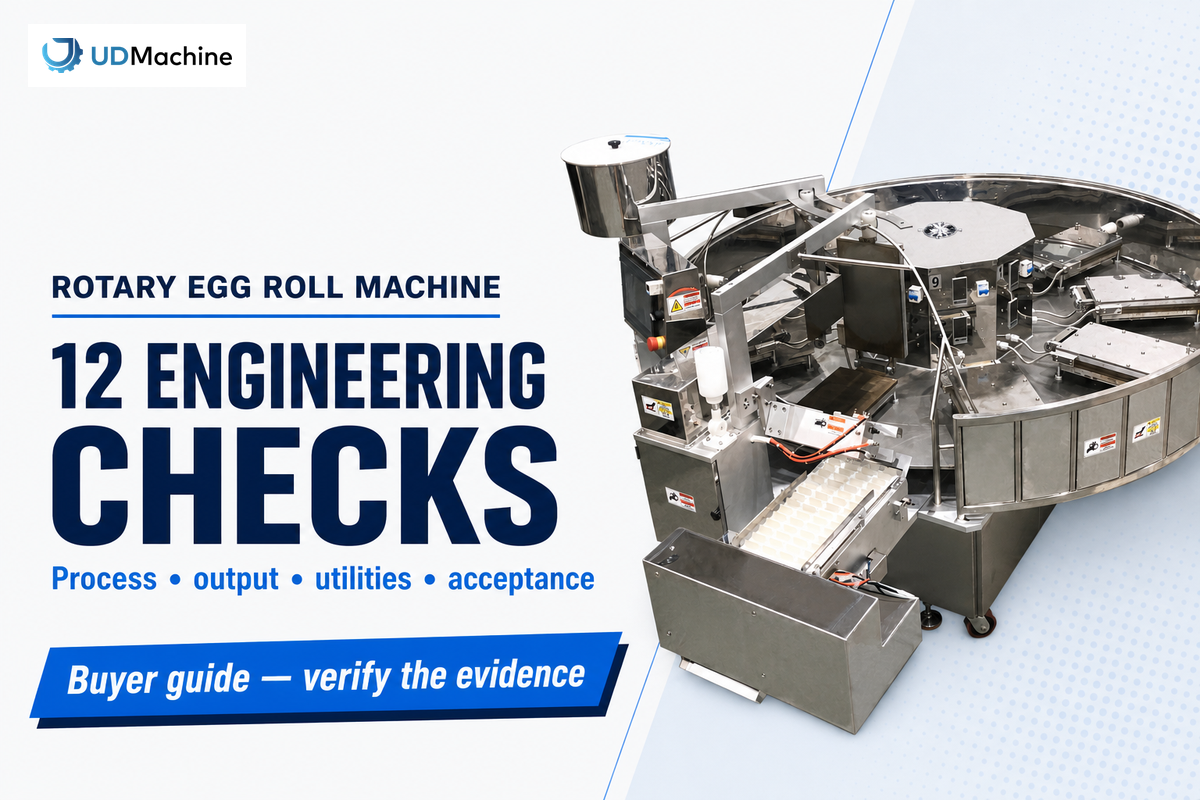
Rotary Egg Roll Machine: A 12-Point Engineering Checklist

UDTECH | Rotary Egg Roll Machine Blogs
A rotary egg roll machine is a wise investment only when your product, process, salable product output, utilities, safety controls and acceptance criteria are in alignment. This guide will aid your bakery, snack food manufacturer and/or food-equipment purchase team in gathering this evidence prior to sourcing equipment.
Revision Date Sept 2026 Informational guide on the planning of baked rolled wafer industrial production
At a glance
Freeze product identity first. Then connect depositing, baking, rolling, and removal to measurable hold points; convert a reference rate into saleable output; test the recipe; verify the site; and accept the line in layers. The commercial solution page remains the place for a configured quotation.
What Does “Rotary Egg Roll Machine” Mean?
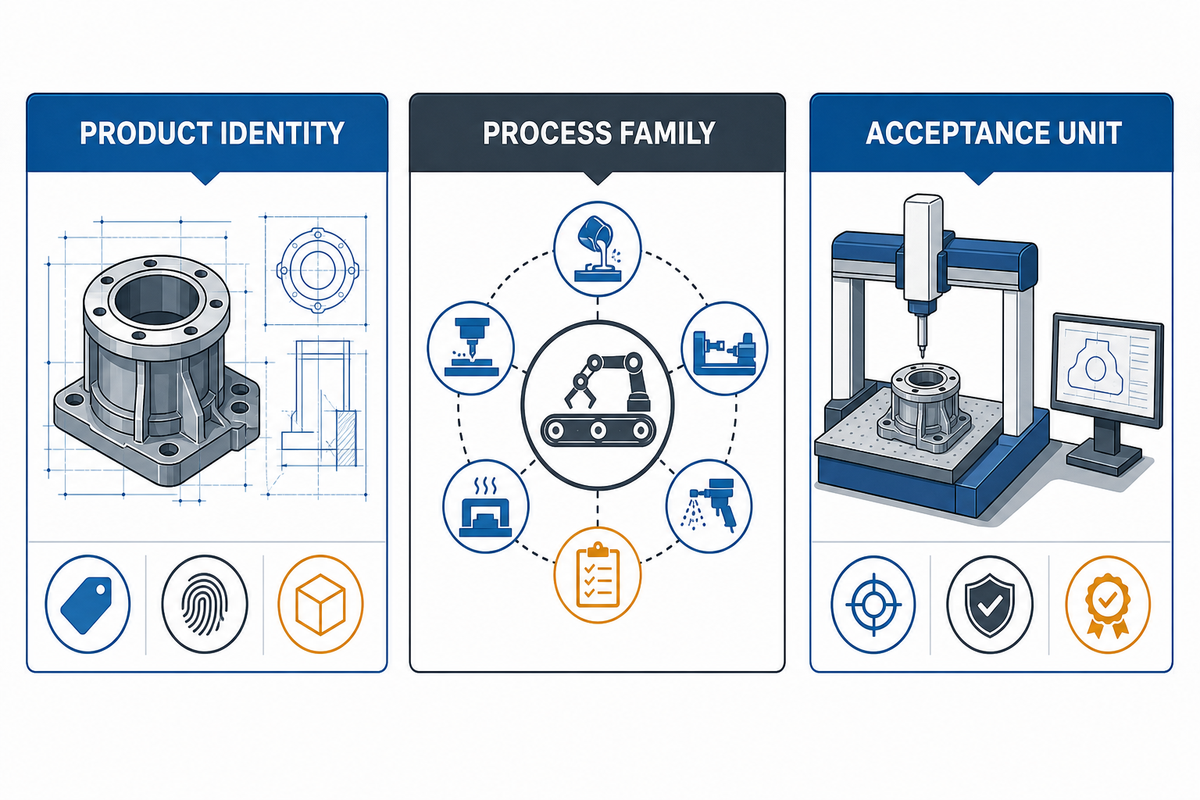
The wording can refer to three different machine types: a baked wafer-roll line, a filled and fried savory spring-roll line, or a small bench-mounted appliance. They share words, but their batter, forming mechanics, hygiene hazards, capacity units, and acceptance tests differ.
Process reference: Google Patents process reference.
For the present guide, a rotary egg roll machine denotes industrial machinery that places a wafer batter sheet on heated forms, bakes the sheet thin, rolls it while still malleable, and ejects the finished tube. A filled savory egg-roll former uses an unrelated wrapper and filling path, so its pieces per hour figure is not a valid benchmark. For a purchaser evaluating a rotary egg roll machine against another rolling machine, the forming sequence and saleable unit must be equivalent first.
| Family | Core operation | Evidence to request |
|---|---|---|
| Baked wafer roll | Deposit → bake → roll → remove | Recipe trial, roll geometry, bake colour, moisture, saleable yield |
| Filled savory roll | Sheet → cut → fill → fold → roll | Filling weight, seal, wrapper handling, fried-product yield |
| Home appliance | One or a few portions per cycle | Consumer duty and electrical safety, not factory acceptance |
This identity check is the first anti-cannibalization boundary for the site. The existing UDTECH solution page owns configured equipment and enquiries; this article owns the questions that help a buyer decide what evidence a configured solution must provide, without making a product-performance claim. For neutral brand context, see the UDTECH manufacturing site.
Search modifiers, including rotary egg roll machine price, best rotary egg roll machine, manual rotary egg roll machine, and fully automatic egg roll roller machine, are comparative search queries. These modifiers do not make products from unlike product families equivalent; use the same identity and vetting checks before treating a result as a benchmark.
How Does a Rotary Egg Roll Machine Work?
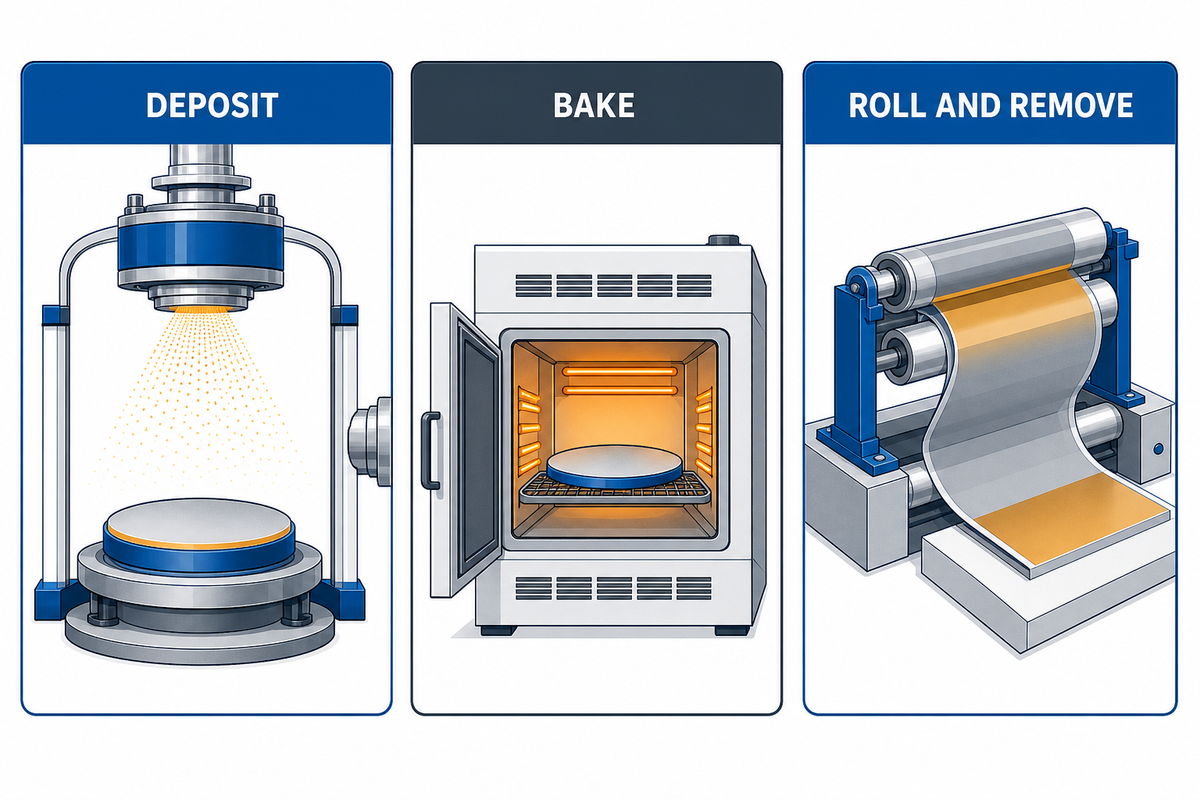
A rotary egg roll machine is better understood as a sequence of control points than as one “rolling” move. Every process map should list the input, controlled variable, release check, safe stop, and recovery state for each station. This sequence makes the later output and acceptance checks comparable.
Method reference: Google Patents process reference.
- Deposit: meter a repeatable batter mass onto the mould and confirm position.
- Bake: bring the wafer sheet to the agreed colour, moisture, and flexibility window.
- Start the Wrapper-to-Roll Stability Loop while the sheet can bend without tearing.
- Release the tube without crushing the seam, then separate it from the hot zone for cooling and inspection.
Historical patent documents describe process sequencing, staged conveying, baking, and rolling. They are vocabulary references, not present performance claims. Ask the vendor to show how the current sequence is controlled through a drawing, video, or factory acceptance test.
Wrapper-to-Roll Stability Loop
Batter mass and spread affect sheet thickness; thickness and moisture affect flexibility; flexibility and timing affect roll closure. If one variable moves, log the change before adjusting another.
A vendor demo should be more useful than a spinning rotary-table routine. Ask which sensor or operator inspection verifies each stage, what happens after a failure or miss, and how the machine returns to a known state after a stop.
Turn Pieces per Hour Into Saleable Output
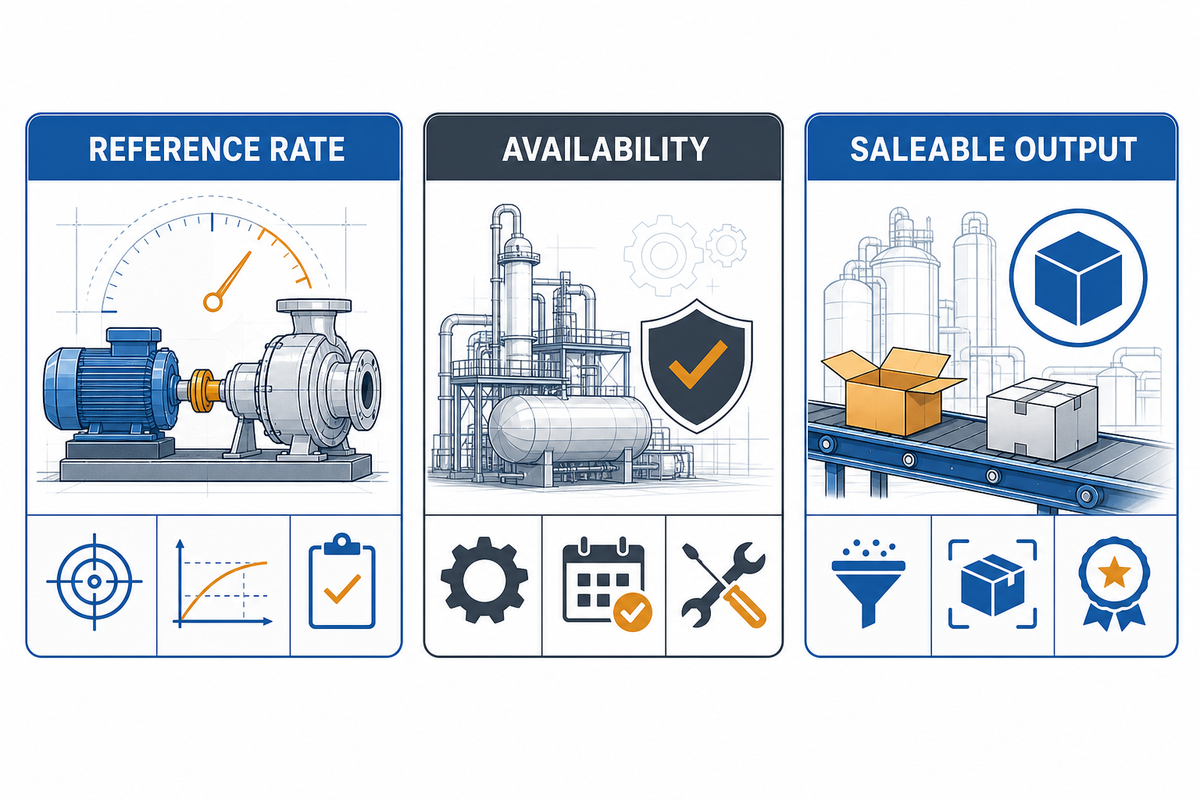
With that process sequence in place, a reference rate is not necessarily a production guarantee. Standardize the product, piece weight, recipe, warm-up, changeover time, stoppages, and first-pass yield before comparing two rotary egg roll machines. Use the output acceptance planner to keep the units and release evidence together.
Output reference: IFT process-line guidance.
| Factor | Project field | Why it matters |
|---|---|---|
| Gross reference rate | Supplier/source-bound rate | Name the product, recipe, and test conditions |
| Run availability | Buyer-defined availability factor | Warm-up, short stops, cleaning, and changeover reduce run time |
| First-pass yield | Buyer-defined yield factor | Cracks, poor seams, colour drift, and size rejects are not saleable |
| Bridge result | rate × availability × yield |
Use the project formula, never an implied UDTECH guarantee |
IFT line-speed guidance highlights a counterintuitive point: the real-life bottleneck is not always the slowest physical unit. The best operating speed may be limited by run stability or by the need to keep downstream equipment supplied.
Any supplier reference rate or mass rate is source-bound to a named model, product, recipe, and test condition. Record the units and release definition in the comparison worksheet; do not convert a source-bound figure into a universal output claim or compare it directly with a filled-product line.
Freeze Recipe and Wrapper Conditions Before a Trial
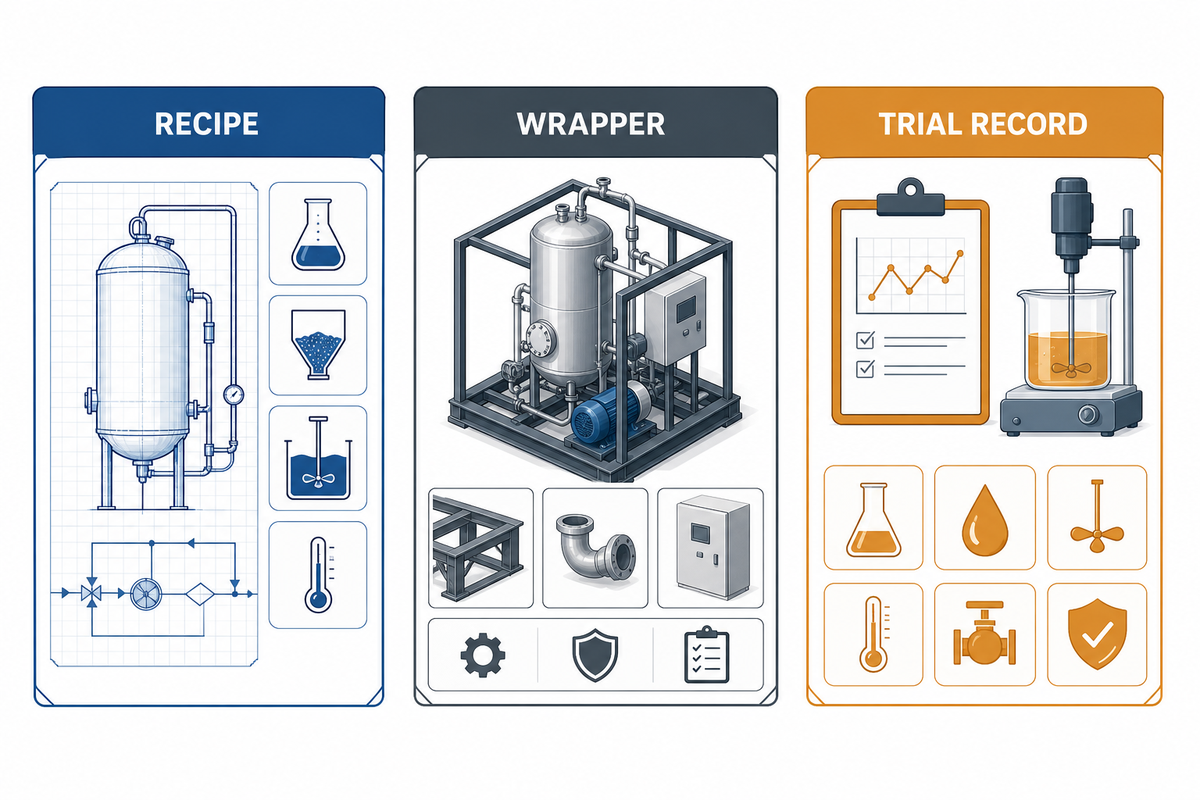
Once the output basis is clear, a consistent process cannot rescue a recipe that does not fit the business model. Before a trial, lock the dough formulation, mixing sequence, rest, deposit size, sheet thickness, roll diameter, filling in or out, intended colour, moisture window, and breakage limit.
Sanitation reference: eCFR 21 CFR Part 117 food CGMP requirements.
Recipe-to-Roll Trial Card
- Sample ID, recipe revision, operator, date, and ambient conditions
- Batter temperature, viscosity or practical flow note, and deposit mass
- Sheet thickness, colour target, moisture observation, and roll timing
- Tube diameter, seam closure, cracks, sticking, breakage, and rejects
- One change at a time, with before/after samples retained for comparison
Troubleshooting guides for wrapper machinery often mention dry dough, incorrect sheet thickness, and sticking. Use those symptoms to design a test protocol, not to assign a cause before analysing data from the current recipe and machine state.
When a wrapper cracks, check moisture and sheet flexibility. When it sticks, check the surface, release timing, and temperature. When colour drifts, check heat balance and dwell time. Mark what did and did not change.
Verify Utilities and Layout Before Capacity Approval
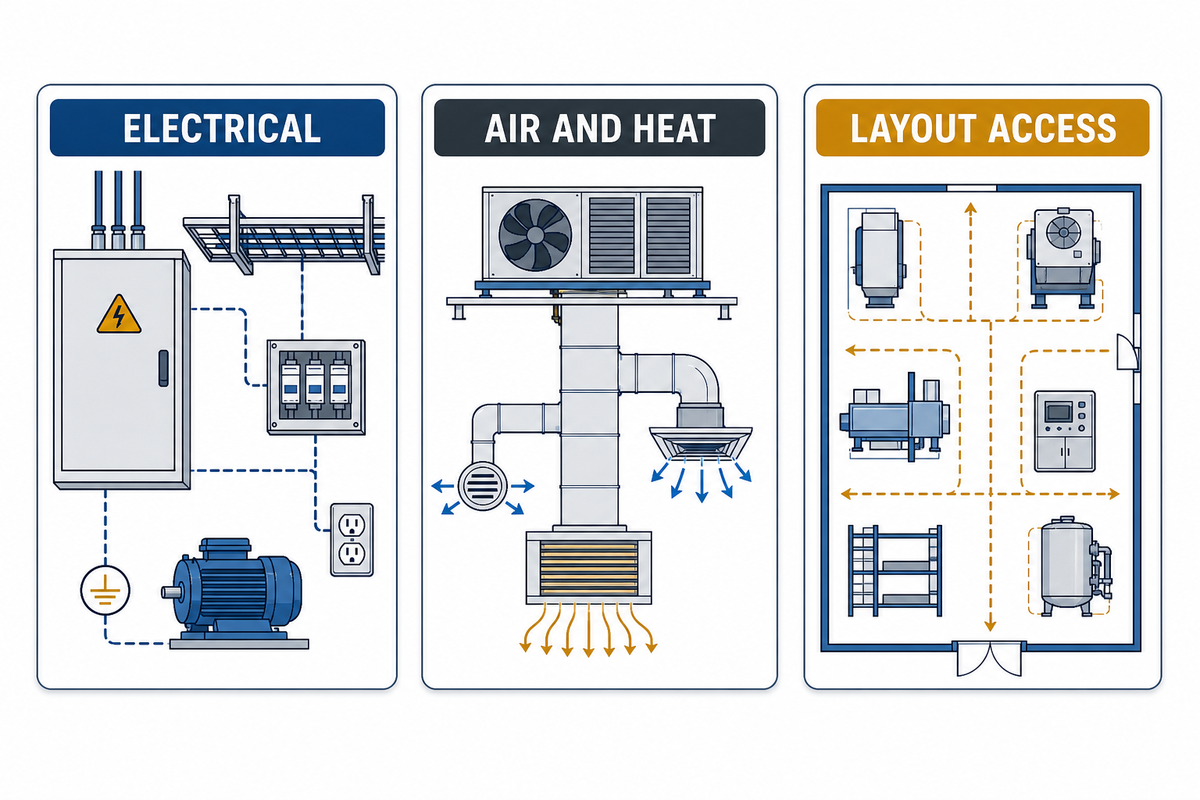
After the recipe trial, an equipment capacity statement usually excludes service and cleaning access, guard clearances, hot-zone separation, material pathways, and downstream handling. Approve capacity only after the site representative signs the project “Utilities Schedule and Scaled Layout”; that reviewer may be from engineering or operations rather than purchasing. A utility fit check can organize those connectors, clearances, and available services before approval.
Site-safety reference: OSHA machine-guarding guidance.
| Interface | Record before order | Capacity risk if missing |
|---|---|---|
| Electrical | Voltage, phase, isolation point, fault protection, and local code review | Unplanned derating, unsafe work, or delayed startup |
| Heat and ventilation | Heat load, exhaust path, room conditions, and service clearance | Temperature drift, operator exposure, and stoppage |
| Air and materials | Pressure/flow duty, batter route, trays, cooling, and packing handoff | Starvation, congestion, or product damage |
| Access and egress | Guard removal path, cleaning reach, lifting route, and emergency access | Longer changeover and unsafe maintenance |
The “Utilities” section of a product specification is a project reference, not a substitute for reviewing the utilities available at the site. Ask the supplier to place every connector and clearance on the layout drawings and identify the owner of each upstream and downstream interface.
Use a supplier- and model-agnostic utilities worksheet: record the required mould or station count, footprint, service clearances, mass, heating and drive loads, electrical phase and voltage, compressed-air duty, and material-flow interfaces as project fields. The supplier’s model specification sheet and the configured commercial solution page must populate the exact values and units.
Before order, have engineering reconcile every supplier value with project tolerances, local code, floor and handling limits, and available utilities. Treat units, interfaces, and tolerances as quote-specific evidence; do not infer a universal machine specification.
| Field family | Equivalent notation | Use in the review |
|---|---|---|
| Length | 1 m = 1000 mm | Compare footprint and service clearance in one unit system |
| Area | 1 m² = 10000 cm² | Keep floor and access calculations traceable |
| Mass | 1 kg = 2.205 lbs | Normalize sample and handling records |
| Power | 1 kW = 1000 W | Separate heating and drive loads without rounding |
| Large power | 1 MW = 1000 kW | Prevent scale errors in site utility schedules |
| Pressure | 1 MPa = 10 bar | Record compressed-air units beside the supplier value |
| Pressure conversion | 1 bar = 14.5038 psi | Make destination-site checks readable to local teams |
| Short duration | 1 min = 60 sec | Normalize stop and changeover logs |
| Hourly duration | 1 hr = 60 min | Keep run-horizon calculations consistent |
| Energy notation | 1 kWh = 1 kW supplied for 1 hr | Keep energy and connected-power fields separate |
| Frequency | 1 kHz = 1000 Hz | Normalize control and sensor documentation |
| Daily duration | 1 day = 24 hr | Compare stated run horizons on the same basis |
Build a FAT/SAT Acceptance Plan
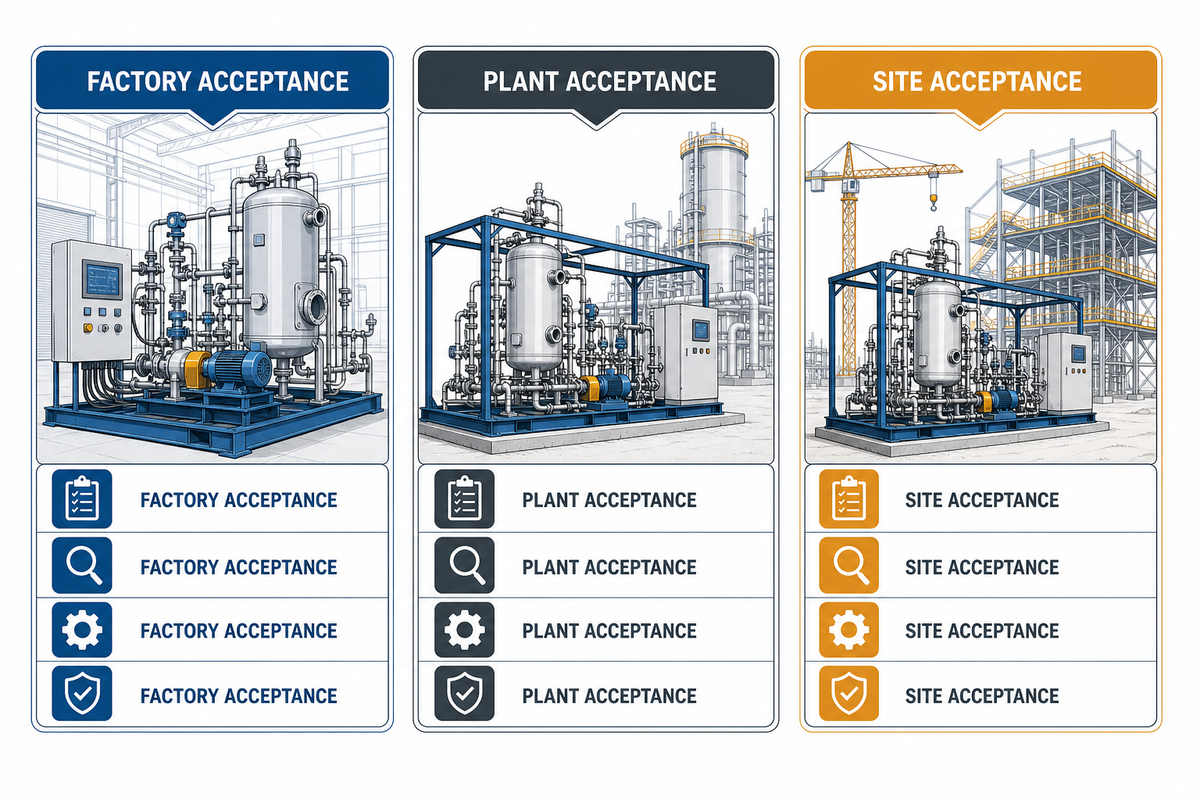
Factory, plant, and site acceptance are three different stages, but they ask a similar question: does the agreed setup produce the designated product safely, consistently, and at an evidence-based performance target over time?
Acceptance reference: EU machinery regulation.
Three-Layer Acceptance Ladder
- Safety and documentation: guards, emergency stops, manuals, drawings, risk records, spare list, and training scope.
- Process repeatability: recipe samples across the agreed speed band with logged thickness, colour, moisture, seam, and reject results.
- Sustained saleable output: a defined run length with warm-up, short stops, changeover, yield, and sign-off rules visible.
Acceptance criteria are often captured in contracts only after a production trial. Define them before the trial, because a quick test at “full speed” can mask wear or poor cleanability.
| Decision point | Project field | Evidence to retain |
|---|---|---|
| Sample duration | Buyer-defined window | Run log and first-off record |
| Changeover window | Buyer-defined changeover | Start/finish time and clean inspection |
| Operating horizon | Buyer-defined run horizon | Shift record and stop reasons |
| First-pass threshold | Buyer-defined threshold | Yield formula and retained samples |
| Product identity | Agreed wafer roll | Recipe revision and sample |
| Roll geometry | Target tube and seam | Measurement sheet |
| Safety stop | Verified response | Observed test and sign-off |
| Document pack | Current revision | Manuals, drawings, and training record |
| Heating load | Supplier value and unit | Verify against the current model specification sheet |
| Drive or transmission load | Supplier value and unit | Verify against the current model specification sheet |
| Electrical interface | Supplier phase and voltage | Confirm site supply and local code |
| Compressed-air duty | Supplier pressure/flow and unit | Confirm availability under load |
For European delivery, Regulation (EU) 2023/1230 sets requirements for machinery in scope, including technical documentation and conformity assessment. Its staged dates include Chapter VI applying from 13 July 2023, Member State notification of penalty rules by 14 October 2026, and the main application date of 14 January 2027; products placed on the market under the earlier directive before 14 January 2027 have transitional treatment. Treat these dates as compliance planning references, not proof that a particular machine is compliant.
Check Hygiene and Allergen Changeover
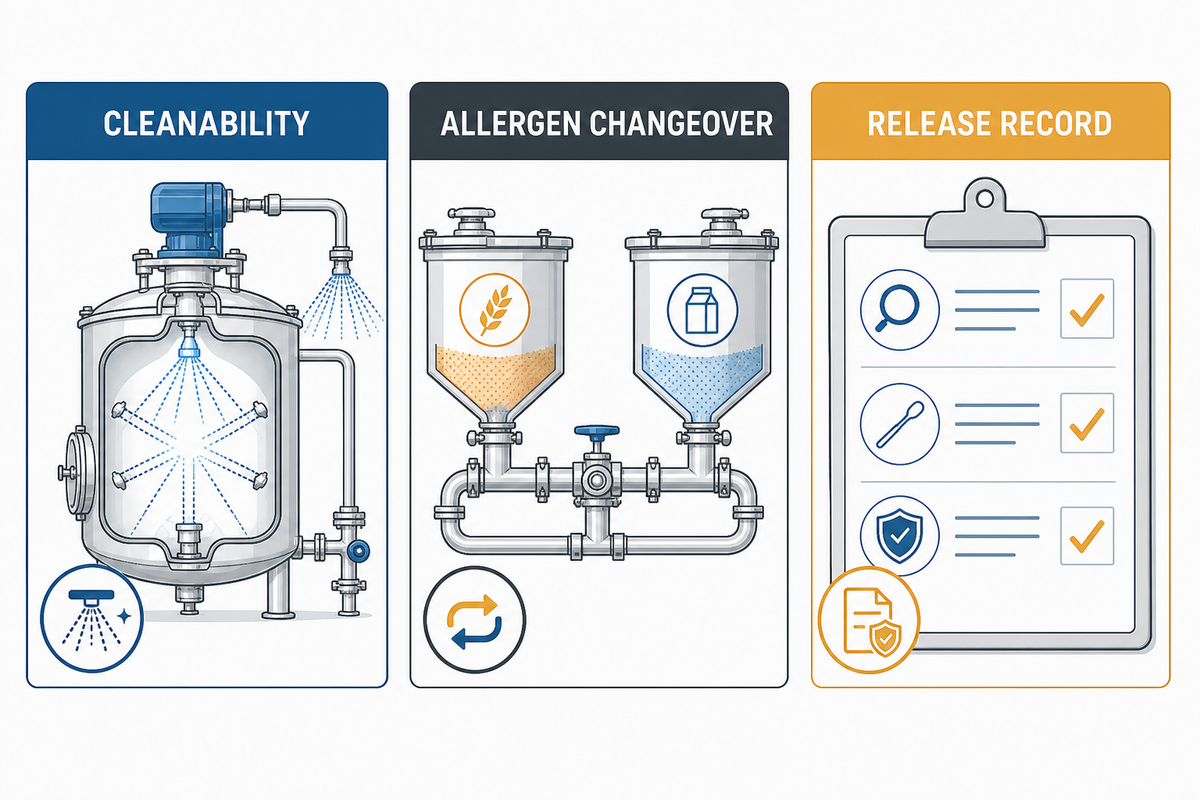
Hygiene is a throughput variable because every difficult-to-clean surface lengthens changeover and increases the chance of residue, flavour carryover, colour drift, or an unplanned hold. FDA CGMP guidance places equipment design, sanitary operations, and process controls inside the food-safety system.
Hygiene reference: 3-A sanitary-design guidance.
Clean-Start Allergen Reset
Stop → isolate → clean → inspect → release. Name the tools, disassembly points, inspection light, residue decision, sample retention, and restart approval. The food business owns the sanitation validation; the supplier should make access and documentation possible.
3-A Sanitary Standards Institute describes sanitary design, fabrication, installation, and cleanability for food equipment. Use its principles as a review framework: accessible product zones, compatible materials, drainage, and no hidden residue traps.
“Easy to clean” is not acceptable if it means “use a rag then call your uncle.” Specify the method, time study, access photos, items that need to be removed, and the basis for which the recipe line may be released.
Review Guarding, Hot Surfaces, and Hazardous Energy
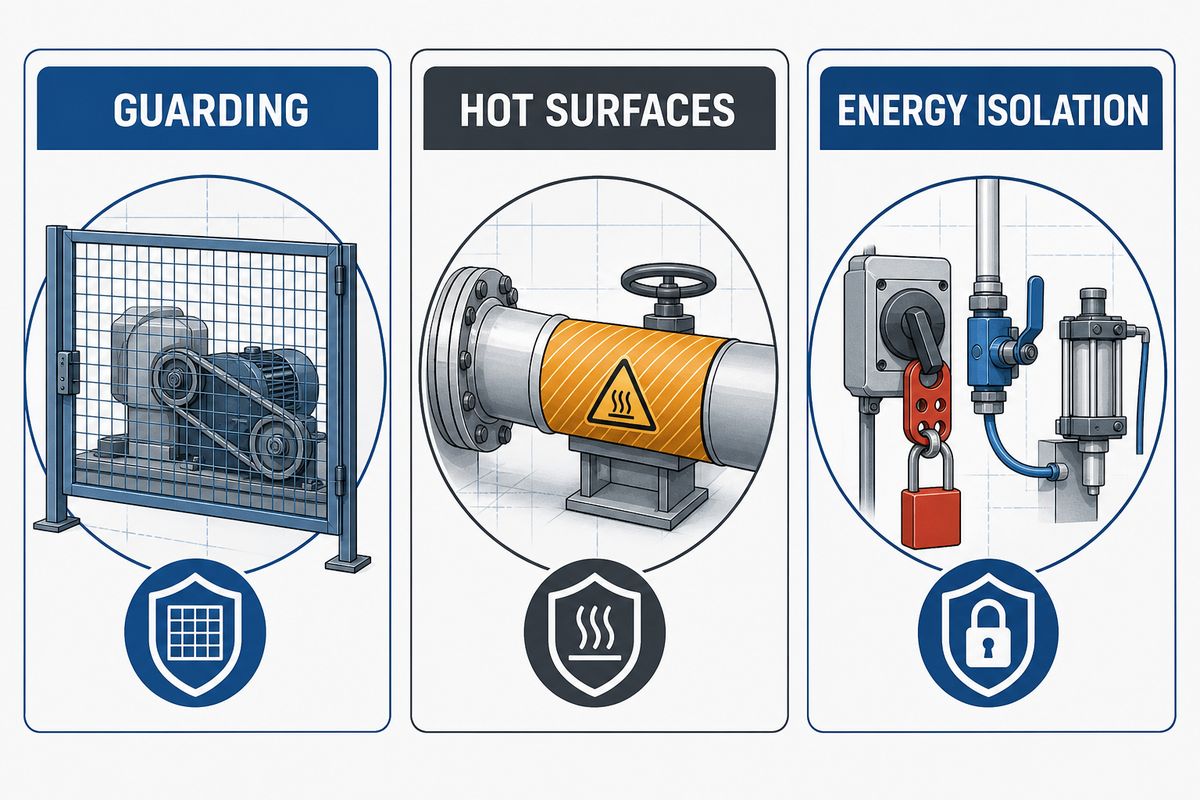
After hygiene review, rotary moulds, drives, pinch points, heated surfaces, and stored mechanical, electrical, or pneumatic energy each need a task-based review. Software interlocks can help, but they do not replace physical guards, emergency-stop verification, or a lockout/tagout procedure.
| Task | Hazard | Control | Evidence |
|---|---|---|---|
| Clear a jam | Unexpected movement or stored heat | Guarded access and energy isolation procedure | Observed stop, isolate, verify-zero-energy test |
| Clean hot zone | Burn and chemical exposure | Cool-down rule, protective equipment, approved method | Training record and signed procedure |
| Inspect drive | Entanglement and restart | Fixed guard, interlock, lockout/tagout | Functional test and maintenance log |
OSHA machine-guarding guidance addresses ingoing nip points, rotating parts, and energy-control procedures. Apply the requirements of the jurisdiction where the machine will operate, and have a qualified person review the final safeguards; this guide is not a certification.
Safeguards protect workers from ingoing nip points and rotating parts; servicing requires an energy-control program. OSHA machine-guarding guidance, used here as a buyer review reference
Troubleshoot by Symptom, Variable, and Confirmation Test
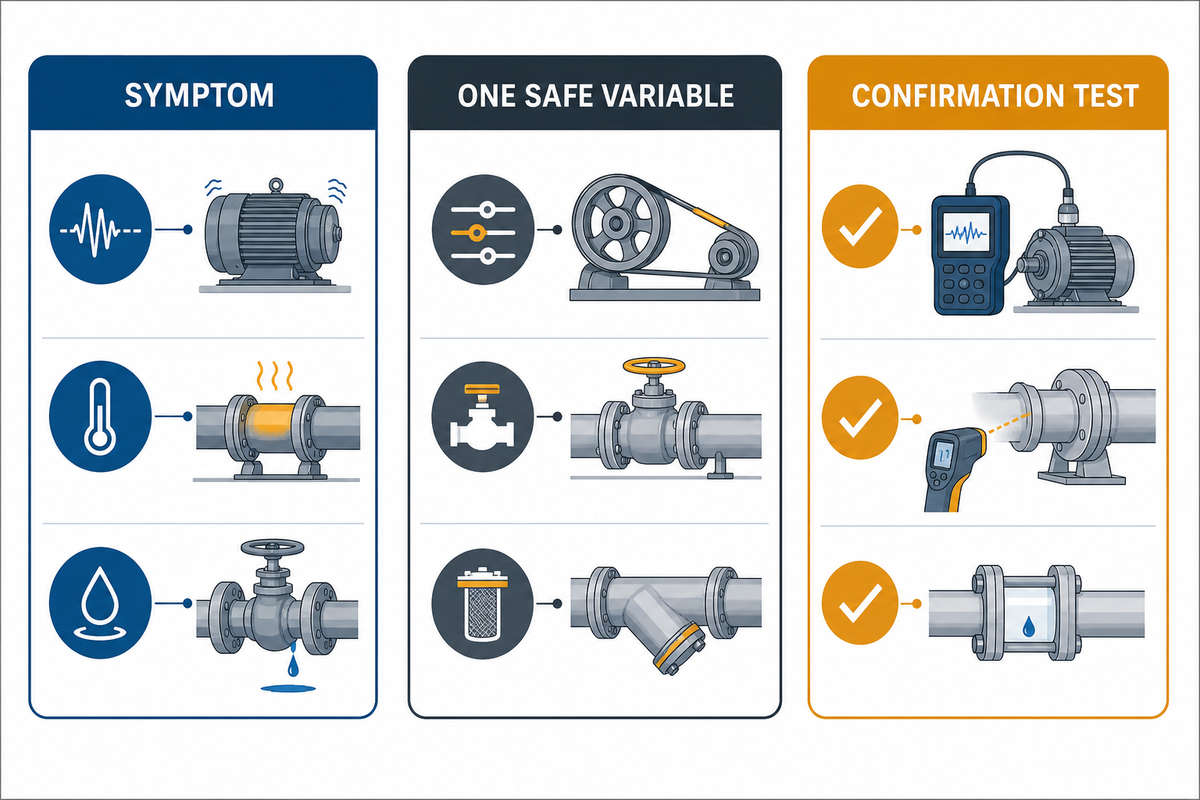
With safeguards documented, when rolls crack, stick, lose colour consistency, or vary in size, preserve the evidence. Record the symptom, change one safe variable, run a confirmation sample, and escalate only after the result is logged.
Control reference: eCFR 21 CFR Part 117 food CGMP requirements.
| Symptom | First variables | Confirmation test |
|---|---|---|
| Cracking | Moisture, thickness, sheet flexibility, roll timing | Hold heat and timing; change one moisture or mass variable |
| Sticking | Surface condition, release timing, temperature, residue | Inspect and clean; repeat with the same recipe |
| Colour drift | Heat balance, dwell, batter spread, sensor reading | Compare samples at one speed and one load |
| Size variation | Deposit mass, mould position, roll pressure, removal timing | Measure a retained sample set and verify alignment |
Forum reports can reveal operator language such as “sticking” or “tearing”, but they cannot diagnose your line. If a test exposes anyone to heat, movement, pressure, or electrical energy, stop and use the approved procedure with qualified support.
Protect Repeatability With Maintenance and Changeover Records
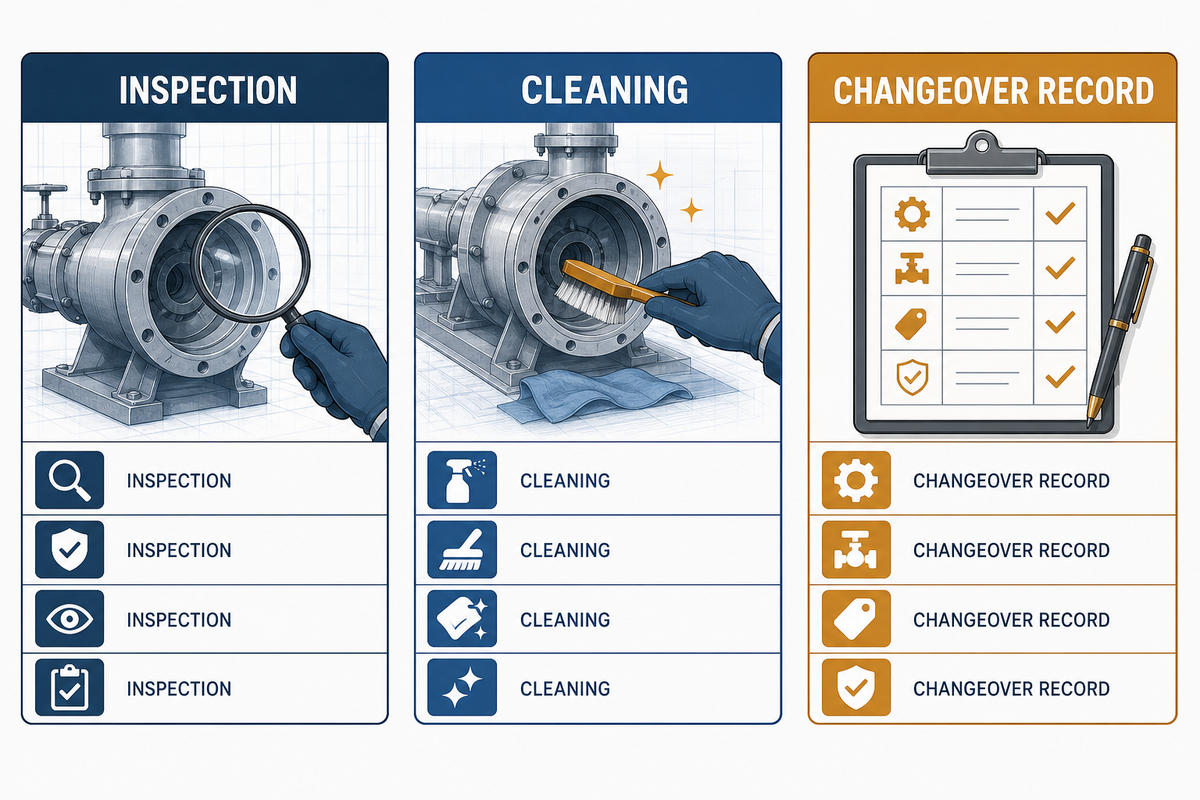
After a symptom is logged, “low maintenance” is not an acceptance criterion by itself. Define the inspection, cleaning, lubrication, sensor, drive, mould, calibration, and spare-parts work that keeps the recipe repeatable.
Maintenance reference: OSHA machine-guarding guidance.
| Record | Evidence | Escalate when |
|---|---|---|
| Daily start and stop | Operator, recipe, warm-up, alarms, first-off sample | The first-off sample misses the release window |
| Changeover | Start/finish time, clean inspection, settings, waste | Residue, unexplained waste, or repeated re-tuning appears |
| Planned maintenance | Manual reference, parts, condition, person, date | Wear, heat, noise, or alignment moves outside the manual |
Keep the actual supplier manual as the authority for service intervals. Do not apply one 250-, 500-, or 1,000-hour schedule to every machine design and duty cycle.
Compare Suppliers With Evidence, Not a Spec-Sheet Race
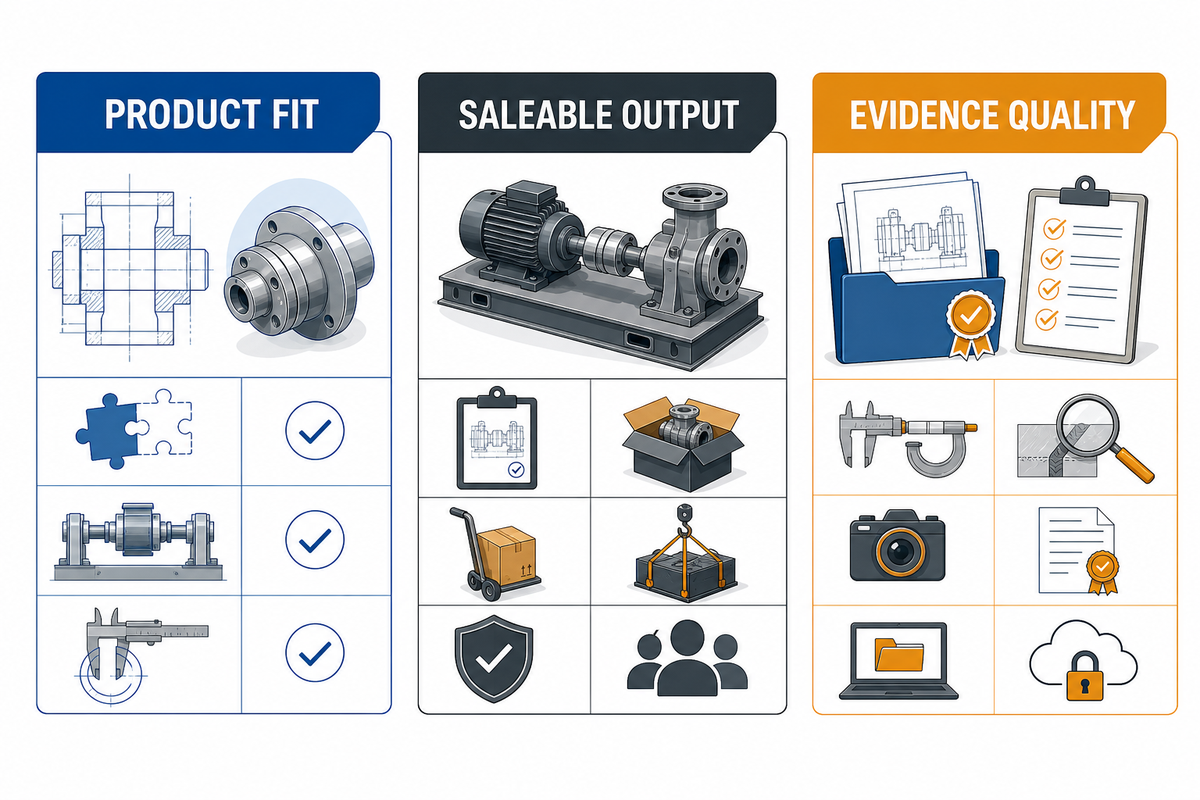
Once maintenance evidence is defined, a supplier checklist should reward proof of product fit and operating ability, not the sheer number of features. Rate every proposal against the same product, reference condition, site limits, and acceptance checklist.
Comparison reference: IFT process-line guidance.
| Category | Question to close | Evidence |
|---|---|---|
| Product identity | Is this a baked wafer-roll line? | Process map and sample |
| Recipe fit | Can the agreed batter roll cleanly? | Trial card and retained samples |
| Output basis | What counts as saleable? | Yield definition and run log |
| Utility boundary | Who supplies each interface? | Schedule and owner matrix |
| Layout access | Can operators clean and service it? | Scaled drawing and access review |
| Hygiene changeover | How is residue released? | Cleaning method and sign-off |
| Safety controls | How are hazards isolated? | Guard and energy-control test |
| Acceptance support | What is signed at handover? | FAT/SAT protocol and training |
| Criterion | Weight | Evidence that earns a high score | Not suitable when |
|---|---|---|---|
| Product fit | 20% | Recipe and roll geometry match | The line is actually a filled savory system |
| Saleable output | 20% | Conditions, yield, stops, and run length are stated | Only a headline pieces/hour appears |
| Utilities and layout | 15% | Scaled drawing, connections, access, owner matrix | Clearance is left to the buyer after shipment |
| Safety and hygiene | 15% | Guard test, isolation method, cleanability evidence | “Automatic” is used as the safety argument |
| Acceptance support | 15% | FAT/SAT protocol, training, and signed handover | No measurable release criteria |
| Serviceability and evidence quality | 15% | Manuals, spares, response path, traceable claims | The quote shifts integration risk without naming it |
After the educational scorecard, buyers who have frozen the product and site can review the rotary egg roll machine solution for configured scope. A RFQ readiness checklist helps carry the same evidence into supplier questions. That controlled handoff keeps the solution page commercial while this guide remains an evidence checklist.
Once the product and site are defined, research the supplier behind the configured scope and record the evidence in the project plan.
Evidence-ready request brief
- Product family, recipe revision, dimensions, texture, and target roll
- Gross rate, saleable-rate formula, yield definition, and shift pattern
- Utility schedule, scaled layout, access, heat, air, and material flow
- Trial card, FAT/SAT limits, safety tests, sanitation release, and training
- Maintenance, spare parts, response path, and unresolved assumptions
What 2025–2026 Automation Trends Mean for Buyers
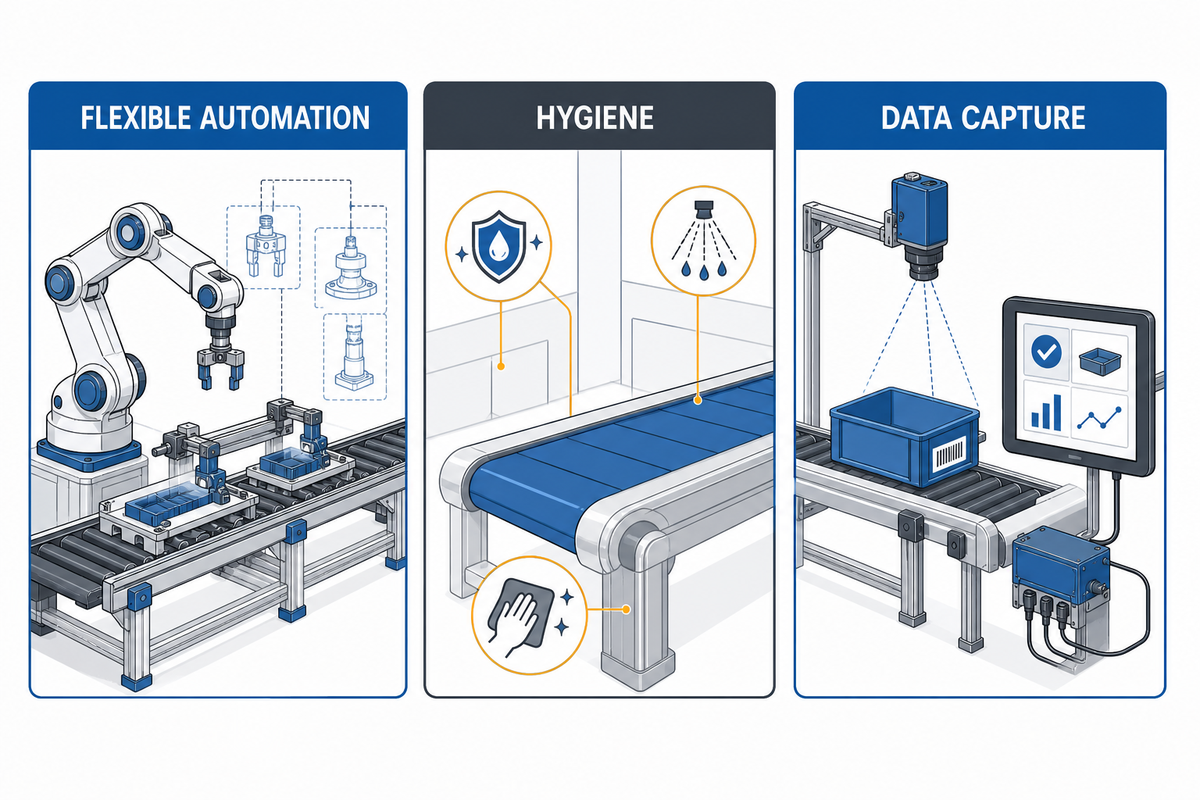
Against that evidence checklist, current food-manufacturing coverage points to a practical shift: flexible automation, hygiene, data capture, and workforce usability matter alongside speed. A single-product line may fall short when product mix or changeover frequency changes. Use these signals when setting trial questions and ownership.
Industry reference: Food Processing manufacturing outlook.
| Trend signal | Buyer implication |
|---|---|
| More product variability | Ask for recipe range, changeover evidence, and first-off approval |
| Hygiene as uptime | Measure clean, inspect, and release time, not just run time |
| More connected controls | Require readable alarms, ownership of data, and a manual fallback |
| Workforce pressure | Score training, access, and repeatable procedures before novelty |
Recent Food Processing coverage describes cost pressure, labor constraints, hygiene, and flexibility, not a guaranteed market-growth rate for one machine type. Use these trends to improve your decision questions, not to justify an unsupported demand forecast.
The strongest equipment choice keeps a documented recipe stable, gives operators a safe recovery path, and makes cleaning and changeover visible. Those measurable qualities are more durable than a novelty feature that cannot be tested at the site. Use this evidence lens when reviewing flexibility, data ownership, and operator training.
Frequently Asked Questions
How much does an egg roll making machine cost?
Industrial pricing is configuration-specific. Product family, recipe trial scope, moulds, heating, controls, utilities, guarding, documentation, installation, training, and acceptance support can all change the quotation. Build the evidence brief first, then request a project quote; this guide intentionally does not publish a generic price range. Ask whether the offer includes commissioning, spare parts, changeover tooling, freight, and the acceptance run. Those boundaries can move the delivered project total even when two headline machine prices look similar, so record exclusions beside every comparison.
What is the name for the machine that rolls egg rolls?
The name depends on the product. A baked wafer-roll system may be called a rotary egg roll machine or wafer egg roll machine, while a filled savory line is usually described as an egg-roll or spring-roll forming machine. Confirm the deposit, bake, filling, fold, and roll sequence before comparing capacity.
What brand of egg rolls do Chinese restaurants use?
There is no reliable universal brand answer. Restaurants may make products in-house, buy wrappers or frozen rolls, or use a regional supplier. Menus, regions, labour models, and purchasing contracts vary, so a restaurant name is not a sound equipment benchmark. For equipment planning, brand popularity matters less than the target wrapper, filling or wafer recipe, output definition, food-safety process, and documented acceptance test. Ask for samples and process records that match your own product.
How should a buyer define saleable output for a rotary egg roll machine?
Define the product identity, recipe revision, piece or mass basis, first-pass yield, reject rules, warm-up, stops, changeover, and agreed run horizon. A supplier’s headline pieces-per-hour figure is useful only when its product and test conditions are documented and comparable.
What evidence belongs in a FAT and SAT acceptance plan?
Keep a layered protocol covering safety and documents, recipe repeatability, sustained saleable output, cleaning release, training, and sign-off ownership. Record samples, measurements, stop reasons, unresolved assumptions, and the conditions under which the supplier’s result is valid.
What are common egg roll mistakes?
Common symptoms include cracking, sticking, colour drift, and uneven size. Hold the recipe and machine state, change one safe variable, retain before-and-after samples, and stop for qualified support when heat, motion, or energy isolation is involved.
References and Sources
- OSHA Machine Guarding – General Requirements
- eCFR 21 CFR Part 117 Current Good Manufacturing Practices
- FDA Current Good Manufacturing Practices for Food
- 3-A Sanitary Standards and Accepted Practices
- Regulation (EU) 2023/1230 on Machinery
- IFT: Optimizing a Process Line
- Google Patents: US3450067A Automatic Egg Roll Machine
- Food Processing: 2025 Manufacturing Outlook Survey
Turn the Guide Into a Project Brief
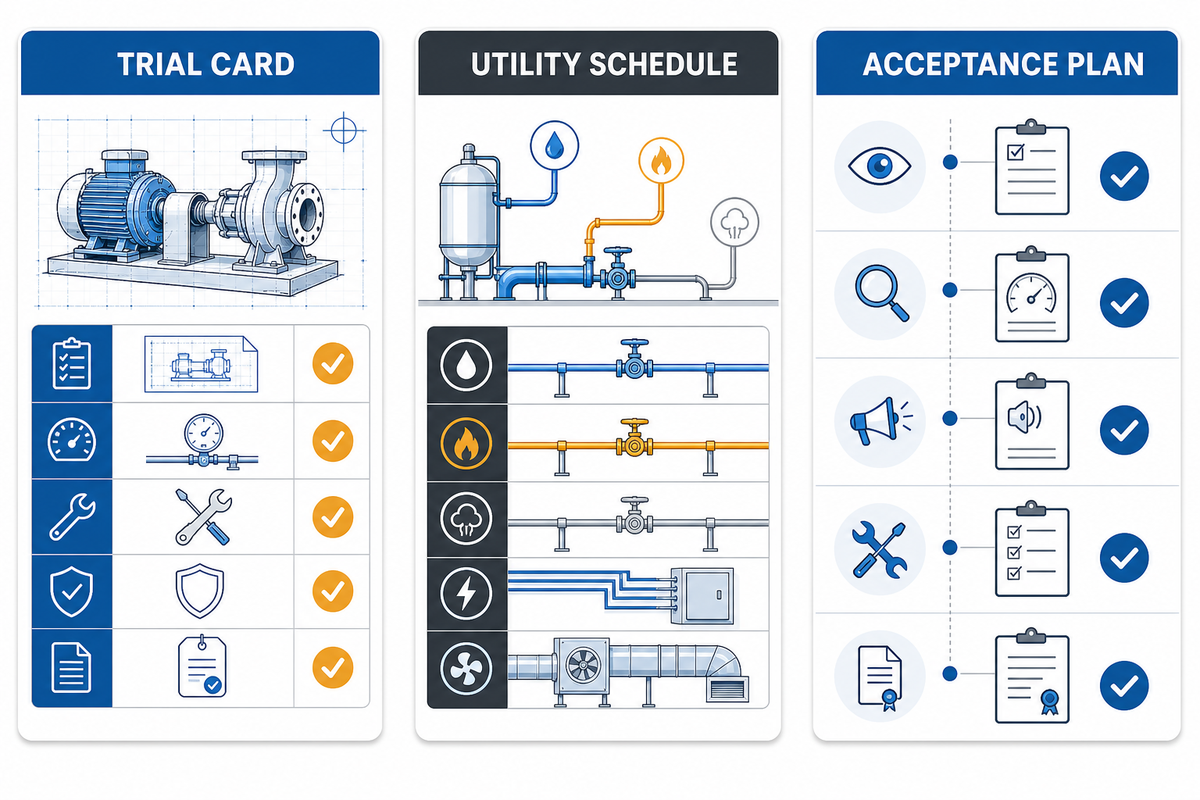
UDTECH can review a documented product trial, utility schedule, and acceptance plan against the configured machine scope. Include your open assumptions so the next conversation starts with evidence.
Compliance reference: EU machinery regulation.