Get in touch with UDTECH Company

ISO Certified Quality
Build Your Model & Utility Sheet
Automatic Egg Roll Machine
Automatic Egg Roll Machine for Crispy Wafer Rolls
5 brochure-documented UD configurations approximately 300 pieces/h compact to 330 pieces/min triple-line electric, natural-gas and LPG heating scopes hollow and filled wafer-roll projects
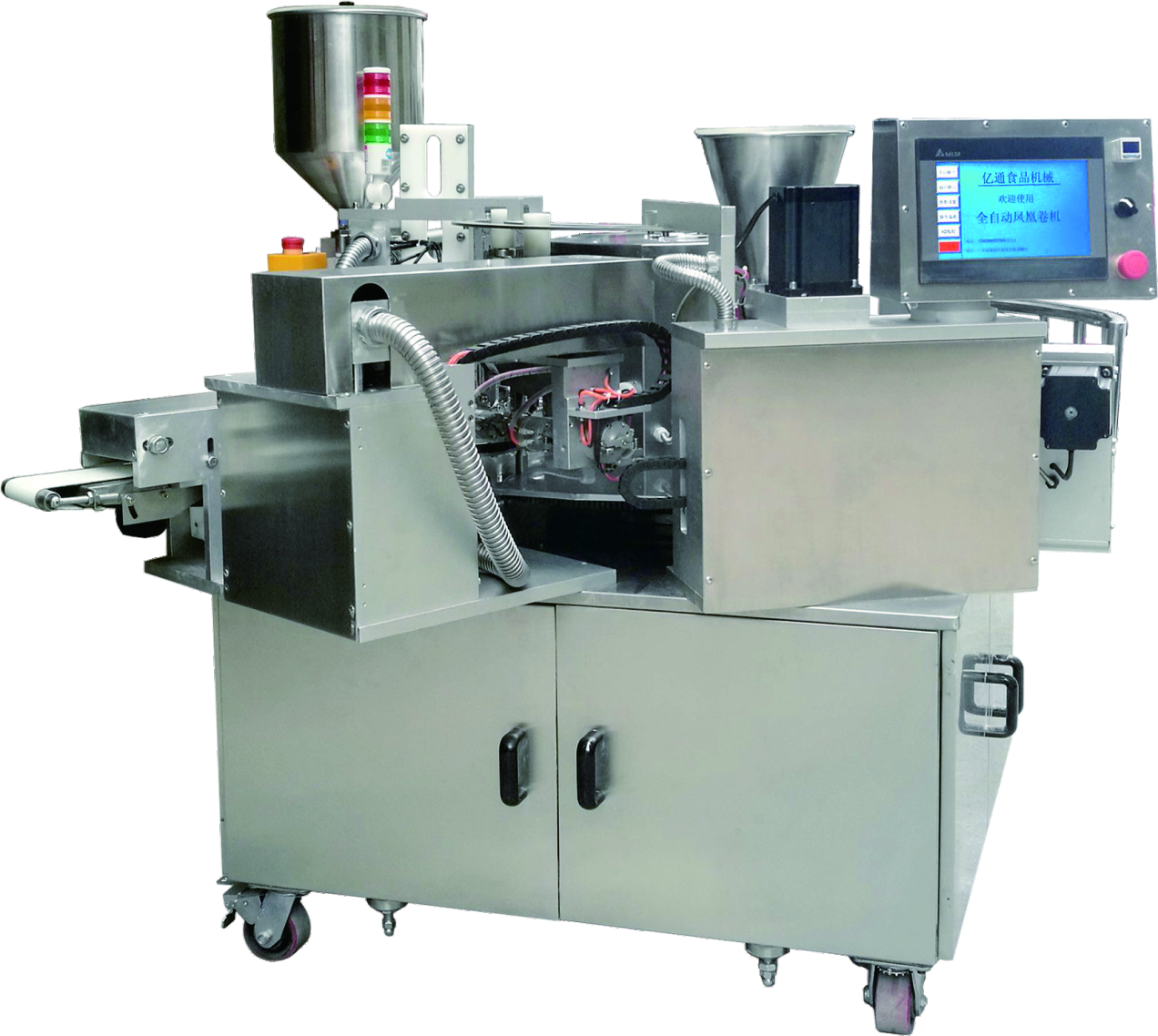
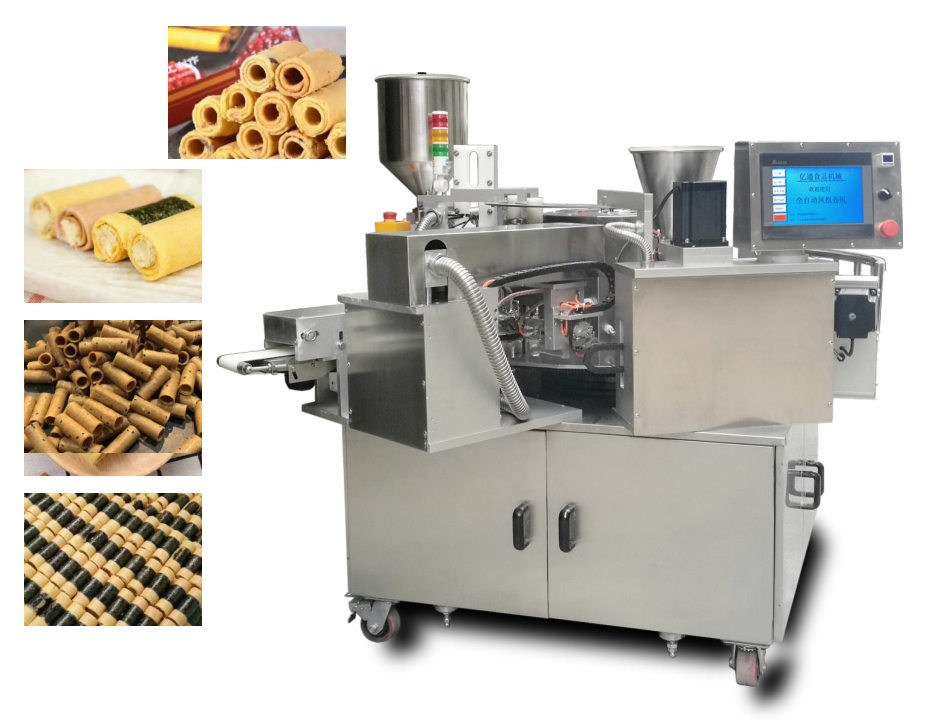
An automatic egg roll machine from UD bakes thin batter sheets and rolls them when warm into crisp wafer sticks. UD covers compact electric units, dual-line and three-line gas-heated systems; start with the product, recipe, target output, utilities and packing boundary, then match those inputs to a documented model and an acceptance basis.
Documented model scope
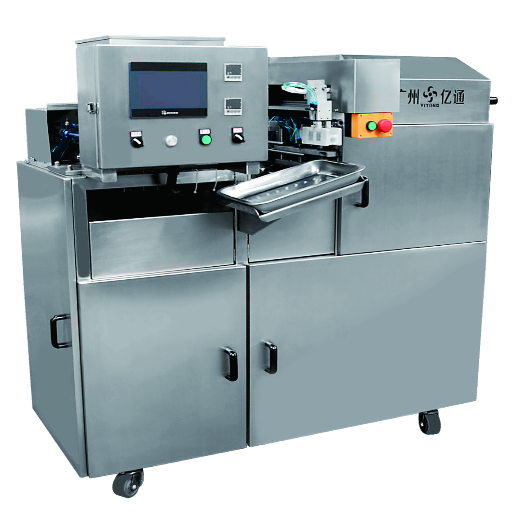
YT-06, YT-12, YT-02DJ, YT05-2 and YT05-3Compact output range
Approximately 300-600 pieces/h, model and product dependentMulti-line output range
Approximately 220 pieces/min dual-line or 330 pieces/min three-lineProduct route
Crispy hollow or center-filled egg rolls and wafer sticksSelection basis
Recipe, piece size, output, utilities, footprint and packing interfaceQuotation result
One confirmed model, utility list, line boundary and acceptance planUD Automated System
5 Documented configurations
300 – 600 Pieces/h (compact)
Up to 330 Pieces/min (triple-line)
Gas & Elec Heating scopes
Product Format and Recipe Inputs
A machine manufacturer can quote the correct hardware only after the product is defined in measurable terms. Wafer integrity changes with batter behavior, sheet thickness, baking profile, roll geometry and the time available to form the sheet while it remains flexible; a 2025 thermal study on industrial wafer baking links baking-plate temperature distribution with wafer thickness and color distribution.
Batter and deposit
Send
Recipe or sample, viscosity window, deposit weight and solids information
Why it matters
Flow and moisture affect coating, release, baking time and sheet strength
Acceptance
Approved recipe, deposit setting and sample-run conditions
Roll geometry
Send
Length, outside diameter, wall thickness, stripe pattern and end condition
Why it matters
Geometry changes the forming tool, cutting position, cooling path and packing count
Acceptance
Dimension method, sample size and allowed breakage
Hollow or filled wafer
Send
Filling type, temperature, dosage, core position and allergen profile
Why it matters
Filling changes nozzle choice, timing, cleaning and downstream cooling
Acceptance
Fill weight, centering, leakage and cleanout checks
Finished-product quality
Send
Color reference, crispness target, moisture target and packaging format
Why it matters
Thermal distribution affects sheet thickness and color, while cooling affects crispness at pack-off
Acceptance
Approved sample and repeatable test method
Line Scope From Batter Preparation To Packing
“Automatic” describes machine operation, not an unlimited line boundary. Define every upstream and downstream handoff in the quotation so the production line has a named owner at mixing, baking, rolling, cooling and packing; published wafer-forming patents illustrate why baking, cutting and forming are linked process stages rather than interchangeable module names.
Process Stage
Base Machine Function
Project Decision
Acceptance Evidence
Batter preparation
Feeds prepared batter to the deposit system
Manual premix, supplied mixer or existing plant system
Batch size, temperature, viscosity and transfer method
Metering and coating
Deposits a controlled amount on the baking surface
Recipe range and product changeover parts
Deposit weight and sheet coverage
Baking
Applies controlled electric or gas heat
Product color, sheet release and site heat source
Approved sample at stated recipe and settings
Rolling and cutting
Forms the warm sheet and cuts the target length
Hollow or filled, diameter, length and pattern
Dimension and breakage sample plan
Cooling and transfer
Discharges product from the forming station
Cooling conveyor length, accumulation and orientation
Pack-off temperature and transfer loss
Packing interface
Hands product to the downstream system
Manual packing, flow wrapper, tray loader or plant conveyor
Interface height, speed, buffer and reject route
Boundary Rule
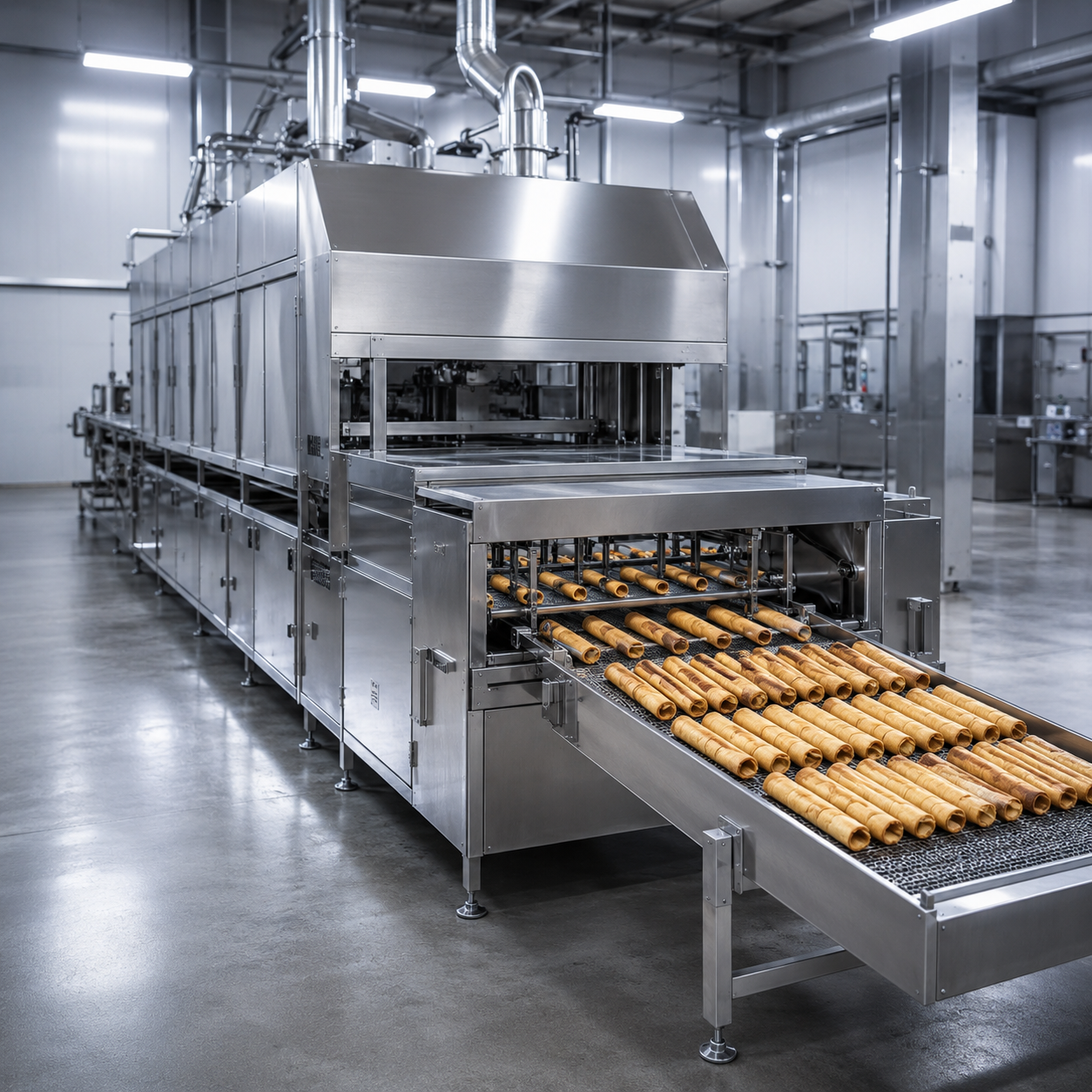
If cooling, conveying, filling or packing is required, list it as included equipment or as a defined site interface. A machine-only quotation and a complete egg roll production line are different deliverables even when both use the same baking and rolling core.
Confirmed Model and Utility Comparison
Five documented UD models are compared below. Published output is approximate and product dependent, so final acceptance must state recipe, piece dimensions, filled or hollow format, test duration and the point at which good pieces are counted; this product basis matters because baking-plate thermal distribution can change wafer thickness and color.
| Scope or model | Published output | Power and heat | Footprint / size | Best comparison use |
|---|---|---|---|---|
| YT-06 compact | Approximately 300 pieces/h | 2 × 2.5 kW heat; 0.8 kW transmission; 380 V ±10%; air 0.2 m³/min at ≥0.6 MPa | 1400 × 900 × 1480 mm | Bakery, retail display or lower-volume production |
| YT-12 compact production | Approximately 600 pieces/h | 4 × 2.5 kW heat; 1.1 kW transmission; 380 V ±10%; air 0.2 m³/min at ≥0.6 MPa | 2200 × 900 × 1480 mm | Higher-output compact production with four heating units |
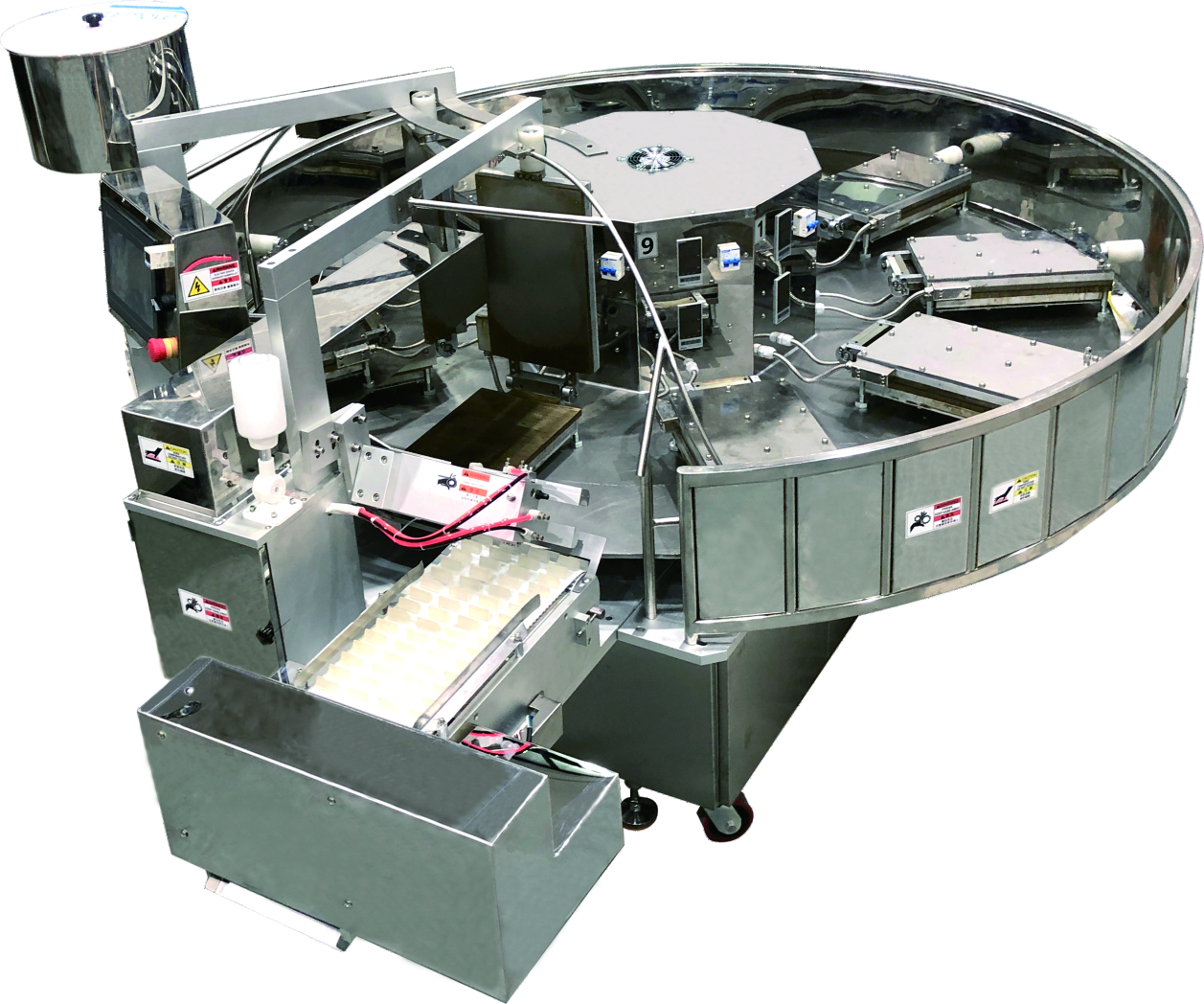
| YT-02DJ rotary | Approximately 500-600 sticks/h | 9 × 2.5 kW heat; 1.5 kW transmission; three-phase 380 V; air 0.4-0.7 MPa | 2700 × 2100 × 1500 mm; 900 kg | Shape, pattern and length flexibility through 9 rotating baking pans |
| Single-line project route | 1 production train; rate confirmed from sample and scope | Voltage, heat source, air and exhaust confirmed in the model-and-utility sheet | Machine plus buffers, cooling and packing boundary | Factory automation without parallel baking lines |
| YT05-2 dual-line | Approximately 220 pieces/min; 600 kg/8h | 9.7 kW; LPG about 6 kg/h or natural gas about 8 m³/h | 15.5 m² (4.2 × 3.7 m); 4300 kg | Dual-line baking, core injection and roll forming |
| YT05-3 three-line | Approximately 330 pieces/min; 900 kg/8h | 12 kW; LPG about 8 kg/h or natural gas about 10 m³/h | 15.5 m² (4.2 × 3.7 m); 4500 kg | Three-line output in the same published machine footprint |
Utility, Safety and Hygiene Acceptance
The Utility, Safety and Hygiene Acceptance Matrix turns site obligations into quotation inputs before the model is frozen. It uses machine-safety and food-facility references as design and acceptance checkpoints, not as certification badges.
A guarding or cleanability gap becomes a commissioning risk because the final layout joins moving rolls, heat, food-contact surfaces and operator access. UD builds the review around written acceptance criteria, including OSHA 29 CFR 1910.212, OSHA 29 CFR 1910.147 and ISO 14159:2002 where applicable.
| Acceptance area | Risk to control | Evidence to request | Owner to assign |
|---|---|---|---|
| Electrical and heat | Voltage, frequency, phase, gas pressure, shutoff and heat rejection mismatch | Load list, connection diagram, fuel specification and shutoff sequence | Supplier + plant engineering |
| Compressed air | Insufficient flow or pressure at peak demand | Required pressure, free-air flow, quality and connection size | Supplier + utilities |
| Guarding | Ingoing nip points, rotating parts, hot surfaces and forming rolls | Guard layout, interlock list, residual-risk review and operating instructions | Supplier + plant safety |
| Hazardous energy | Unexpected startup or stored electrical, pneumatic, mechanical and thermal energy during cleaning or unjamming | Isolation-point drawing and energy-control procedure inputs | Plant employer with supplier data |
| Food contact | Inaccessible soil, contamination or unsuitable contact materials | Food-contact material list, surface access and cleaning instructions | Supplier + quality |
| Allergen changeover | Residue in batter, filling and transfer paths | Disassembly map, cleaning method, inspection points and validation plan | Plant quality |
| Powder handling | Flour or sugar dust accumulation and ignition risk where applicable | Site dust-hazard assessment inputs, extraction points and housekeeping access | Plant engineering/safety |
| Line acceptance | Testing an easy product or counting output before downstream rejects | Approved recipe, duration, staffing, reject rules and count point | Buyer + supplier |
Reference Points for a United States Installation
Machine hazards
OSHA 29 CFR 1910.212 identifies point-of-operation, nip-point and rotating-part hazards, while 29 CFR 1910.147 addresses hazardous-energy control during servicing activities such as cleaning and unjamming.
Hygienic operation
ISO 14159:2002 provides hygienic-design principles, and 21 CFR Part 117 places sanitation, cleanability and allergen-control duties on food facilities. The applicable edition and plant obligations belong in the project review.
Six Steps from Sample Review to Handover
A useful quotation works as a small engineering package, not a model name next to a price. UD uses product and site inputs to align specifications, deliverables, acceptance, schedule and the prerequisites on both sides.
Send the product brief
— Share the recipe or sample, product dimensions, hollow or filled format, target output and packaging plan.
Confirm the process route
— Match the compact, rotary, single-line, dual-line or three-line scope to the baking, forming, cooling and packing boundaries.
Freeze utilities and layout
— Review power, fuel, air, exhaust, access, cleaning space, line height, buffers and operator positions.
Issue the written quotation
— State the model, included modules, documents, milestones, exclusions, site prerequisites and warranty scope.
Approve the acceptance protocol
— Fix the product, run time, staffing, sampling, saleable-output rule and evidence package before manufacture.
Prepare handover
— Align trial material, factory testing, packing, shipment, installation, training, spares and site readiness.
Inputs That Prevent Rework
Input
Minimum useful detail
Decision it unlocks
Product sample
Approved dimensions, color, texture, breakage limit and filling target
Baking, forming, cutting and acceptance setup
Output target
Pieces/min and kg/h on a declared piece weight and shift basis
Model and number of production lines
Factory layout
Available length, width, height, access doors and service clearances
Machine orientation and downstream boundary
Utility sheet
Voltage, frequency, phase, fuel, air, exhaust and ambient conditions
Heating, controls, motor and connection package
Packing plan
Manual or automatic, pack count, orientation, speed and buffer allowance
Cooling conveyor and handoff design
Automatic Egg Roll Machine Engineering & Planning Tools
01
Capacity & Utility RFQ Builder
Build a comparable enquiry around the product, output basis, utilities, footprint and packing boundary. Blank fields stay visible as gaps; the tool does not substitute default factory data.
02
Automatic Egg Roll Machine Scope Selector
Enter a comparable piece-rate target and the preferred production route. The selector uses only documented UD model bands; it sends anything outside those bands to engineering review instead of inventing a model.
03
Saleable Output Loss Map
Test a buyer-side planning scenario by applying availability, performance and first-pass quality to one nominal output basis. These percentages are your assumptions, not guaranteed UD results.
Automatic Egg Roll Machine FAQ
DATA INDEX: 01 / 15
It makes thin baked wafer sheets that are rolled while warm into crisp hollow or filled sticks. This page is for industrial wafer-roll production, not stuffed or fried rolls.
In this machinery category, the terms often overlap around a thin baked sheet rolled into a crisp tube. The sample, recipe, diameter, length, pattern and filling define the actual product.
A compact machine integrates the core process in a small footprint, a single-line scope connects one production train to its supporting modules, and a multi-line scope runs parallel baking and forming lines. UD’s brochure documents dual-line YT05-2 and three-line YT05-3 configurations.
Align the unit, product, piece weight, recipe, run duration, staffing and reject rule first. Then calculate saleable output as nominal output multiplied by availability, performance and first-pass quality.
Filled output requires the filling type, dosage, temperature, nozzle position, cleaning route and cooling behavior to be included in the selected configuration. YT05-2 and YT05-3 are documented with core-injection functions.
Batter flow, moisture, release and baking response affect coating, forming and breakage. A 2025 baking-plate study also connects thermal distribution with wafer thickness and color distribution.
YT-06 is published at approximately 300 pieces/h in a 1400 × 900 × 1480 mm envelope, while YT-12 is published at approximately 600 pieces/h in a 2200 × 900 × 1480 mm envelope. Final output is confirmed on the approved product.
YT-02DJ uses 9 rotating baking pans and is published at approximately 500-600 sticks/h. Its brochure size is 2700 × 2100 × 1500 mm with three-phase 380 V power.
YT-06 and YT-12 list 380 V ±10% input and compressed air of 0.2 m³/min at ≥0.6 MPa. Heating and transmission loads differ by model and are shown in the comparison table.
Both are gas-heated configurations: YT05-2 lists about 6 kg/h LPG or 8 m³/h natural gas, and YT05-3 lists about 8 kg/h LPG or 10 m³/h natural gas. Electrical power is published at 9.7 kW and 12 kW respectively.
State the approved recipe, dimensions, filled or hollow format, operators, duration, startup allowance, sampling plan, reject rules and downstream count point. Record both pieces/min and kg/h when weight output matters.
OSHA 29 CFR 1910.212 is relevant to guarding and 29 CFR 1910.147 to hazardous-energy control during servicing. Plant engineering must apply the rules to the final installation and operating procedures.
ISO 14159:2002 addresses hygienic machinery design, while 21 CFR Part 117 addresses sanitation, cleanability, food-contact surfaces and allergen cross-contact in food facilities. These are review references rather than product certification claims.
Send the product sample or recipe, target pieces/min and kg/h, dimensions, filling, site voltage/frequency, fuel and air data, available floor space, packing boundary and destination. The quotation should return the selected model, utilities, line boundary, documents, milestones and acceptance plan.
Expansion is easier when floor space, utilities, controls, cooling and packing interfaces are reserved in the first layout. A second or third production train should still be validated against product mix and downstream capacity.