Get in touch with UDTECH Company

What Are Crackers? Baked Snack Classification, Flour Chemistry, and Industrial Lamination

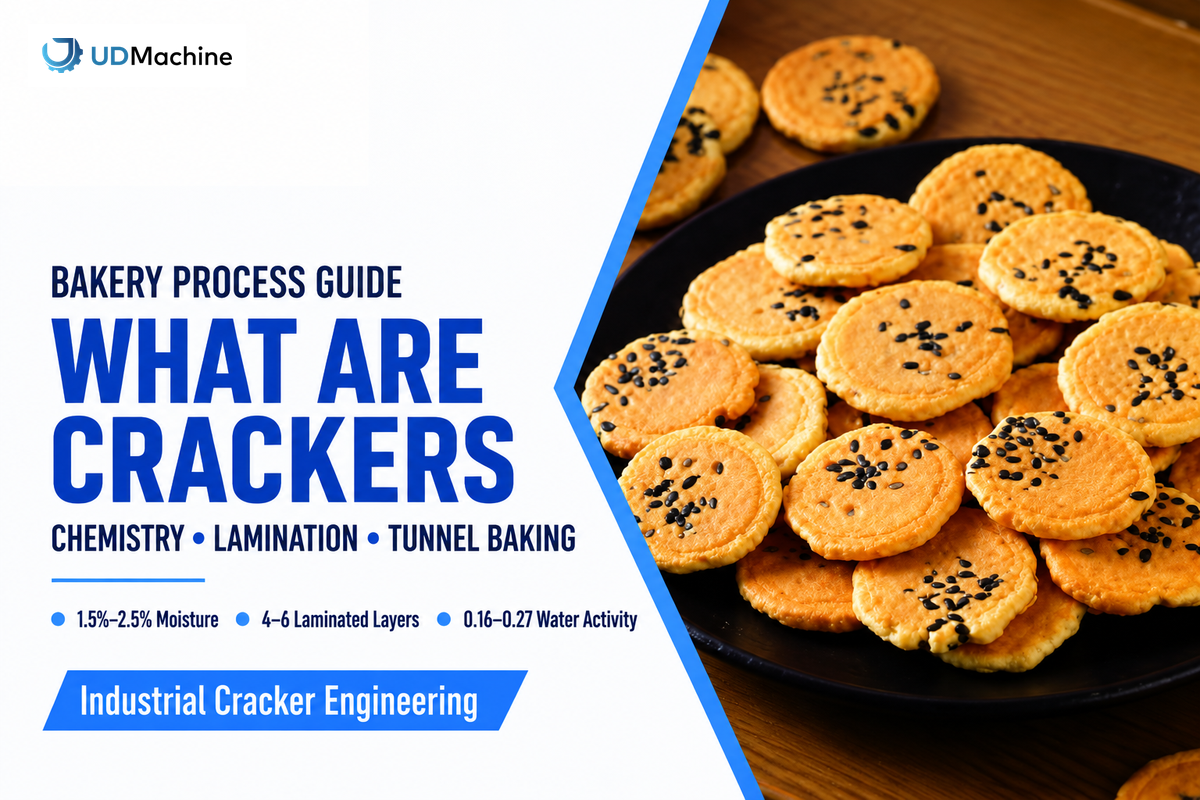
What are crackers? In baking and food science, crackers are grain-based flat, dry, and crisp snacks. Bakers sheet an extensible wheat flour dough and bake it to 1.5% to 2.5% finished moisture, per the American Society of Baking (ASBE). The final water activity is between 0.16 and 0.27 (PMC8685390). Unlike sweet cookies, crackers are sheeted and docked, and fermented soda crackers are also laminated into 4 to 6 layers (ASBE); lines that skip lamination produce a more chip-like texture (BakingBusiness).
Dictionaries also list non-food meanings for the word. These include festive paper noisemakers, petrochemical cracking units, and computer security intruders. This technical guide deals strictly with the baked cereal product and manufacturing equipment. We examine flour rheology, sponge fermentation, multi-zone tunnel baking, water activity, and commercial line choice.
What Are Crackers in Baking and How Do They Differ from Cookies and Biscuits?
In cereal chemistry, a cracker is a thin, low-moisture baked wafer formulated from wheat flour, water, low fat, and biological or chemical leavening. Per the USDA Agricultural Research Service (ARS) Cracker Baking Procedure, test crackers are sheeted to a 0.54 mm final roll gap and baked to a 2.75% target moisture (2.0% to 3.5% range).
Commercial factory lines bake crackers down to 1.5% to 2.5% finished moisture, according to the ASBE Crackers Technical Encyclopedia. At this dryness level, equilibrium water activity sits between 0.16 and 0.27 in peer-reviewed wheat cracker studies (PMC8685390). In fermented soda crackers, the BAKERpedia formula adds 35% water in the sponge and 5% at dough-up, for 40% total hydration on flour weight, before baking drives moisture down to 1.5% to 2.5% (BAKERpedia).
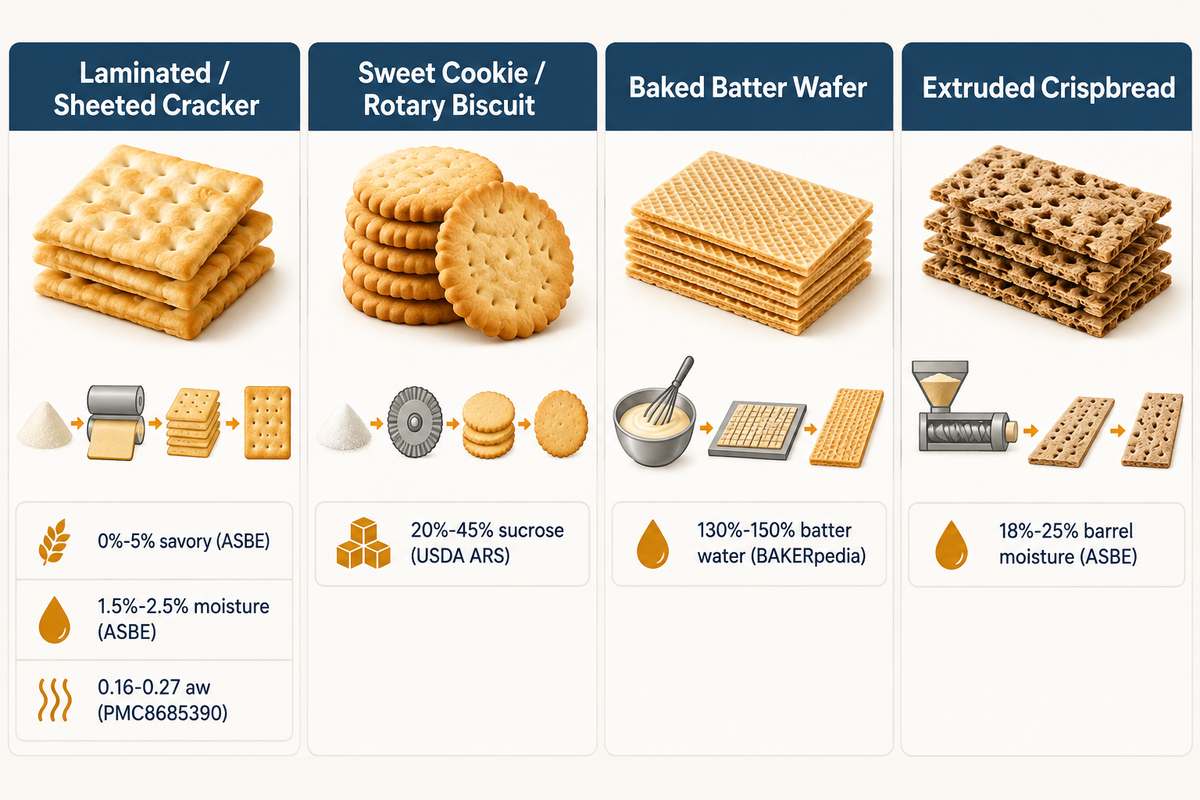
Plant engineers separate crackers from sweet cookies, wafers, and crispbreads using three measurable formulation boundaries and one labeling rule (ASBE; USDA ARS). First, savory cracker doughs contain 0% to 5% sugar on flour weight, whereas sweet cookies carry 20% to 45% sugar. Second, while the mixing of cookies produces short and crumbly dough, the mixing of crackers results in continuous and extensible gluten film. Third, cracker dough is sheeted on multi-roll sheeters and docked with rotary pins, and fermented soda crackers are also laminated into 4 to 6 layers. Fourth, 21 CFR § 101.12 Table 2 sets two Reference Amounts Customarily Consumed (RACC): 15 g for crackers not usually eaten as snacks and 30 g for snack crackers.
Historical evolution also explains why crackers occupy a separate baking category. Early crackers began as unfermented maritime ship’s biscuit, or hardtack, which served as a durable staple food on sea voyages. The name dates back to 1801, when Captain Josiah Bent introduced a new type of biscuit at his bakery in Milton, Massachusetts; they were the first to be called “crackers,” probably because of the cracking sound they make when eaten (Mondelēz International history). In 1898, Adolphus Green merged his American Biscuit & Manufacturing Company with the New York Biscuit Company and the United States Baking Company to form the National Biscuit Company, later renamed Nabisco, whose first new product, the Uneeda biscuit, came in the patented “In-er-seal” package, a cardboard carton with a waxed inner wrapper that helped move crackers from bulk barrels to self-serve packages. That shift laid the foundation for the modern cracker, the modern cracker baking system, and the continuous baking system that is used today.
| Parameter | Laminated / Sheeted Cracker | Sweet Cookie / Rotary Biscuit | Baked Batter Wafer | Extruded Crispbread |
|---|---|---|---|---|
| Wheat Flour Protein (%) | Sponge: HRS/HRW or high-gluten flour (>13% protein); dough-up: hard/soft blend (ASBE) | 7.0%–9.0% soft wheat (USDA ARS) | 8.5%–10.0% low-extensibility (ASBE) | Wheat and rye flours or whole grain (Antila et al., 1983); no wheat in gluten-free versions (USDA CID Type III) |
| Sugar on Flour Weight (%) | 0%–5% savory (ASBE) | 20%–45% sucrose (USDA ARS) | 0%–5% flat wafer (BAKERpedia) | — |
| Internal Fat on Flour Weight (%) | 10%–12% shortening in soda crackers; snack crackers are oil-sprayed after baking (ASBE) | 18%–35% shortening (USDA ARS) | 1%–3% release oil (BAKERpedia) | — |
| Dough Hydration (%) | 40% water on flour weight in soda crackers (35% sponge + 5% dough, BAKERpedia) | 10%–20% water (USDA ARS) | 130%–150% batter water (BAKERpedia) | 18%–27% feed moisture in twin-screw extrusion of wheat flour (Processes 2024; Ma et al.; Robin et al.) |
| Forming & Venting Hardware | 3-roll sheeter, 4–6 layer laminator, 16–25 docking pins | Rotary molder or wire-cut (0% scrap web) | Closed cast-iron baking plates | Twin-screw extruder die and calibration rolls |
| Finished Moisture & Water Activity | 1.5%–2.5% moisture (ASBE); 0.16–0.27 aw (PMC8685390) | Crisp biscuits often below 0.60 aw; soft cookies about 0.60–0.85 aw (Novasina) | Often below 0.60 aw, like other dry crisp bakery products (Novasina) | — |
Food safety engineers must also enforce a clear hygiene boundary after baking. Baking crackers to less than 0.27 water activity prevents microbial growth, as bacteria and molds can’t multiply below 0.60 aw (Novasina). However, low water activity does not sterilize surfaces post bake. Vegetative pathogens such as Salmonella can be present if pathogen-contaminated seasoning or oil spray comes into contact with a warm cracker. Refer to FDA’s Draft Guidance on Sanitation Programs for Low-Moisture Ready-to-Eat Human Foods for more information.
Six Major Types of Crackers: Soda, Cream, Snack, Cheese, Graham, and Water Crackers
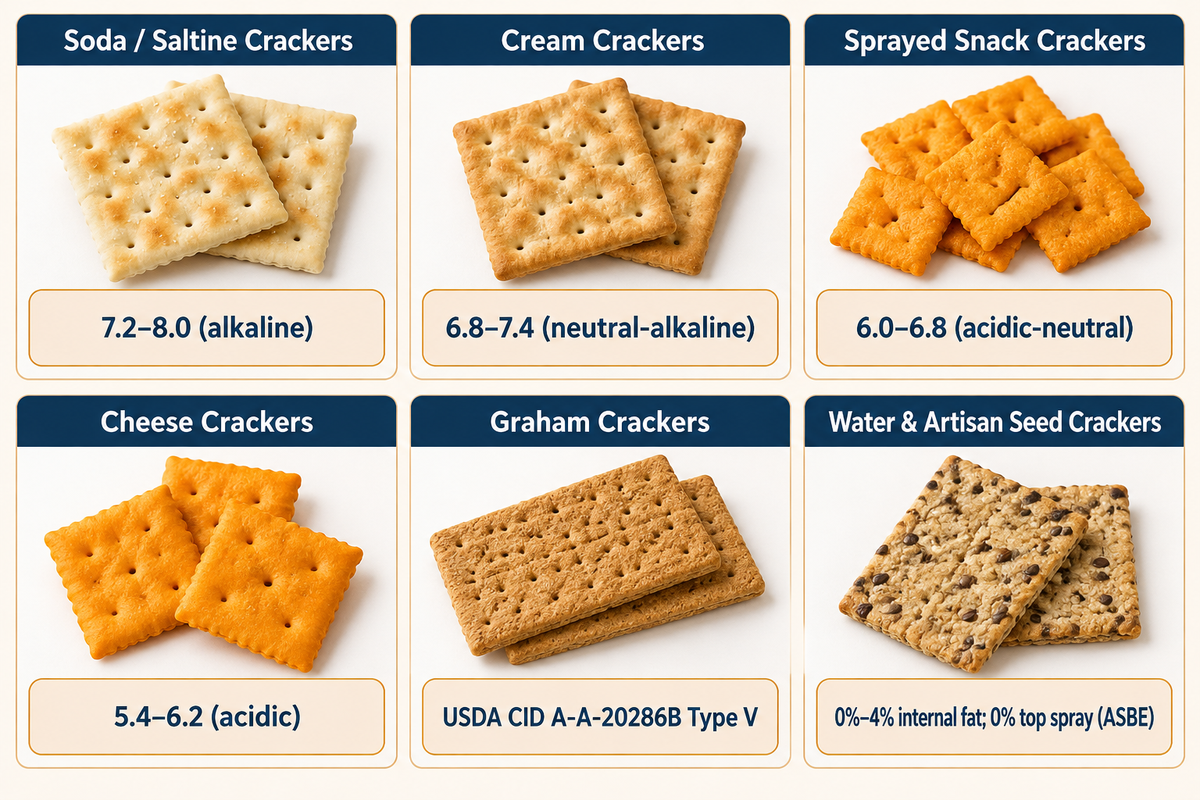
Commercial bakeries classify crackers into six core families—plus soup and extruded sub-types—based on fermentation method, leavening chemistry, fat level, and finished pH. In the US Federal procurement, USDA Commercial Item Description A-A-20286B (May 27, 2020) covers Type I Soda, Type II Saltine, Type III Gluten-free, Type IV Oyster, Type V Graham, Type VI Salad, Type VII Whole wheat, Type VIII Whole grain, Type IX Multigrain, and Type X Other crackers (as specified by the purchaser).
21 CFR § 136.180 is the FDA standard of identity for whole wheat bread, rolls, and buns, and Part 136 covers only bread, rolls, and buns, so it sets no standard for crackers. USDA CID A-A-20286B Type V describes graham crackers (made with graham flour under 21 CFR § 137.200, plus sugar) and applies only when a purchaser specifies that CID. R&D teams apply the Cracker Family Selection Matrix below to avoid recipe errors on the line. Soda crackers ferment for 16 to 20 hours in the sponge; at dough-up, 0.5% to 1.2% ammonium or sodium bicarbonate is added, enough to bring the final dough to pH 6.0 to 8.0 (ASBE; BAKERpedia). Ritz-style snack crackers, on the other hand, are chemically leavened and are usually sprayed with oil right after baking (ASBE).
| Cracker Type / Category | USDA CID / Industry Class | Leavening & Fermentation Route | Internal Fat & Top Oil Spray | Finished Baked pH | Best Application / Scenario |
|---|---|---|---|---|---|
| Soda / Saltine Crackers | USDA CID A-A-20286B Type I & II | 16–20 h sponge + 3–5 h dough rest; yeast, lactic starter, and 0.5%–1.2% ammonium or sodium bicarbonate (ASBE) | 10%–12% internal shortening; oil spray optional (ASBE) | 5.65–7.32 (FDA/CFSAN approximate pH list) | Dry, flaky 4–6 laminated layers, square shape with top salt; served with soup |
| Oyster & Soup Crackers | USDA CID A-A-20286B Type IV | 16–20 h sponge fermentation; rotary cut into small hexagonal or round pieces | At least 8% fat (USDA CID A-A-20286B, Type IV) | — | High float durability in hot chowder and broth without rapid disintegration |
| Cream Crackers | Commonwealth Fermented Class | 4–16 h yeast fermentation; fat-and-flour filling dusted between 4–6 laminated layers | 5%–20% fat on flour weight, the range BAKERpedia gives across soda, water, cream and snack crackers | — | Blistered pockets and tender flaky bite; eaten with butter or aged cheese |
| Sprayed Snack Crackers | Savory crackers, Group A (USDA CID A-A-20286B) | Chemical leavening: ammonium bicarbonate, sodium bicarbonate, MCP and SAPP in different combinations, at 0.5%–3% of flour weight (BAKERpedia) | Post-bake oil spray (ASBE) | — | Short, melt-in-mouth crunchy texture; popular hors d’oeuvre carrier for cream cheese or spread |
| Cheese Crackers | USDA CID A-A-20286B Type X (Other, as specified by the purchaser) | 1–4 h enzyme rest; aged cheddar cheese (15%–25%), paprika, and yeast extract | — | — | Savory umami snap, orange-brown color, central single docking hole for snack packs |
| Graham Crackers | USDA CID A-A-20286B Type V | Chemical leavening with graham/whole-wheat flour, honey, and molasses | At least 8% fat; must contain graham flour and sugar (USDA CID A-A-20286B) | 7.10–7.92 (FDA/CFSAN approximate pH list) | Slightly sweet, denser whole grain crunch; used for pie crusts and campfire s’mores |
| Water & Artisan Seed Crackers | Commercial Water Biscuit Class | Unfermented or short rest; wheat flour, water, 0%–4% oil, steam-blistered crust | 5%–20% fat on flour weight, the range BAKERpedia gives across soda, water, cream and snack crackers | — | Hard, glassy snap with neutral flavor; paired with soft brie or cranberry toppings |
| Extruded & Gluten-Free Crispbreads | USDA CID A-A-20286B Type III (gluten-free crackers, any process) | Twin-screw thermal cooking (130–150 °C) and steam flash expansion | — | — | Gluten-free rice, potato, and high-fiber multigrain crackers for retail health aisles |
Historical dietary movements shaped several of these categories. In the 1830s, American minister Sylvester Graham advocated for the use of coarsely milled whole-wheat flour in temperate diets. His followers baked the original unsweetened graham cracker, and considered it a healthy staple. Today, industrial lines produce a wide variety of savory and sweet profiles across these versatile groups.
Cracker Ingredients and Soft Wheat Flour: Choosing Yeast Sponge vs. Chemical Leavening
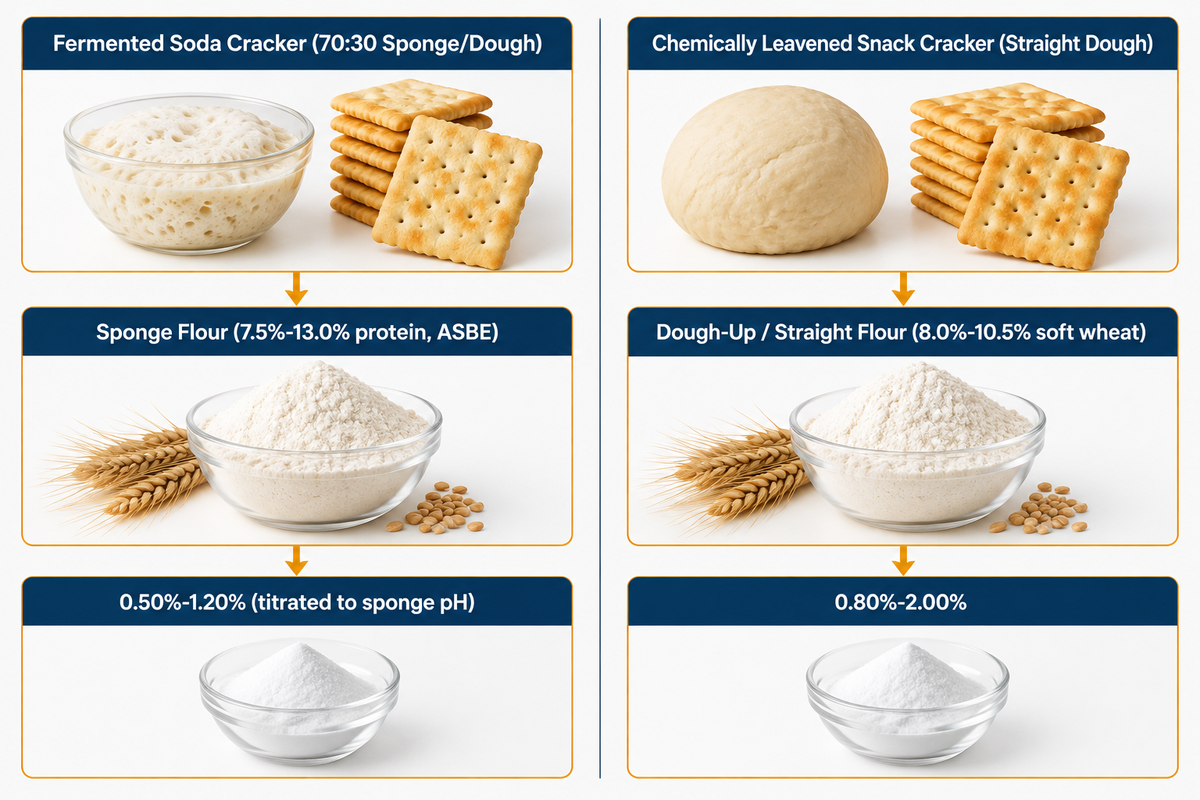
Selecting the right type of wheat flour is the first step in quality control for cracker manufacturing. Cereal chemists evaluate cracker flour using AACC Approved Method 56-11 Solvent Retention Capacity (SRC), which measures water absorption, 5% sodium carbonate SRC, 50% sucrose SRC, and 5% lactic acid SRC.
Cracker flour is milled from 100% soft red winter (SRW) wheat or from a blend of hard and soft wheats (Kansas State University Research and Extension). Soft wheat generally carries 7% to 11% protein, and SRW cracker flour must have enough strength to lift the crackers during baking, so millers either start from higher-protein soft wheat or use the flour left after the very low-protein cake-flour streams are removed (BakingBusiness). Low damaged starch lets the dough sheet thin without holding excess water. Fermented soda crackers follow a different two-stage flour strategy. According to ASBE and BAKERpedia, the 70% sponge stage uses hard red spring or hard red winter wheat flour, or even high-gluten flour above 13% protein. Sixteen to 20 hours of fermentation take the sponge from pH 6.0 to pH 4.0, and the 0.005% (50 ppm) proteolytic enzyme is added later, at dough-up, together with the remaining 30% of the flour as a hard/soft wheat blend that keeps the laminated sheet pliable.
Using 11.5% to 12.5% protein bread flour in an unfermented snack cracker without enzyme conditioning yields elastic recoil. The dough web snaps back after the rotary cutter and reduces round cutouts to thick ovals. Proteolytic enzyme at 0.005% (50 ppm) of flour weight relaxes the gluten network (BAKERpedia). Nabisco’s U.S. Patent US5108764A (1992), on the other hand, uses a pentosanase that hydrolyzes non-cellulosic cell-wall polysaccharides to keep reduced-fat dough machinable across 3 to 8 laminated layers.
| Ingredient (Baker’s % on Total Flour = 100%) | Fermented Soda Cracker (70:30 Sponge/Dough) | Chemically Leavened Snack Cracker (Straight Dough) | Primary Engineering Function |
|---|---|---|---|
| Sponge Flour (HRS/HRW or >13% protein high-gluten, ASBE) | 70.0% | 0% (no sponge stage) | Provides gluten frame broken down during 16–20 h lactic fermentation |
| Dough-Up / Straight Flour (8.0%–10.5% soft wheat) | 30.0% | 100.0% | Delivers low-elasticity sheeting and tender baked bite |
| Water (Absorption, BAKERpedia) | 40.0% (35.0% sponge + 5.0% dough) | 26.0%–30.0% | Hydrates gluten and generates steam lift in Zone 1 of the oven |
| Shortening / Vegetable Fat (ASBE) | 10.0%–12.0% | 10.0%–12.0% (plus post-bake oil spray, ASBE) | Interrupts gluten continuity and lubricates laminated dough layers |
| Compressed Yeast & Lactic Starter (BAKERpedia) | 0.2%–0.3% compressed yeast + 1.0%–4.0% lactic starter (or old sponge) | 0% | Produces carbon dioxide, lactic acid, and fermentation aroma |
| Sodium Bicarbonate (NaHCO3, ASBE) | 0.50%–1.20% (titrated to sponge pH) | 0.40%–0.80% | Neutralizes sponge lactic acid, bringing the final dough to pH 6.0–8.0 (ASBE), and releases CO2 |
| Ammonium Bicarbonate (NH4HCO3, ASBE) | 0% | 0.80%–2.00% | Decomposes above 60 °C into NH3, CO2, and H2O for rapid oven spring |
| Protease & Pentosanase Enzymes (BAKERpedia / US5108764A) | 0.005% (50 ppm protease, BAKERpedia) | Protease (enzyme-type snack crackers, ASBE); pentosanase per US5108764A | Protease reduces gluten recoil; pentosanase maintains 3–8 layer machinability |
| Fine Salt & Malt Extract (BAKERpedia) | 2.0% salt + 0.5%–1.0% diastatic malt | 1.5%–2.0% salt + 3.0%–5.0% sugar/syrup | Controls flavor, yeast fermentation nutrients, and Maillard surface color |
Chemical leavening in snack crackers uses ammonium bicarbonate (baking ammonia) along with sodium bicarbonate. Per Church & Dwight Bicarbonate Technical Applications, ammonium bicarbonate dissociates above 60 °C into ammonia gas, carbon dioxide, and water vapor, leaving zero alkaline sodium residue. Because ammonia dissolves in water, ammonium bicarbonate only works in thin products baked below 3.0% moisture. Formulators can also add asparaginase, an enzyme that breaks down asparagine to aspartic acid and ammonia so that asparagine cannot react with reducing sugars to form acrylamide. The non-binding FDA process contaminant guidance on acrylamide (Guidance for Industry: Acrylamide in Foods) calls asparaginase treatment one of the most effective practices adopted by manufacturers for cereal goods, with reported acrylamide reductions of approximately 35 to 90 percent in various cereal-dough-based products, and it suggests replacing ammonium bicarbonate in cookies and crackers with alternative leavening agents without raising overall sodium levels.
Are crackers called biscuits in British English?
Yes. The Cambridge English Dictionary and the Oxford Learner’s Dictionaries state that the British English term “biscuit” refers to an array of low moisture, crispy flat baked goods. Even so, British bakers still use “cracker” or “savory biscuit” specifically for thin, unsweetened varieties eaten with cheese. In American English, “biscuit” is a quick bread that is served alongside a meal.
International customs rules resolve this regional vocabulary split through Harmonized System (HS) Heading 1905. Sweet cookies and sweet biscuits fall under subheading 1905.31, crispbread has its own subheading 1905.10, and savory crackers, soda crackers, and water biscuits fall under 1905.90 (“Other”), which the UK tariff splits further into “Biscuits” (1905 90 45) and “Extruded or expanded products, savoury or salted” (1905 90 55).
Sponge-and-Dough Fermentation: How a 16–20 Hour Sponge Builds Soda Cracker Layers
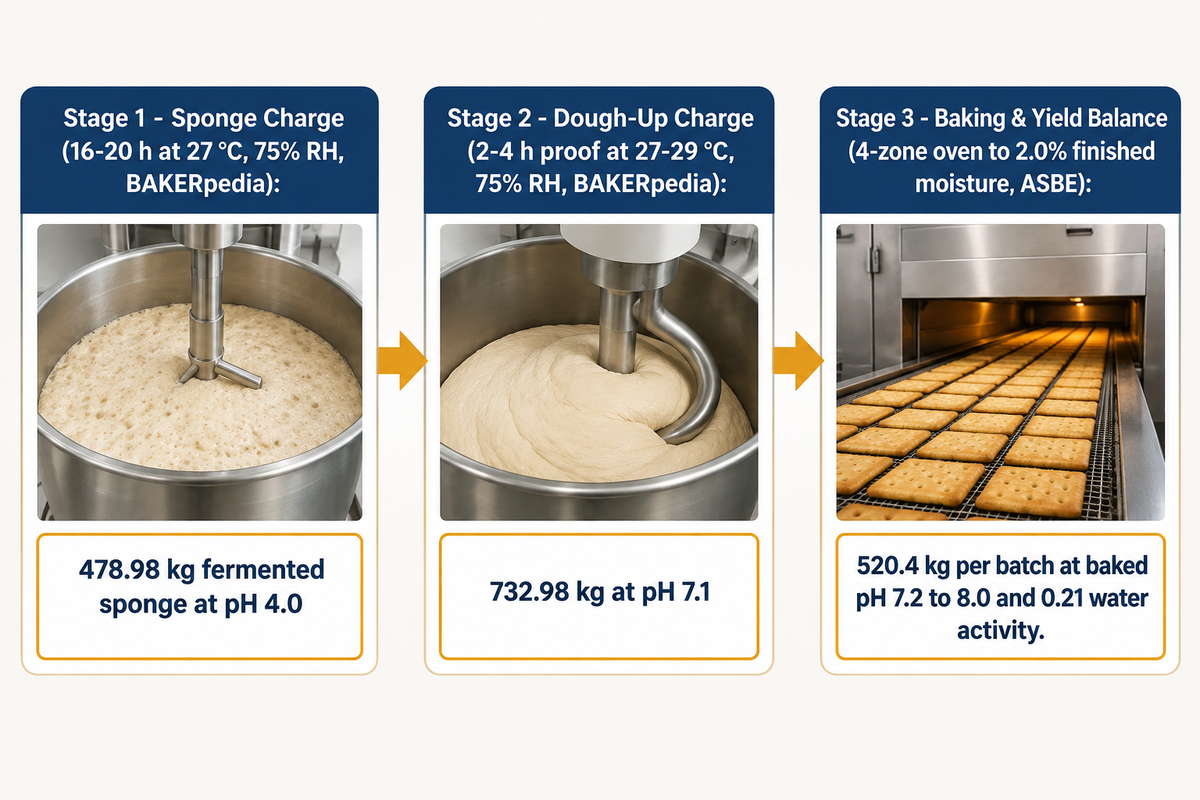
Traditionally, flaky structures in soda crackers and saltines develop during a 19- to 25-hour two-stage sponge-and-dough process: a 16- to 20-hour sponge fermentation followed by a 3- to 5-hour dough rest (BAKERpedia, ASBE).
In Stage 1, bakers mix 70% of the total flour with water, yeast, and lactic starter into a sponge held at 27 °C (80 °F) and 75% relative humidity for 16 to 20 hours (ASBE). Inside the sponge, Saccharomyces cerevisiae yeast consumes simple sugars first. Next, lactic acid bacteria convert maltose into lactic and acetic acids, dropping sponge pH from 6.0 down to 4.0 (BAKERpedia). The 0.005% (50 ppm) proteolytic enzyme in this formula is not part of the sponge; it goes in at dough-up to make the dough sheetable (ASBE; BAKERpedia).
At the dough-up stage, operators return the fermented sponge to a spindle mixer with the remaining 30% flour (a hard/soft wheat blend), shortening (10% to 12%), salt (2.0%), diastatic malt (0.5% to 1.0%), 0.5% to 1.2% ammonium or sodium bicarbonate, and 0.005% (50 ppm) proteolytic enzyme. The bicarbonate neutralizes the sponge acids and is dosed to bring the final dough to pH 6.0 to 8.0, slightly alkaline, before a 3-to-5-hour rest (BAKERpedia; ASBE). Any excess sodium bicarbonate decomposes to sodium carbonate in the oven.
Worked Engineering Example: 500 kg Total Flour Batch Soda Cracker Mass Balance
When scaling a bakery formulation from kitchen trial to factory line, engineers calculate ingredient weights per mixer trough. ASBE’s soda cracker formula uses a 70:30 sponge/dough flour split, with the bicarbonate dosed to bring the final dough to pH 6.0 to 8.0 (ASBE; BAKERpedia). A mass balance shows precise weights for a 500 kg total flour batch at the standard 70:30 split as follows:
- In Stage 1 — Sponge Charge (16–20 h at 27 °C, 75% RH, BAKERpedia):
- Sponge flour (70% of 500 kg): 350.0 kg.
- Sponge water (35.0% on total flour weight): 175.0 kg.
- Compressed yeast (0.25% on total flour): 1.25 kg.
- Lactic starter or old sponge (2.0% on total flour): 10.0 kg.
- Protease enzyme (0.005% / 50 ppm on total flour): 0.025 kg (25 g).
- Initial sponge mass: 536.25 kg at pH 6.0 (lecithin omitted for simplicity). Assuming a 1.5% fermentation gas loss (8.04 kg of CO2), 528.21 kg of fermented sponge at pH 4.0 remains.
- In Stage 2 — Dough-Up Charge (3–5 h rest at 27 °C, 75% RH, ASBE):
- Dough-up flour, hard/soft blend (30% of 500 kg): 150.0 kg.
- Dough-up water (5.0% on total flour): 25.0 kg.
- Refined vegetable shortening (11.0% on total flour): 55.0 kg.
- Fine dough salt (2.0% on total flour): 10.0 kg.
- Sodium bicarbonate (0.80% on total flour): 4.00 kg, dosed to bring the final dough to pH 6.0 to 8.0. Proteolytic enzyme (0.005% / 50 ppm on total flour): 0.025 kg (25 g).
- Total mixed dough mass before sheeting: 772.23 kg (diastatic malt omitted for simplicity); check the final dough pH with a meter against the 6.0 to 8.0 target.
- In Stage 3 — Baking & Yield Balance (4-zone oven to 2.0% finished moisture, ASBE):
- Dry solids entering the oven: 432.5 kg flour solids (500 kg at an assumed 13.5% moisture) + 55.0 kg fat + 10.0 kg salt + 4.00 kg sodium bicarbonate = 501.5 kg, before adding the dry matter of the 10.0 kg starter and 1.25 kg yeast. Subtracting the 8.04 kg fermentation gas loss and the 1.48 kg to 2.95 kg of CO2 and water released by the bicarbonate (2 NaHCO3 → Na2CO3 + CO2 + H2O in the oven, or NaHCO3 + lactic acid → sodium lactate + CO2 + H2O in the dough) leaves about 490.5 kg to 492.0 kg.
- Finished baked cracker mass at 2.0% moisture (÷ 0.98) is about 500.5 kg to 502.0 kg per batch, plus at most 11.5 kg from starter and yeast solids, before trim, breakage, and oil spray. Baked pH and water activity have to be measured on the finished crackers; a mass balance cannot predict them.
How Crackers Are Made Industrially: Lamination, Docking Holes, and Multi-Zone Tunnel Baking
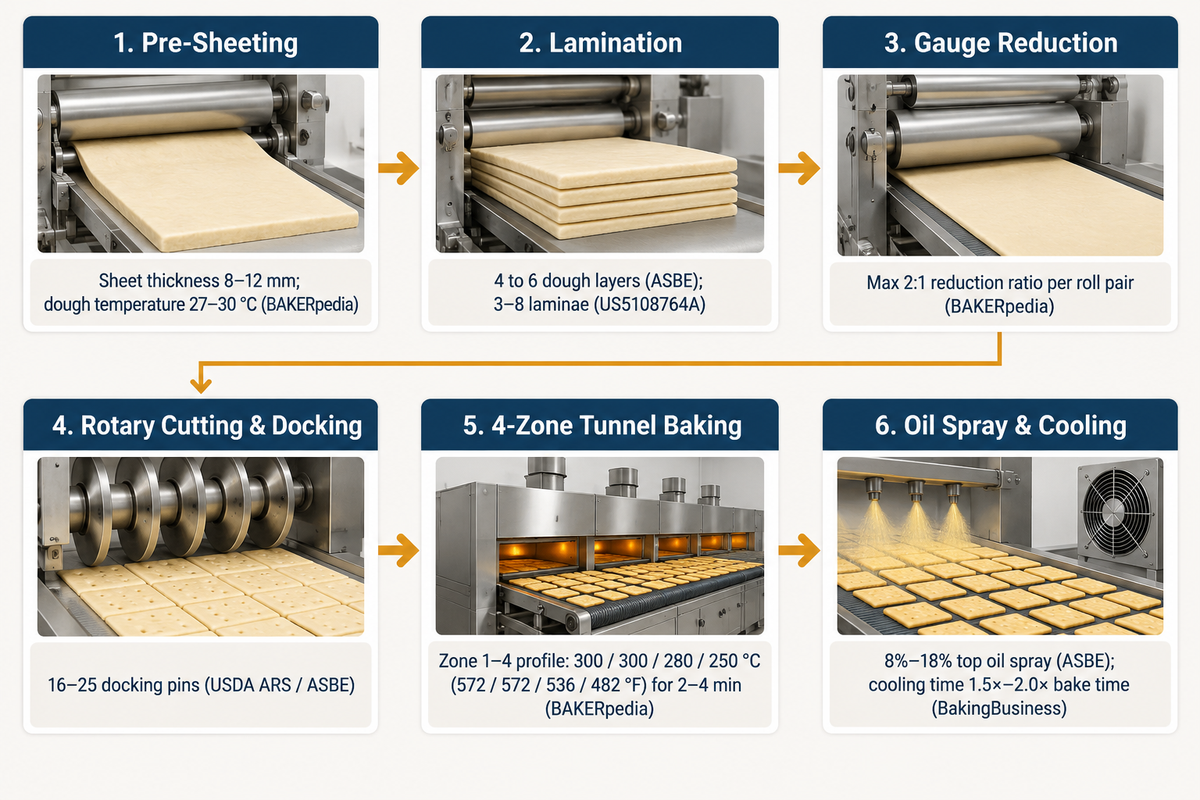
Crackers today are made on continuous automated sheeting, laminating, and tunnel-baking lines that convert mixed dough into packaged crackers within 15 minutes. Per BakingBusiness Cracker Tech 101, the makeup line compresses the dough into a continuous band of targeted thickness, and soda cracker dough is then laminated into 4 to 6 layers (ASBE); UDTECH builds these lines in 600 mm to 1,500 mm working widths.
The table below breaks a cracker makeup line into six unit operations: pre-sheeting, lamination, gauge-roll reduction, rotary cutting, 4-zone tunnel baking, and oil spray with cooling. Our guide to synchronized automation of a biscuit production line shows how these stations are synchronized.
| Process Stage | Equipment Configuration | Target Operating Range | Defect If Out of Spec |
|---|---|---|---|
| 1. Pre-Sheeting | 3-roll or 4-roll forcing sheeter with grooved steel rolls (BakingBusiness) | Sheet thickness 8–12 mm; dough temperature 27–30 °C (BAKERpedia) | Edge tearing or uneven lateral density across the belt |
| 2. Lamination | Cut-sheet or continuous envelope laminator with fat/flour duster | 4 to 6 dough layers (ASBE); 3–8 laminae (US5108764A) | Delamination or flat, bready interior lacking flaky lift |
| 3. Gauge Reduction | 3 to 4 smooth steel gauge roll stations + relaxation web | 2:1 reduction per roll station suggested (BakingBusiness); 0.54 mm test (USDA ARS) or 2–4 mm sheet (ASBE) | Longitudinal recoil and oval distortion after cutting |
| 4. Rotary Cutting & Docking | Twin-roll (separate docker + cutter) or single-roll die (BakingBusiness) | 16–25 docking pins (USDA ARS / ASBE); 1%–2% trim (tied) or 30%–50% scrap (round, BakingBusiness) | Hollow pillow blisters or incomplete edge break-apart |
| 5. 4-Zone Tunnel Baking | 30–90 m (100–300 ft) direct gas-fired (DGF) heavy mesh oven (KPM Analytics) | Zone 1–4 profile: 300 / 300 / 280 / 250 °C (572 / 572 / 536 / 482 °F) for 2–4 min (BAKERpedia) | Skin or shell set too early in the bake, and uneven core-to-surface moisture that leads to checking (BakingBusiness) |
| 6. Oil Spray & Cooling | Spinning-disc oil sprayer + ambient cooling conveyor (BAKERpedia) | Post-bake oil spray (ASBE); total cooling time up to 2× bake time (KPM Analytics) | Condensation inside film bag or spontaneous checking fractures |
Cutting geometry dictates how much dough scrap returns to the sheeter. According to BakingBusiness, rectangular crackers like saltines use a tied cutter. Adjacent squares share perforated score lines and snap apart after baking, generating only 1% to 2% edge trim (98% to 99% virgin dough). By contrast, round snack crackers require a scrap cutter that returns 30% to 50% web scrap back into the sheeter hopper.
Next, the cut sheet enters a 30 to 90 m (100 to 300 ft) tunnel oven (KPM Analytics). In direct gas-fired heavy-mesh soda cracker ovens, dough bakes across four thermal zones at 300 / 300 / 280 / 250 °C (572 / 572 / 536 / 482 °F) for 2 to 4 minutes (ASBE; BAKERpedia). Kevin Knott of Bühler Group tells BakingBusiness that most cracker lines follow a ‘bell’ curve of low, higher, then lower heat so the first phase does not set a skin too early, while Reading Bakery Systems notes that thin crisp crackers may instead get high heat first and a gradually falling profile, like the 300/300/280/250 °C setpoints above. Either way, ASBE notes that Zone 1 needs high humidity and high heat transfer for oven spring, and the final zones bring moisture down to 1.5%–2.5%. Because rapid dough drying increases Salmonella heat resistance during a 150-second bake (PubMed 38734415), plants run dedicated microbiological kill-step validation alongside moisture checks.
Why do crackers have holes on the surface?
Crackers have small, evenly spaced holes—called docking holes—to let expanding steam and carbon dioxide escape in the 250 to 300 °C oven. Each pin also presses top and bottom dough layers together around the hole, creating a flat, crisp blister pattern. Without these holes, the steam has no place to go, and causes the layers to blow apart, resulting in large, hollow pillows.
A typical saltine (rectangular shape) has 16 to 25 docking holes punched through the dough web by a rotary die (USDA ARS notes a 16 hole pattern). A cheese cracker typically has a central hole for venting and light edge lift.
Laminated Sheeting vs. Single-Sheet Rotary Cutting vs. Twin-Screw Extrusion
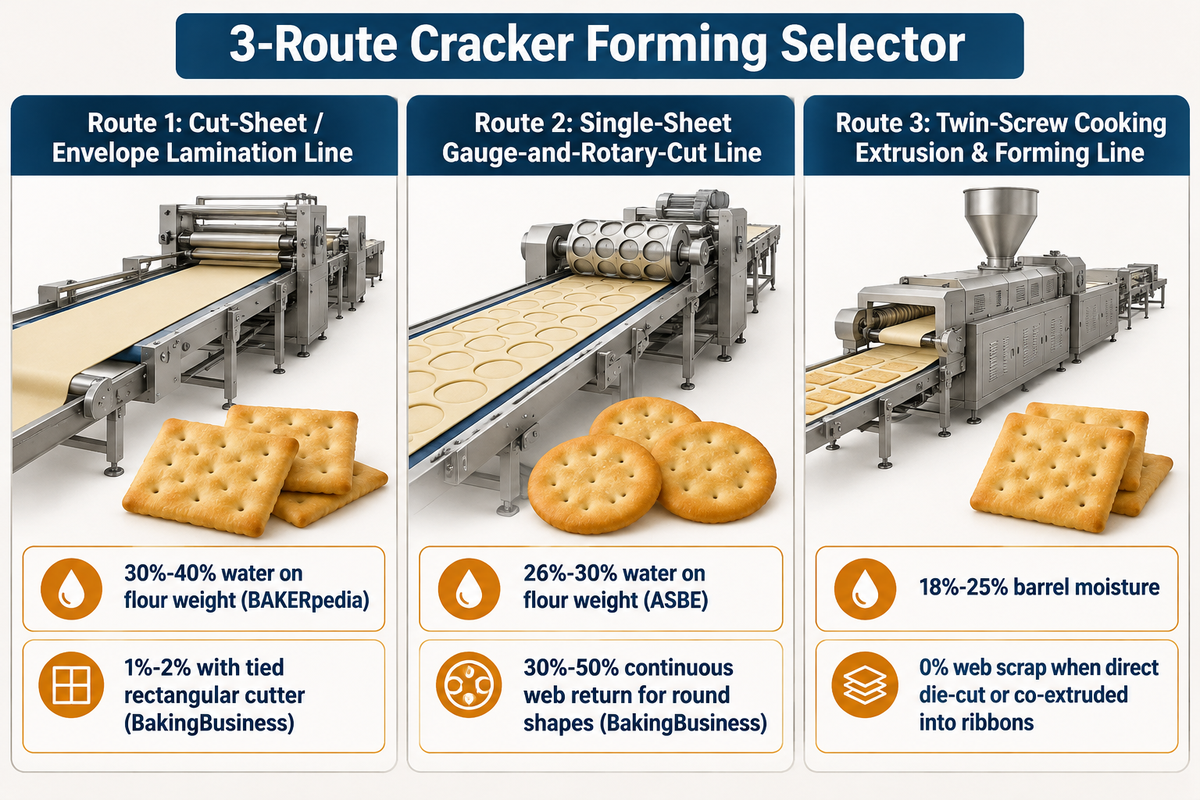
Not all commercial cracker lines need a cut-sheet laminator. When planning floor space and capital budget, bakery engineers use the 3-Route Cracker Forming Selector below. It matches target texture against dough hydration (40% water on flour weight for fermented soda dough, BAKERpedia), line length, and cutter scrap return (1%–2% for tied cutters, 30%–50% for scrap cutters, BakingBusiness).
| Engineering Criterion | Route 1: Cut-Sheet / Envelope Lamination Line | Route 2: Single-Sheet Gauge-and-Rotary-Cut Line | Route 3: Twin-Screw Cooking Extrusion & Forming Line |
|---|---|---|---|
| Best Product Fit | Soda crackers (saltines), cream crackers, flaky puff crackers | Sprayed snack crackers (Ritz-style), cheese crackers, graham crackers, water crackers | Multigrain crispbreads, rice crackers, potato crackers, high-pulse protein flat snacks |
| Lift & Pore Mechanism | Interlayer fat/flour separation + steam expansion across 4–6 laminated layers (ASBE) | Internal ammonium/sodium bicarbonate gas nucleation in a single sheet (ASBE) | In-barrel starch gelatinization + die-face steam flash expansion |
| Dough Hydration (%) | 40% water on flour weight (35% sponge + 5% dough, BAKERpedia) | 20%–35% water content in cracker doughs, against 10%–20% for cookies (BAKERpedia) | 18%–27% feed moisture in twin-screw extrusion of wheat flour (Processes 2024; Ma et al.; Robin et al.) |
| Cutter Scrap Return (%) | 1%–2% with tied rectangular cutter (BakingBusiness) | 30%–50% continuous web return for round shapes (BakingBusiness) | 0% web scrap when direct die-cut or co-extruded into ribbons |
| Tunnel Oven & Line Scale | 30–90 m (100–300 ft) 4-zone tunnel oven + laminator (KPM Analytics) | 30–90 m tunnel oven + 3-roll sheeter and gauge rolls (KPM Analytics) | Twin-screw extruder + calibration rolls + multi-pass dryer/toasting oven |
| Limitations / When Not to Use | High capital cost and floor length; cannot run gluten-free rice or corn formulas lacking gluten | Cannot replicate the multi-layer flaky split of a laminated saltine or cream cracker | Produces a puffed starch-foam crunch rather than a tender wheat-gluten laminated flake |
Route 1 is required for the production of a Classic soda or a cream cracker that splits into 4 to 6 horizontal layers (ASBE; US5108764A). Route 2 removes the overhead laminator to run high-speed round snack crackers, graham crackers, and seed crackers with 30% to 50% scrap web return (BakingBusiness). Route 3 uses a co-rotating twin-screw extruder to cook gluten-free rice, potato, corn, and pulse formulas, which lack a gluten network and tear on standard gauge rolls.
Moisture Content, Water Activity, and Preventing Cracker Checking in Storage
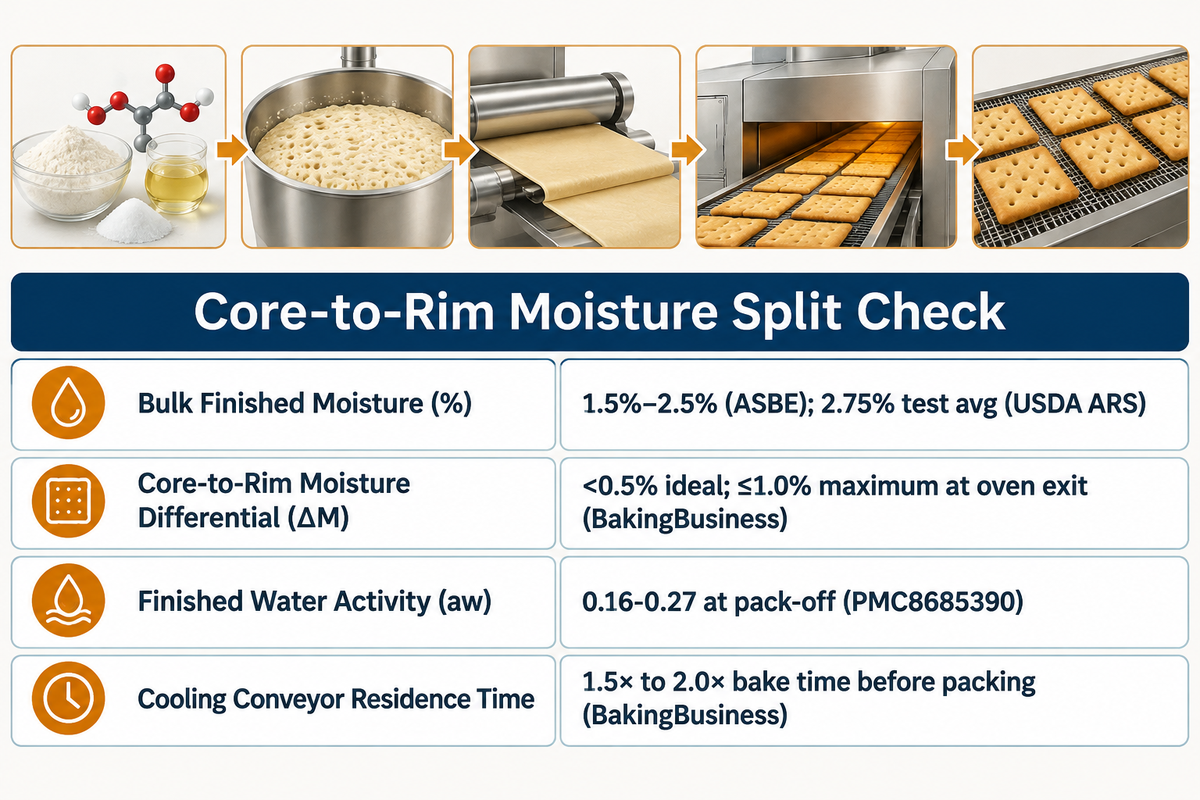
Crackers emerge from the tunnel oven at 1.5% to 2.5% moisture and 0.16 to 0.27 water activity (PMC8685390; ASBE). Two physical processes impact shelf quality: softening from moisture sorption at 0.35 to 0.50 water activity and spontaneous hairline fracture (BakingBusiness).
Low-moisture snacks lose their crispness once water activity reaches about 0.35 to 0.50 (Katz and Labuza, 1981), and QA teams set release limits below that range. For the mechanism, see how water activity causes baked snacks to lose crunch. The cereal science research on sensory crispness and water activity by Katz and Labuza (1981) describes this boundary. Novasina adds that the critical water activity for crispness is product-specific, so each cracker formula needs its own measured limit.
Even in a sealed barrier bag, crackers can crack spontaneously due to checking. BakingBusiness and the Royal Society Proceedings A study trace checking to uneven moisture distribution between the core and the edge of the cracker at the oven exit. The moisture migrates outwards from the core (which shrinks) to the edge (which swells). Eventually, that outward stress breaks the cracker.
| Control Parameter | Safe Production Target | Warning / Defect Zone | Corrective Engineering Action |
|---|---|---|---|
| Bulk Finished Moisture (%) | 1.5%–2.5% (ASBE); 2.75% test avg (USDA ARS) | <1.5% (brittle) or >3.5% (slack bake, USDA ARS) | Adjust Zone 3/4 burner pressure and band speed; monitor with online NIR sensor (KPM Analytics) |
| Core-to-Rim Moisture Differential (ΔM) | Below 1% wb moisture difference between center, middle and edge; 0%–3.41% of microwave-assisted low-fat biscuits checked (Foods, 2025) | 3.05% wb center-to-outside difference; 94.74% of conventionally baked low-fat biscuits checked within one day (Foods, 2025) | Use a bell-shaped bake curve or Zone 1 steam injection, a convection final zone, or a post-oven RF dryer (BakingBusiness) |
| Finished Water Activity (aw) | 0.16–0.27 at pack-off (PMC8685390) | ≥0.35–0.50 crispness loss (Katz & Labuza 1981 / Novasina) | Package in moisture-barrier metallized BOPP or HDPE film sleeves (ASBE) |
| Cooling Conveyor Residence Time | Up to 2× bake time before packing (KPM Analytics) | Cold draft shock or hot packing before equilibration | Use temperate ambient cooling conveyors for gradual moisture equilibration (BakingBusiness) |
To prevent checking on high-speed lines, QA teams run the Core-to-Rim Moisture Split Check. Operators cut center and edge pieces from crackers sampled at the oven exit and dry each on a halogen moisture balance; KPM Analytics notes that online NIR reads only the surface, so its sensor belongs several feet downstream of the oven, after the product has equilibrated. Adding a post-oven radio-frequency (RF) dielectric dryer selectively heats water in the center without over-browning the rim.
Do crackers expire?
Crackers do not spoil microbially like high-moisture bread because their baked water activity of 0.16 to 0.27 sits well below the 0.60 threshold required for mold or bacterial growth (Novasina; PMC8685390). Instead, crackers lose crispness when humidity ingress pushes water activity above 0.35 to 0.50 (Katz & Labuza 1981). Over longer storage, surface oils (the post-bake oil spray on snack crackers, ASBE) also oxidize and turn rancid.
Exact duration depends on the fat level, barrier film water-vapor transmission rate, and the ambient pantry humidity. Slowing humidity pick-up and lipid oxidation can be achieved by storing the opened inner bags in sealed moisture-barrier containers (Novasina).
Cracker Nutrition, Culinary Pairings, and 2026 High-Protein Sourdough Reformulation
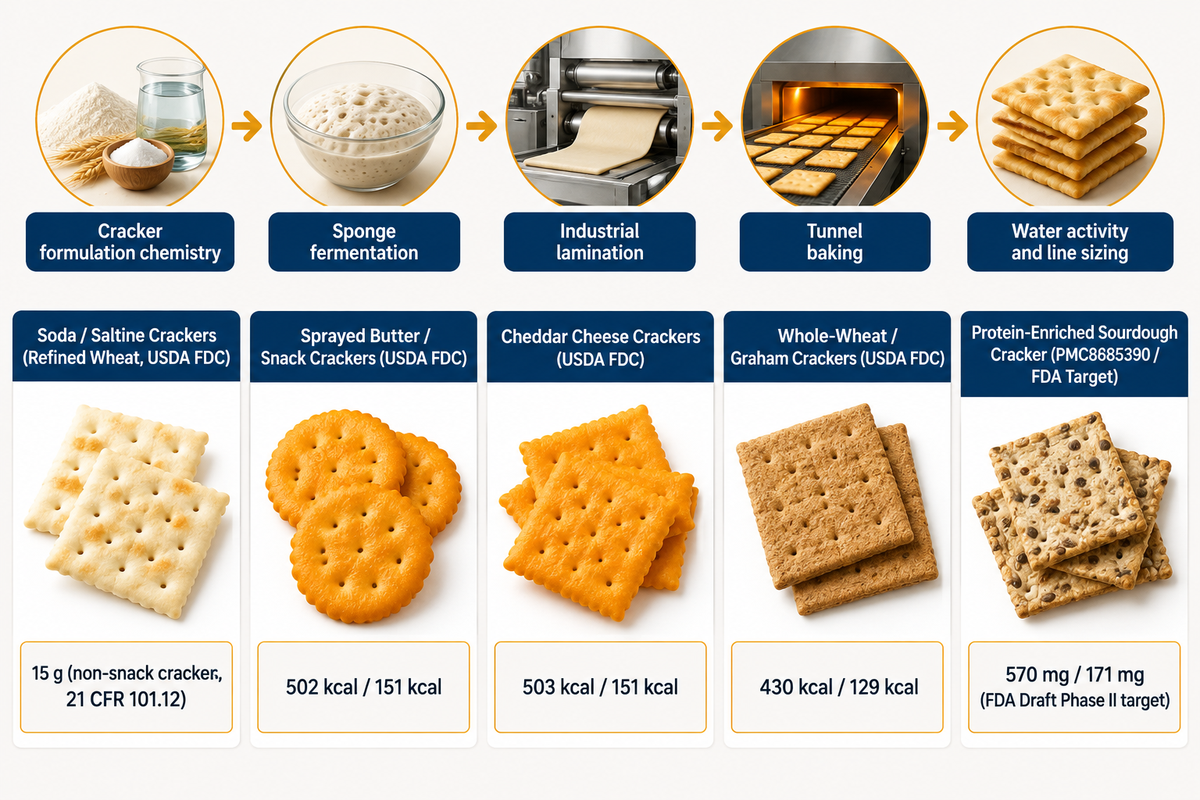
Standard commercial crackers provide 421 to 503 kcal, 6.8 to 10.1 g protein, and 480 to 940 mg sodium per 100 g in the USDA FoodData Central benchmarks below. Under 21 CFR § 101.12 Table 2, FDA sets a 15 g RACC for non-snack crackers (like saltines) and a 30 g RACC for convenient snack crackers.
The table below compares nutritional values per 100 g alongside the regulatory 15 g and 30 g RACC serving sizes so formulation teams can benchmark sodium, dietary fiber, and protein accurately.
| Cracker Type | 21 CFR 101.12 RACC | Energy (per 100 g / per RACC) | Protein (per 100 g / per RACC) | Total Fat (per 100 g / per RACC) | Dietary Fiber (per 100 g / per RACC) | Sodium (per 100 g / per RACC) |
|---|---|---|---|---|---|---|
| Soda / Saltine Crackers (Refined Wheat, USDA FDC) | 15 g (non-snack cracker, 21 CFR 101.12) | 421 kcal / 63 kcal (126 kcal per 30 g) | 9.5 g / 1.4 g | 9.8 g / 1.5 g | 2.8 g / 0.4 g | 940 mg / 141 mg (282 mg per 30 g) |
| Sprayed Butter / Snack Crackers (USDA FDC) | 30 g (snack cracker, 21 CFR 101.12) | 502 kcal / 151 kcal | 6.8 g / 2.0 g | 25.3 g / 7.6 g | 1.8 g / 0.5 g | 780 mg / 234 mg |
| Cheddar Cheese Crackers (USDA FDC) | 30 g (snack cracker, 21 CFR 101.12) | 503 kcal / 151 kcal | 10.1 g / 3.0 g | 25.2 g / 7.6 g | 2.4 g / 0.7 g | 830 mg / 249 mg |
| Whole-Wheat / Graham Crackers (USDA FDC) | 30 g (snack cracker, 21 CFR 101.12) | 430 kcal / 129 kcal | 7.1 g / 2.1 g | 10.4 g / 3.1 g | 3.5–10.0 g / 1.1–3.0 g | 480–580 mg / 144–174 mg |
| — | — | — | — | — | — | — |
Three consumer and regulatory shifts are driving cracker reformulation in 2026. First, the Puratos Taste Tomorrow 2026 Bakery Trends Report projects a 17% rise in online conversations around protein-enriched baked goods. That study shows 29% of global shoppers check product packaging for protein content, and launches of sweet baked goods carrying a sourdough claim rose 31%. Meanwhile, American Bakers Association (ABA) Consumer Trends research reports that 60% of consumers want crackers with unique functional ingredients. Popular inclusions such as seeds, ancient grains, and bold seasonings turn a simple appetizer into a delicious, nutritious snack.
Second, sodium reduction remains a priority for commercial formulators. Under FDA’s Voluntary Sodium Reduction Goals, the October 2021 Phase I guidance is final. In August 2024, FDA issued Draft Phase II Sodium Reduction Targets proposing a voluntary mean target of 570 mg sodium per 100 g for savory crackers. Surface crystal salt hits taste buds faster than internal dough salt. Bakeries therefore cut total sodium by lowering internal dough salt, blending potassium chloride (KCl) with umami yeast extract, and applying fine flaky top salt.
Lastly, using protein isolates and non-wheat proteins changes the rheology of dough. In PMC8685390 (2021), replacing 20% to 40% of the wheat flour with ground jellyfish raised protein but left less starch to absorb water and gelatinize, so linear expansion fell from 1.89 mm to 1.39 mm and hardness from 10.76 N to 5.14 N.
What are the health benefits of eating whole-grain and fermented crackers?
Whole-grain, seed, and protein-enriched crackers deliver higher dietary fiber (3.5 to 10.0 g per 100 g in USDA FoodData Central benchmarks) than refined saltines (2.8 g fiber per 100 g). In one 2021 study, replacing 30% of the wheat flour with ground jellyfish gave a cracker with 13.09% protein (PMC8685390). In addition, 16-to-20-hour lactic acid sponge fermentation (ASBE) hydrolyzes gluten peptides and generates organic acids.
According to the Puratos Taste Tomorrow 2026 Report, 29% of shoppers check packaging for protein content, and 58% of consumers believe sourdough makes bread healthier. Pairing whole-grain crackers with protein-rich toppings such as aged cheddar, cottage cheese, or nut butter further raises per-serving protein and satiety.
Commercial Cracker Production Lines: Capacity Sizing, Utilities, and Equipment Selection
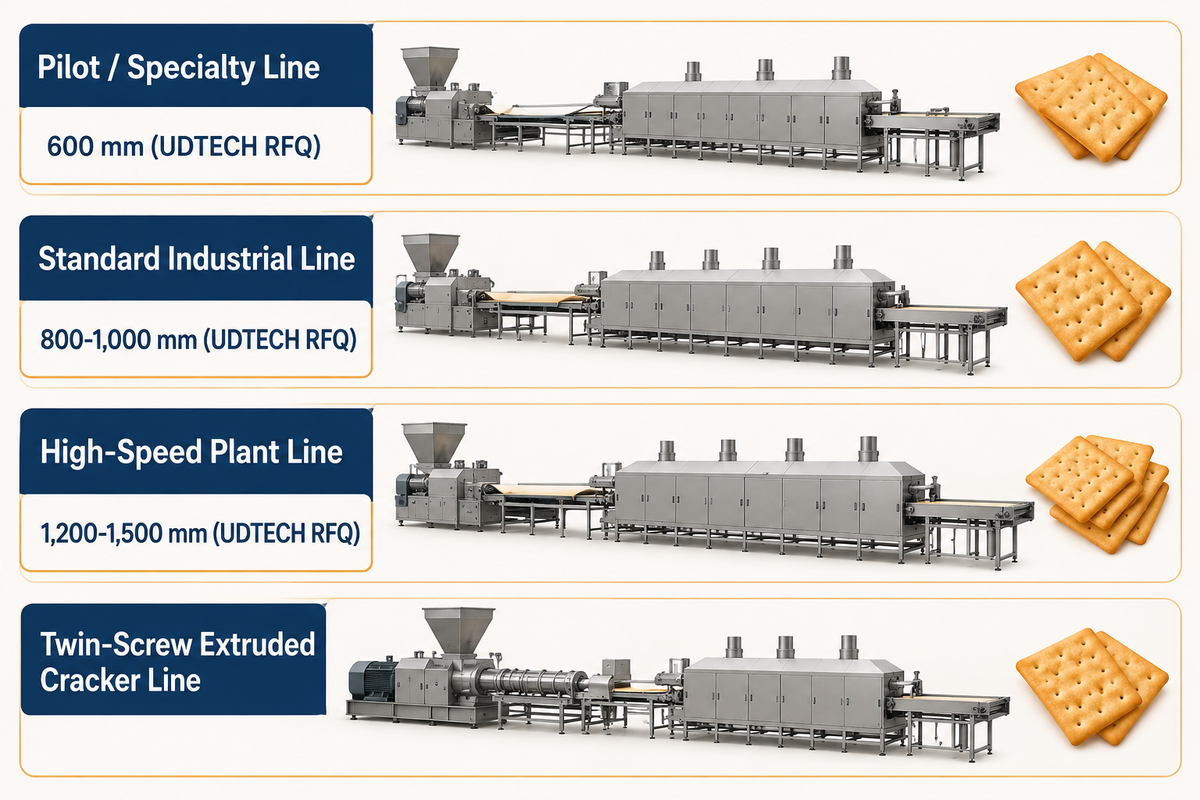
When bakeries scale to 24/7 industrial production, line engineering governs product consistency. Mechanical precision determines whether dough sheets hold uniform thickness across 600 mm to 1,500 mm working belt widths (UDTECH’s line range) and through 30 to 90 m (100 to 300 ft) tunnel ovens ( KPM Analytics). Suzhou UDTECH Technology Co., Ltd. manufactures industrial food processing machinery and biscuit and cracker processing lines and twin-screw extrusion systems.
UDTECH manufactures industrial food processing machinery and does not produce retail cracker brands or mill wheat flour. All parameters including capacity, equipment widths and turnkey prices are engineered per project RFQ.
| Line Class | Working Belt Width | Tunnel Oven Length & Zones | Bake Time Window | Primary Application | Throughput & Pricing Basis |
|---|---|---|---|---|---|
| Pilot / Specialty Line | 600 mm (UDTECH RFQ) | 30 m (100 ft, KPM Analytics); 4 zones (BAKERpedia) | 2–4 min at 250–300 °C (BAKERpedia) | Artisan water crackers, seeded crispbreads, regional snack brands | Engineered per customer quote |
| Standard Industrial Line | 800–1,000 mm (UDTECH RFQ) | 45–60 m (150–200 ft, KPM Analytics); 4 zones | 2–4 min at 300/300/280/250 °C (BAKERpedia) | Laminated soda crackers (4–6 layers, ASBE), sprayed snack crackers | Engineered per customer quote |
| High-Speed Plant Line | 1,200–1,500 mm (UDTECH RFQ) | 60–90 m (200–300 ft, KPM Analytics) + RF dryer (BakingBusiness) | 2–4 min bake + post-oven RF leveling | National retail saltines (1%–2% trim) and round snack crackers (30%–50% scrap, BakingBusiness) | Engineered per customer quote |
| Twin-Screw Extruded Cracker Line | Project-sized screw & sheet die (UDTECH) | Multi-zone dryer and toasting oven | Formulation-dependent drying profile | Rice crackers, multigrain crispbreads, high-protein pulse snacks | Engineered per customer quote |
When evaluating an industrial food processing machinery manufacturer, quotes should always include sheet thickness, bake time, and scrap return, in addition to kg/h output. Belt width multiplied by oven baking length, divided by bake time, gives belt area throughput. Reducing bake time from 3.8 to 2.5 minutes increases belt-area throughput by 52%, while finished mass output also depends on dry-basis areal density across the band.
6-Point Commercial Cracker Line RFQ Verification Checklist
- Working Width & Cutter Scrap Return Ratio: Specify net working belt width (600 to 1,500 mm). Confirm whether the rotary cutter uses a tied die (1%–2% edge trim) or a round scrap-web die (30%–50% scrap return conveyor, BakingBusiness).
- Sheeter, Laminator & Gauge Roll Reduction: Require 3- or 4-roll sheeters and smooth steel gauge rolls with independent servo drives. Reduce 4- to 6-layer laminated sheets (ASBE) gradually, at the 2:1 ratio per roll station that BakingBusiness suggests.
- Tunnel Oven Thermal Architecture: Define zone count (4 zones at 300 / 300 / 280 / 250 °C, BAKERpedia), oven length (30 to 90 m, KPM Analytics), and direct gas-fired (DGF) heavy mesh band tracking.
- Post-Oven Dielectric / RF Moisture Leveling & NIR Sensing: Flange space for a post-bake radio-frequency (RF) dryer (BakingBusiness). Pair it with an online near-infrared (NIR) moisture sensor (KPM Analytics).
- Hot Oil Spray & Sanitary Cooling Design: Specify enclosed oil sprayers for the post-bake oil spray (ASBE), stating the oil application rate and its basis (percent of finished cracker weight or of flour weight), with tool-free washdown access to prevent low-moisture ready-to-eat (RTE) pathogen harborage (FDA RTE Guidance).
- Factory Acceptance Test (FAT) Moisture & Microbiological Qualification: Lock FAT pass/fail targets into the purchase contract: 1.5%–2.5% finished moisture (ASBE) and a single maximum center-to-edge moisture difference (BakingBusiness), stated in percentage points (wet basis) together with its sampling and test method. Also require water activity of 0.16–0.27 (PMC8685390) and thermal lethality logs.
Frequently Asked Questions About Crackers
What makes a cracker different from a cookie in baking chemistry?
Crackers use low sugar (0% to 5% on flour weight) and moderate fat (8% to 16%), allowing wheat proteins to hydrate into a continuous, extensible gluten sheet (ASBE). Bakers laminate, dock, and bake that sheet to 1.5% to 2.5% moisture. Cookies use high sugar (20% to 45%) and fat (18% to 35%) to form a crumbly short dough baked to 3.0% to 5.0% moisture.
Why are saltine crackers called soda crackers, and are they alkaline?
Soda crackers or saltines are called that because bakers add 0.5% – 1.2% sodium bicarbonate (or baking soda) during the dough-up stage (ASBE). Baking soda neutralizes lactic and acetic acids that are formed during 16 – 20 hours of sponge fermentation (BAKERpedia). Enough bicarbonate is added to bring the final dough to pH 6.0 – 8.0, slightly alkaline (ASBE), and any excess sodium bicarbonate decomposes to sodium carbonate in the oven.
Why do crackers go soggy in the refrigerator or humid rooms?
Freshly baked crackers have a water activity of only 0.16 to 0.27 (PMC8685390), which matches an equilibrium relative humidity of 16% to 27% (ERH = aw × 100, Novasina), so they absorb water vapor from any air more humid than that. An open pack in a refrigerator or humid room keeps picking up moisture instead of drying out, and once water activity rises to about 0.35 to 0.50 the glassy starch matrix plasticizes and the crackers turn soft (Katz & Labuza 1981).
Did crackers originate from ship’s biscuit and hardtack?
Yes. Commercial crackers are derived from unfermented maritime hardtack. In 1792, John Pearson’s bakery in Newburyport, Massachusetts, began making pilot bread, a tough and durable biscuit for sailors on long voyages. In 1801, Captain Josiah Bent introduced a new type of biscuit at his Milton, Massachusetts, bakery, the first to be called “crackers,” probably because of the cracking sound they make when eaten.
How do bakers stop crackers from blistering unevenly or cracking after packaging?
Industrial bakers prevent hollow blisters by ensuring that the spacing of the rotary docker pins (16 to 25 holes per saltine unit, USDA ARS / ASBE) matches the bottom-to-top heat ratios (Zone 1). This vents steam smoothly while welding laminated dough layers together. To prevent spontaneous post-pack hairline fractures (“checking”), plants follow a bell-shaped bake curve of low, higher, then lower heat or inject steam in Zone 1, and add post-bake radio-frequency (RF) drying to even out the interior moisture (BakingBusiness).
Can crackers be made without wheat gluten or yeast fermentation?
Yes. Most snack, cheese, and graham crackers skip yeast fermentation and use ammonium bicarbonate and sodium bicarbonate chemical leavening (ASBE). Hydrocolloid binders or co-rotating twin-screw extruders are used for the formation of gluten-free rice, seed, potato, and pulse crackers.
What does “cracker” mean outside of food in computing and regional slang?
Beyond baking, a search of dictionaries shows four other meanings outside of food for cracker. These include: an unpermitted computer intruder; a cracking unit in petrochemical plants; a British paper table tube used at Christmas; and an old American slang term. In relation to cybersecurity, a cracker breaks into computer systems or software copy protection, unlike an ethical security hacker.
Specify Your Commercial Cracker or Extruded Snack Production Line
Are you planning a laminated soda cracker line, a rotary snack cracker system, or a twin-screw crispbread line? UDTECH has a complete solution for you. Check our industrial biscuit and cracker production lines. You can also request a custom cracker or snack line engineering quote with our food process engineers for width sizing, oven utility calculations, and plant layouts.
About This Analysis
This technical reference was compiled using federal food specifications (USDA AMS CID A-A-20286B, USDA ARS Soft Wheat Quality Laboratory protocols, and 21 CFR Part 101/136). It also draws on peer-reviewed cereal science studies (PMC8685390, Katz & Labuza 1981, Royal Society Proceedings A) and industrial baking guidelines (ASBE, BAKERpedia, and BakingBusiness). Suzhou UDTECH Technology Co. Ltd. manufactures industrial food processing equipment and doesn’t make retail food brands. The technical staff of Suzhou UDTECH Technology Co. Ltd. reviewed this reference.
References & Sources
- U.S. Department of Agriculture, Agricultural Research Service (USDA ARS). Cracker Baking Procedure & AACC Method 56-11 Solvent Retention Capacity Protocols. Corn, Soybean and Wheat Quality Research Unit, Wooster, OH.
- U.S. Department of Agriculture, Agricultural Marketing Service (USDA AMS). Commercial Item Description: Crackers, A-A-20286B (Superseding A-A-20286A), May 27, 2020.
- American Society of Baking. Crackers.
- BAKERpedia. Crackers.
- Maisont, S., et al. (2021). Development and Characterization of Crackers Substitution of Wheat Flour With Jellyfish. Frontiers in Nutrition, 8, 772220. PMC8685390.
- Mihalos, M. N., & Siris, S. (2014). Cracker tech 101. BakingBusiness.
- Atchley, C. (2020). How optimized baking prevents cracker checking. BakingBusiness.
- KPM Analytics. Moisture Measurement and Gradient Control in Cookie and Cracker Tunnel Oven Production.
- Novasina AG. Understanding the Shelf Life and Equilibrium Water Activity of Bakery Products.
- Katz, E. E., & Labuza, T. P. (1981). Effect of Water Activity on the Sensory Crispness and Mechanical Deformation of Snack Food Products, Journal of Food Science, 46(2), 403–409.
- Puratos. The hottest bakery trends for 2026 (Taste Tomorrow).
- U.S. Patent and Trademark Office / Google Patents. US5108764A: Pentosanase Enzyme-Treated Laminated Cracker Dough Process (1992).
- U.S. Code of Federal Regulations. 21 CFR § 101.12 Reference Amounts Customarily Consumed Per Eating Occasion (Table 2: Crackers 15 g and 30 g) & FDA Draft Phase II Voluntary Sodium Reduction Targets.