Get in touch with UDTECH Company

Mini Biscuit and Steamed Bun Production Equipment
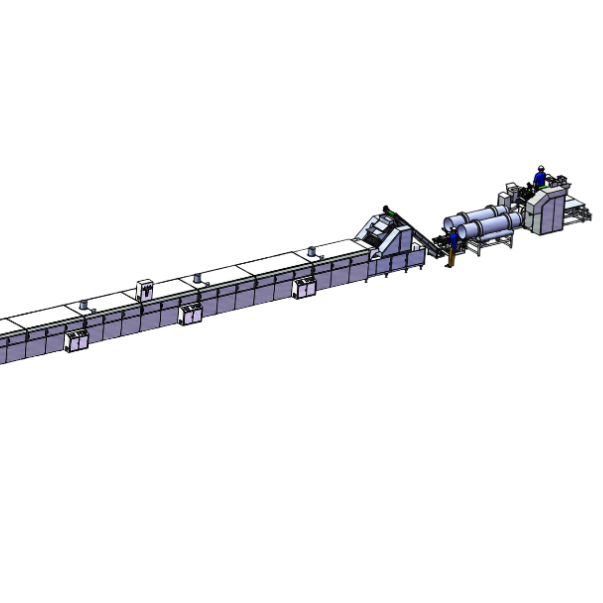
UDTECH builds one automatic biscuit production line: a 55 m train of eight machines that mixes, presses, cuts, rounds, bakes and screens small round snack pieces — the product trade English calls small steamed bun biscuit. It is baked in an electric tunnel, not steamed, and it is not the savoury quick bread American English also calls a biscuit. Send a photo of your piece with its diameter and weight and we tell you whether this line runs it.
Quotation within 24 hours
30–50 working days from contract
Trial run at our factory before shipment
12 months warranty from commissioning
We want the product, not the formula. A picture of the finished product together with its diameter and its weight is enough, and your recipe will remain your recipe.
Quotation turnaround
Within 24 hours, reviewed by an engineer
Production lead time
30–50 working days, confirmed with your quotation
Before shipment
Trial run and inspection at our factory, video sent to you, and you are welcome to attend
Payment
30–50% deposit against the signed contract, balance before shipment; L/C at sight also accepted
Warranty
12 months from commissioning, excluding consumable and wear parts
On your site
Our engineers install, commission and train your operators; travel, visa and accommodation to the buyer’s account
Automatic Biscuit Production Line Capabilities
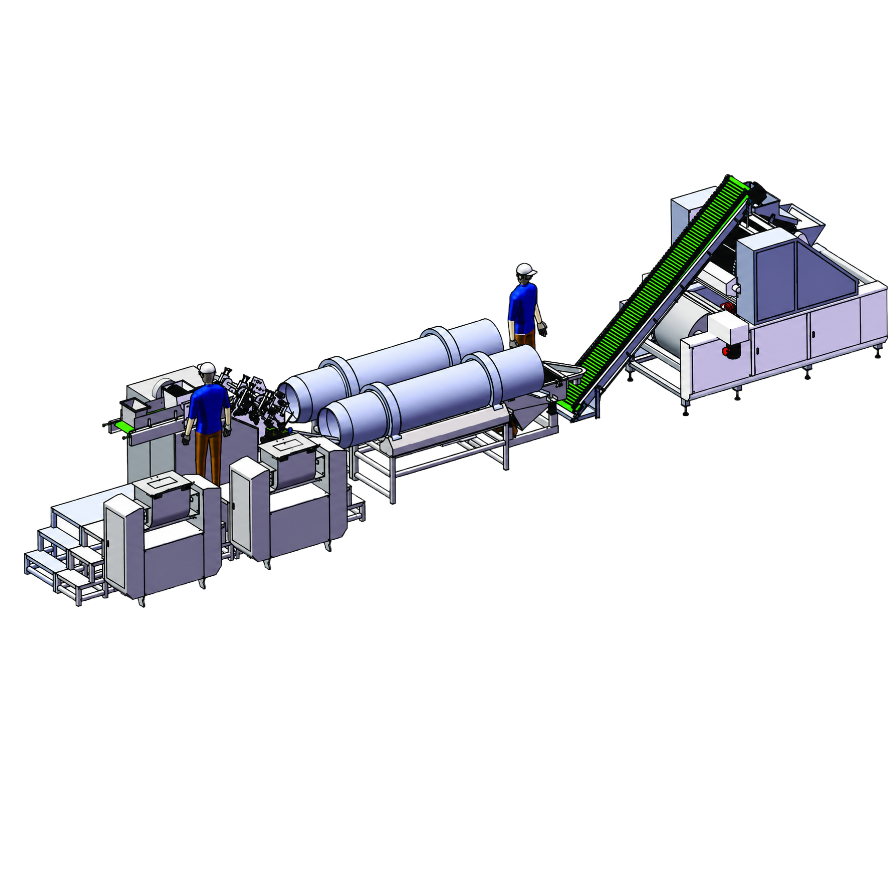
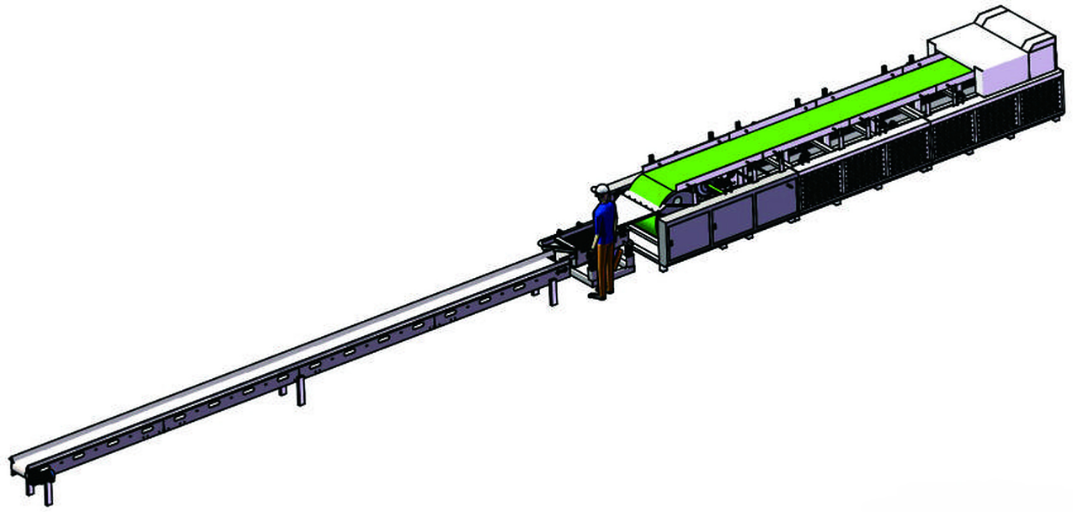
The line runs as one continuous production process from mixed dough to screened pieces: eight units over 55,000 mm drawing 418 kW installed, in the material-flow order below. Capacity is set by whichever unit chokes first, which is why the whole manufacturing process is published here: the UDTECH line is quoted as one machine, not as an oven with attachments. The trade-off of a dedicated train is fixed scope — pairing a bought-in oven with mismatched upstream units is where published capacity figures fail.
- Mixer — dough is mixed to the batch that the stages downstream are set for.
- Dough-sheet press and cutter — the sheet is gauged and cut to the piece size your product sets.
- Rounder — cut pieces are formed into the ball shape the finished piece keeps.
- Lifting conveyor — rounded pieces are lifted to the arranging deck without manual transfer.
- High-speed arranger — pieces are spread across the width of the belt so the bake is even.
- Electric temperature-controlled tunnel oven — pieces bake under zone temperature control, with no gas burner and no steam cabinet on this train.
- Vibrating screen — undersize and broken pieces are separated out. This is the last unit; the line ends here.
- Electrical control cabinet and operator platform — line controls and the operator position. Name your destination market's guarding, emergency-stop and disconnect rule in the enquiry — in the United States that is 29 CFR 1910.263 — and we answer it item by item in the quotation.

Baked, not steamed
Small steamed bun biscuit is a product name, not a description of the process. This train bakes electrically and carries no steam cabinet and no proofing section. If your product has to be steamed, the machine class you need is a steamer, and it is not this line.
How far the automation reaches
- The forming process is sheet pressing, cutting and rounding in succession, without manual intervention between stages
- The vibrating screen grades the run, taking out undersize and broken pieces before they reach your packing area
- Baking runs under zone temperature control the length of the tunnel, which is electrically heated
- Pieces cool on the belt between the tunnel exit and the screen, so no separate cooling cabinet is needed
Supported Products and Application Split
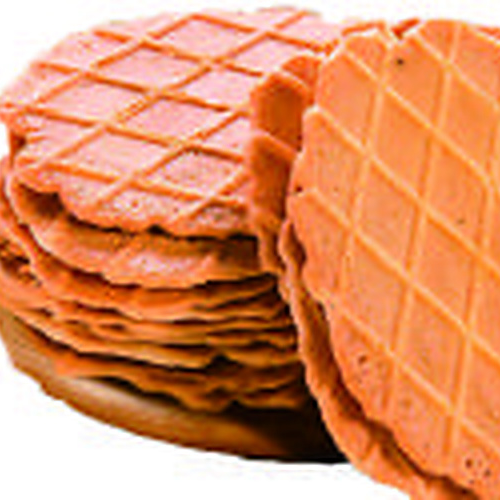
The word biscuit covers products made through at least six different forming routes and this line runs exactly one of them, so a line chosen on that word and a target tonnage can arrive unable to form your piece at all. This UDTECH line is designed around one product family — small round baked snack pieces from a wheat-flour dough, plain or coloured — and both variants run on the same line with no change of parts. The two finished product pictures below are the pieces recorded in the UDTECH equipment file for this train.

Plain mini bun biscuit
- Product form
- Round baked piece, uncoated
- Forming route
- Dough-sheet pressing, cutting, then rounding
- Heat process
- Electric temperature-controlled tunnel baking
- Grading point
- Vibrating screen, at the end of the train
- To confirm yours
- A photo, the finished diameter and the piece weight

Coloured or flavoured mini bun biscuit
- Product form
- Round baked piece, colour or flavour carried in the dough
- Where colour enters
- At the mixer — the train has no coating, panning or spraying stage
- Forming route
- Identical to the plain piece, with no change of parts
- Heat process
- Electric temperature-controlled tunnel baking, zone-controlled
- To confirm yours
- A photo, the finished diameter and weight, and the colouring you use
There are two separate pages under this category, and they are one train sold into two markets rather than two machines. The UDTECH equipment file records both applications against the same YT-XMT800 line, so the forming route, the tunnel and the eight-unit train are identical on either page — it is the specification you send us that differs.
Baby Biscuit Production Line
- Application
- The infant and toddler route, set out on a separate page and kept clear of ordinary small-biscuit work
- Line behind it
- The YT-XMT800 train specified on this page
- What changes
- The finished piece, and what your market expects of it, not the machine
- Tell us first
- Your destination market, the finished diameter and the piece weight
Mini Steamed Bun Production Line
- Application
- The leisure snack route, listed under the product's own trade name
- Line behind it
- YT-XMT800, eight units over 55,000 mm, 418 kW installed
- Output
- 4,000 kg per 24 h
- Heat source
- Electric tunnel baking, with no steam cabinet on the line whatsoever
Why a dedicated line beats an oversized one
Two published figures settle this before budget does. Trade coverage of tunnel sizing in Baking Business gives the general rule that a tunnel oven should be at least 70% full for a quality bake, so a tunnel too wide or too long for your product degrades the bake and not merely the energy bill. Private-label baker Leclerc chose the same way round and said so plainly: go smaller, and run the line at a speed that does full shifts without changeovers.
The trade-off runs against intuition: capacity you cannot fill is not free headroom, because a tunnel held under 70% full degrades the bake itself and not only the energy bill.
Oversizing against a growth plan is the wrong answer at the bake; the right call is a line sized for the shift you run today, with the second line bought when the first one is full.
Biscuit Forming Method, Size Changeover and Line Configuration
Biscuit forming route is the factor that decides whether a line can make your product at all. Bakery machinery is grouped by forming route before anything else — the A21C patent classification divides dough machinery on exactly that basis — and the table places this line inside that map.
| Forming route | Products normally made this way | This line |
|---|---|---|
| Rotary moulding | Hard sweet biscuits, digestive-type biscuits | No |
| Sheeting, laminating and cutting | Soda crackers, thin crisp and layered pieces | No |
| Wire-cut and depositing | Cookies and soft biscuits | No |
| Extrusion and co-extrusion | Extruded pieces and filled bars | No |
| Dough-sheet pressing and rounding | Small round baked snack pieces | Yes |
| Moulded baking template in a tunnel | Flat moulded and lattice-pattern pieces | Another UDTECH platform |
The table gives the route each product is normally made by, not the only way to reach it. Biscuits are also classified by texture and by formulation, and one product can be reached by more than one route.
Size and shape changes depend on two units
- The dough-sheet press and cutter set the piece size before rounding, so a different finished diameter is a change at that unit
- The rounder is responsible for the round form; any other shape cannot be reached by a change of production settings on this line
- The arranger spaces pieces to the belt width, so a size change is also a spacing change if the tunnel is to stay evenly loaded
Send the finished diameter, the piece weight and a sample: changeover parts and settings are confirmed against those, never estimated
Evaluate ParametersLine Specifications, Footprint and Utilities
Every figure below comes from our own specification for this biscuit production line, quoted in the basis we publish it in. Derived values carry their arithmetic with them, so you can recompute any of them.
| Specification | Value |
|---|---|
| Line length | 55,000 mm (180 ft 5 in) |
| Line width | 1,900 mm (6 ft 3 in) |
| Line height | 3,000 mm (9 ft 10 in) |
| Output | 4,000 kg per 24 h (8,818 lb per 24 h) |
| Output on an hourly basis | 167 kg/h (368 lb/h), derived |
| Installed power | 418 kW |
| Heat source | Electric, temperature-controlled tunnel baking |
| Energy envelope at rated power | ≤ 2.51 kWh per kg — an upper bound |
| Machine units in the train | 8, mixer to vibrating screen |
| Control | Electrical control cabinet with operator platform |
How the derived figures are calculated
- 167 kg per hour = 4,000 kg ÷ 24 h
- 8,818 lb per 24 h = 4,000 kg × 2.2046
- ≤ 2.51 kWh per kg = 418 kW × 24 h ÷ 4,000 kg, at rated power
Site requirements before the line arrives
- A clear straight run of at least 55 m for the train, plus working space at each end
- An electrical service able to carry 418 kW installed
- Floor loading rated for the equipment weight, and cleaning access around the machines rather than only along one side of them
CRITICAL PATH
Send the building drawing before the specification. A 55,000 mm straight run and a 418 kW supply either exist on your floor or they do not, and that answer changes the configuration before any other decision does.
UDTECH application engineering
For scale: published US biscuit, cookie and cracker plants run tunnel ovens of 80 to 160 ft (24 to 49 m) at belt widths of 39 to 48 in, one of them discharging into a 66 ft cooler. Our 55,000 mm is the whole train from mixer to vibrating screen — roughly one of entire plants' baking-and-cooling section, with mixing, forming, rounding, conveying, arranging and screening included.
Tunnel length buys you throughput and costs you floor run, and that is the trade you are actually making when a 55 m train is set against a 24 m oven quoted on its own.
Reading a capacity figure before you compare it
Lines in this class publish capacity on at least three different bases, so the four figures below cannot be ranked against one another until they are put on a single basis.
| Published basis | Figure as listed | What it does not settle | What puts it on one basis |
|---|---|---|---|
| Pieces per hour | 4,000 pieces/h | Mass output, because the piece weight is not stated | The finished piece weight in grams: pieces/h × g ÷ 1,000 = kg/h |
| Kilograms per hour, single figure | Up to 1,500 kg/h | Whether that rate is peak or sustained | Hours per shift held at that rate, and on which product |
| Kilograms per hour, banded | 450-550 kg/h | Which end of the band your product sits at | The product and the dough the band was measured on |
| Kilograms per 24 hours, this line | 4,000 kg per 24 h | The hourly rate, and whether you run 24 hours | 4,000 ÷ 24 = 167 kg/h, then your own running hours |
Run this check on any listing in ten seconds
BAKERpedia, the baking trade's technical reference, publishes tunnel heat loads of 350-450 BTU per pound of batter for cakes and sweet baked goods, 400-500 BTU per pound of dough for bread and buns, and 900-1,000 BTU per pound for soda and snack crackers.
Take the lowest figure published for any of them, 350 BTU/lb, which sets a floor rather than a match: divided by 3,412.14 BTU per kWh that is 0.10257 kWh per pound, and multiplied by 2.20462 that is 0.226 kWh per kilogram, before any tunnel loss. Those bands are published per pound of dough or batter going into the oven, so read against a finished-output rate they stay a floor: a line advertising 500 kg per hour needs at least 113 kW of heat alone, and a listing pairing that output with a few kilowatts is describing a different machine.
Quotation, Lead Time and Payment Terms
There is no price list for this line, because no two are configured alike. What you pay follows target daily output, your electrical supply and heat source, the length of the train and the number of conveying sections, how much automation you carry either side of it, the delivery terms and destination, and the scope of on-site installation and training.
What a quotation covers, and what it does not
| Covered in a quotation for this line | Not in this line's scope |
|---|---|
| The eight-unit train, mixer to vibrating screen, with the control cabinet and operator platform | Steaming: this line bakes and carries no steam cabinet |
| Factory trial run and inspection before shipment, with the trial-run video | Downstream packaging: the train ends at the vibrating screen |
| Our engineers on your site for installation, commissioning and operator training | Engineers' travel, visa and accommodation, which are to the buyer's account |
| 12 months warranty from commissioning | Consumable and wear parts |
| Layout drawing for the 55 m corridor and the 418 kW connection point | Building work, electrical service upgrades and foundations |
| — | Destination-market certification and documentation, a project-specific item confirmed separately against your written specification |
How your quotation is produced
Send your product, your target daily output and your site conditions, and an engineer returns a written quotation within 24 hours. Production is then scheduled at 30–50 working days and confirmed with that quotation. Payment is 30–50% deposit against the signed contract with the balance before shipment, and L/C at sight is also accepted.
Sixteen headings to put in your specification
A published university guide to buying food process equipment lists sixteen headings a specification should cover. The three buyers leave out most often are inspection and acceptance testing, installation, and maintenance and service. Equipment weight, foundation requirements, utility usage, drawings, manuals and spare-parts lists are named there as items the specification settles, not items to discover on delivery.
Pre-shipment Trial Run, Sanitation and Warranty
Manufacture is rarely where a line project fails. The failure usually sits in what was never specified: the acceptance test, the cleaning access, the date the warranty runs from. Every line leaves the UDTECH factory only after it has been assembled and run, and below is what happens before shipment, what is handed over with the line, and what the warranty is measured from.
- The complete line is assembled and trial-run at our factory before it ships; a factory trial run is not a substitute for on-site acceptance, and both belong in your specification.
- The trial run is filmed and the video is sent to you, and you are welcome to attend it in person.
- It is also your first chance to inspect cleaning access on the assembled machines, which is easier standing at the line than on a drawing.
- The balance of payment falls due before shipment, after the trial run.
A biscuit line is a dry process, and a dry process is cleaned dry. Published food industry guidance on sanitary design in bakery and food processing plants is explicit that wet cleaning in a dry area does more harm than good. The US equipment rule, 21 CFR 117.40, calls for cleanable design, corrosion-resistant food-contact surfaces, smoothly bonded seams, and installation that lets both the equipment and the spaces next to it be cleaned.
- Food-contact material grade, cleaning access and washdown expectations are confirmed item by item against your written specification at quotation stage
- The adjacent-spaces clause is a floor-plan question: leave cleaning access around the train, not only along one side of it
Warranty is 12 months from commissioning, excluding consumable and wear parts. Ask any supplier which event starts theirs: delivery, acceptance and first production are three different dates, and twelve months measured from each is three different lengths of cover.
- Manuals, drawings, utility data and spare-parts lists are specification items — name them in your enquiry and they are confirmed in the quotation rather than left to arrival
- Our engineers travel to your plant for installation and commissioning and train your operators on the line; travel, visa and accommodation are to the buyer's account
Biscuit Production Line Project Flow, From Enquiry to Handover
You send the product photo, finished diameter and weight, target daily output, available straight run and electrical service. We answer whether the line runs your product.
An engineer returns a written quotation within 24 hours, with the scope boundaries stated so you can compare it line for line.
The deposit is 30–50% against the signed contract. The production clock starts here, not at first contact.
Manufacture takes 30–50 working days, to the configuration fixed in the contract.
The assembled line is run and inspected at our factory before shipment, the video is sent, you are welcome to attend, and the balance falls due.
On delivery the train is set out on your floor to the layout drawing. This stage ends when the line is mechanically complete, not when it runs.
Utilities and controls are verified on your floor before commissioning starts, because the enquiry-stage check was a drawing exercise and this one is a measurement. Operator training runs with commissioning.
Handover follows a documented performance acceptance: the line is run to the agreed acceptance criteria and the result is recorded, so handover rests on a record rather than a verbal sign-off.
Engineering Calculation Tools
-
SYS.CALC / 01
Biscuit Line Capacity Unit Converter
-
SYS.CALC / 02
Biscuit Line Envelope Check
-
SYS.CALC / 03
Biscuit Line Nameplate Sanity Check
Frequently Asked Questions
Which products does this line make?
Small round baked snack pieces from a wheat-flour dough, plain or coloured — the product trade English calls small steamed bun biscuit. One product family, two variants, one train. Send a photo with the finished diameter and the piece weight and we confirm whether it runs.
Does the line bake the buns or steam them?
It bakes, in an electric temperature-controlled tunnel, with no steam cabinet and no proofing section. "Steamed bun" names the product's appearance in trade English, not the process. If your product must be steamed you need a steamer, which is a different machine class.
How much does the line produce, and on what basis?
4,000 kg per 24 hours, our own published basis; divide by 24 for 167 kg per hour, multiply by 2.2046 for 8,818 lb per 24 hours. Throughput is set by whichever stage chokes first, so compare whole trains rather than single machines. We do not call this line state-of-the-art — that word is not checkable, and these figures are.
How much floor space and electrical supply does the line need?
A straight run of at least 55,000 mm for the train, at 1,900 mm wide and 3,000 mm high, plus working space at each end, and an electrical service able to carry 418 kW installed. That 55,000 mm is the corridor the machines occupy rather than the room they sit in — you also need cleaning access around the train, not only along one side of it, and floor loading for the equipment weight. Send a floor plan and the corridor and the supply point are marked on your own drawing.
Which forming technology does this line use?
Dough-sheet pressing and rounding: the sheet is gauged and cut, then the cut pieces are rounded. It is neither rotary moulding nor wire-cutting. That route is what limits the line to round pieces at the size the press and the rounder are set for.
Can the line make hard biscuits, soft biscuits or crackers?
No. Those are three separate forming routes — rotary moulding, wire-cutting and lamination — and this train has none of them.
What determines a size or shape change on this line?
The dough-sheet press and cutter set the piece size and the rounder sets the round form, so a different diameter is a change at those two units and a change to the spacing the arranger holds. Send the finished diameter, the piece weight and a sample; parts and settings are confirmed against them.
Which factors drive the price of a line like this?
Target daily output, your electrical supply and heat source, the length of the train and the number of conveying sections, how much you automate either side of it, the delivery terms and destination, and the scope of on-site installation and training. Configured lines carry no list price.
How long is the lead time?
Production is scheduled at 30–50 working days and confirmed with your quotation. The clock starts at the signed contract and the deposit rather than at first enquiry, and it ends at the factory trial run rather than at arrival on your site. Sea freight, customs clearance and your own installation window sit outside that figure, so a delivered-and-running date is the contract lead time plus your freight and site schedule — worth fixing in writing before you set two suppliers' quoted weeks side by side.
Can I see the line running before it ships?
Yes. Every line is trial-run and inspected at our factory before shipment, the video is sent, and you are welcome to attend.
What warranty and installation support is included?
Warranty is 12 months from commissioning, excluding consumable and wear parts. Our engineers travel to your plant for installation and commissioning and train your operators; travel, visa and accommodation are to the buyer's account. Ask every supplier which event starts their warranty.
Does the quotation include downstream packaging?
No — this train ends at the vibrating screen, and packaging is a separate machine class quoted separately if you ask for it.
What documentation should I specify for my destination market?
Put your destination market's requirements into the written specification you send with the enquiry: machine guarding and electrical isolation practice, food-contact material documentation, manuals and the language they are written in. The US bakery equipment rule, 29 CFR 1910.263, covers machine guarding, emergency stops and disconnect provisions, and the US equipment rule, 21 CFR 117.40, covers cleanable design and food-contact surfaces; your own market sets its own list, which is why the specification is yours to write and ours to answer. We confirm item by item what we can supply against that specification, at quotation stage rather than after shipment.