Get in touch with UDTECH Company


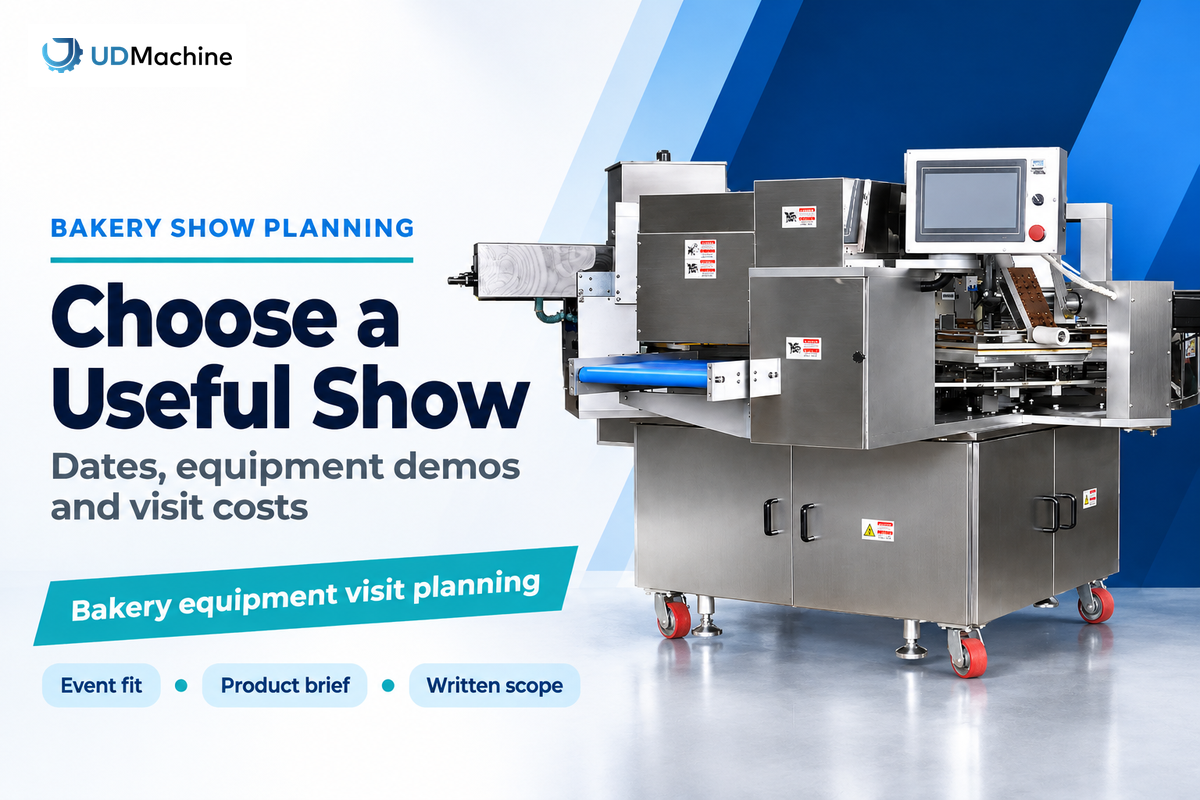
A bakery show connects bakers with equipment suppliers, ingredient companies and educators. For a business visit, identify the event that covers the product you want to manufacture and the people you want to meet. This guide lists eight organizer-announced events for 2027-2028 and covers planning visits, machinery comparison, trip budgeting and other activities.
A bakery developing a new pastry range and a wafer-roll factory have different priorities for a business visit. Make the initial distinction and then decide on a destination.
Before you book
- Match the event to your product and purchasing task.
- Separate exhibition days from education days.
- Compare demonstrations using the same recipe, output unit and finishing scope.
- Budget for travel, accommodation and time away from production, alongside the entry badge.
What Is a Bakery Show?
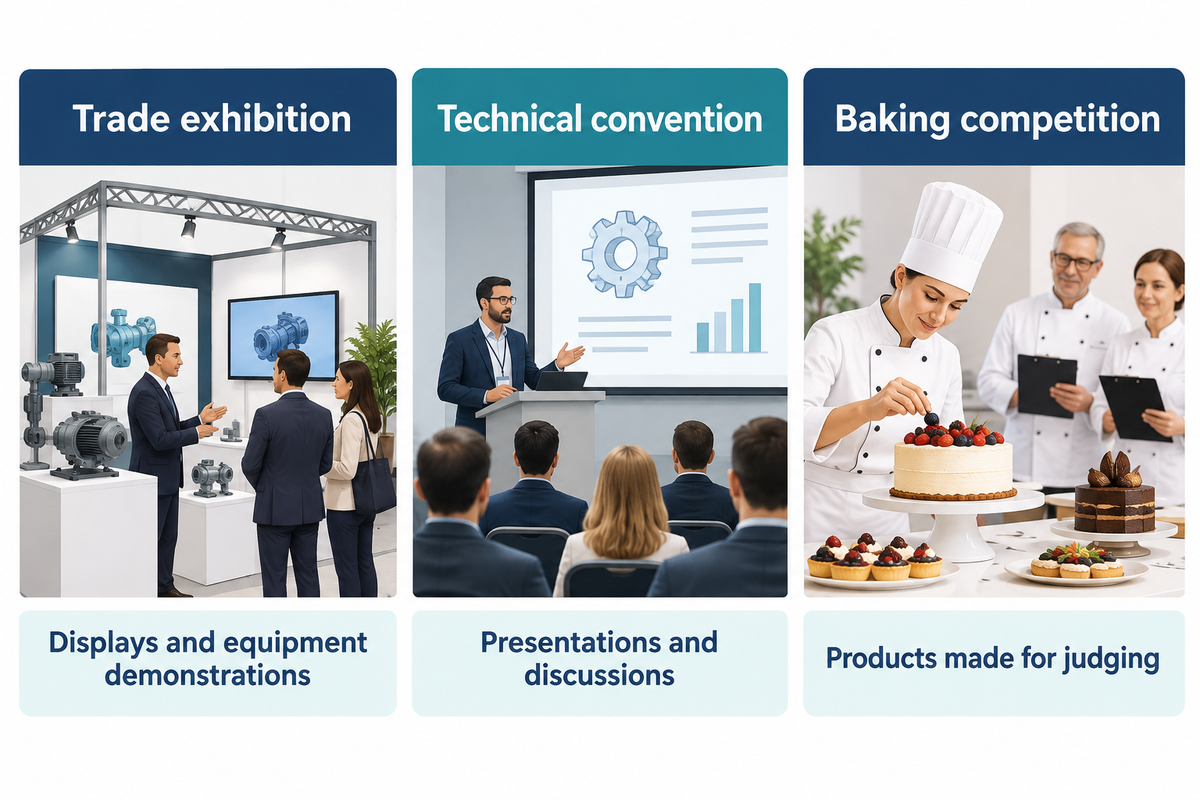
A bakery show is a fact-finding industry event to discover products, meet suppliers and gain knowledge on baking or production methods. Trade exhibitions focus on displays and equipment demonstrations. Technical conventions, on the other hand, emphasize presentations and discussions. A baking competition, on the other hand, focuses on contestants making products for judging.
IBIE, the International Baking Industry Exposition, is also known as The Baking Expo. It focuses on commercial and retail businesses along the grain-based food supply chain. On the other hand, BakingTECH, organized by the American Society of Baking, focuses on technical education and industry exchange. While both may be helpful for a professional baker, the useful conversation at each may be different.
Begin an equipment project by determining the decision you want to make as a result of the visit. For craft development, for example, decide on the techniques or ingredients you want to bring back to your bakery.
Upcoming Bakery Trade Shows: Dates, Places and Fit
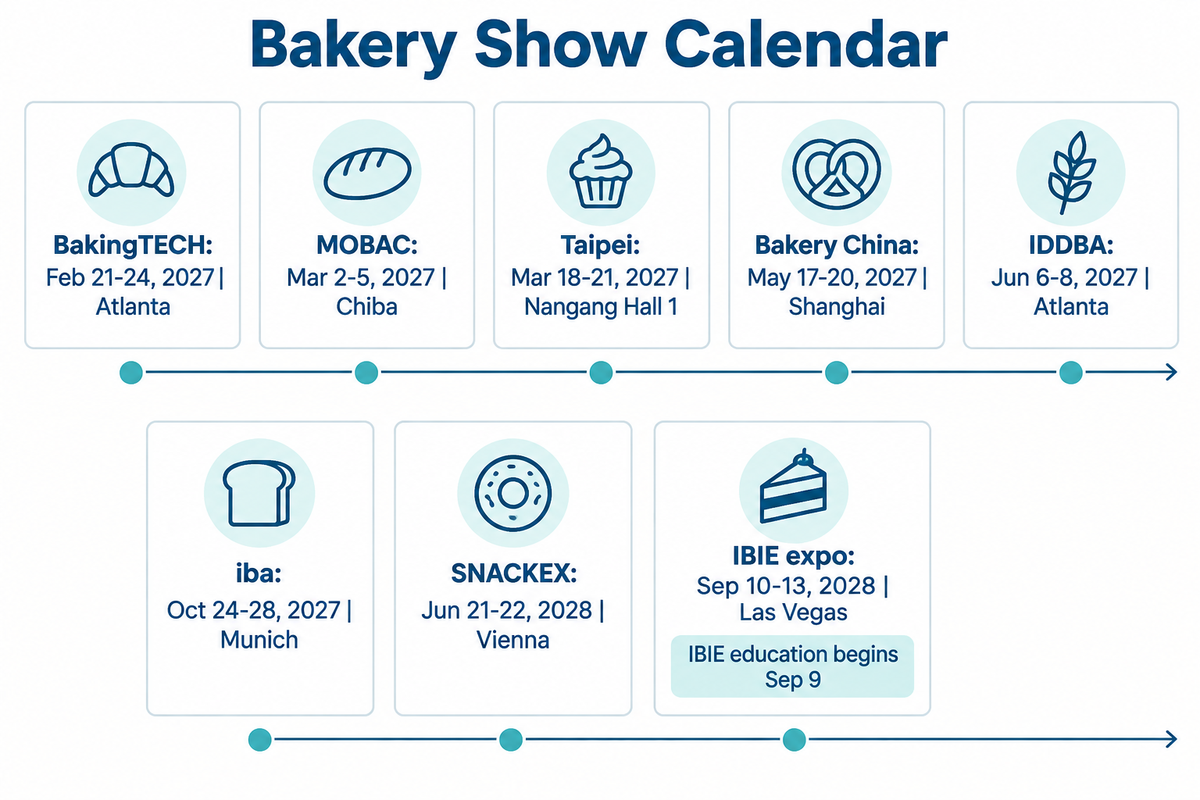
The next published editions below cover BakingTECH (February 2027) to IBIE (September 2028). Choose by event focus as well as geography. The calendar separates IBIE’s exhibition dates from its education dates, so machinery visits and educational visits can have different travel dates.
| Event | Published dates | Location | Main visit focus |
|---|---|---|---|
| BakingTECH 2027 | February 21–24, 2027 | Atlanta, United States | Baking science, technical sessions and the Formulation Floor |
| MOBAC SHOW 2027 | March 2–5, 2027 | Makuhari Messe, Chiba, Japan | Bakery and confectionery machinery, materials and marketing |
| Taipei International Bakery Show | March 18–21, 2027 | Nangang Exhibition Center, Hall 1, Taipei | Bakery equipment, ingredients, packaging and finished products |
| Bakery China 2027 | May 17–20, 2027 | NECC, Shanghai, China | Production equipment, ingredients, packaging and services |
| IDDBA 2027 | June 6–8, 2027 | Atlanta, United States | Dairy, deli, bakery and foodservice buying |
| iba 2027 | October 24–28, 2027 | Munich, Germany | Bakery and confectionery production, products and trade services |
| SNACKEX 2028 | June 21–22, 2028 | Vienna, Austria | Savory snacks, ingredients and related processing technology |
| IBIE 2028 | Exposition: September 10–13, 2028; education begins September 9 | Las Vegas, United States | Commercial and retail baking equipment, ingredients and education |
Dates and event descriptions come from the linked organizers. Booking pages have the current event admission rules, hours, and programs.
Locations are important for transfers. MOBAC is in Chiba (Makuhari Messe), and thus is outside central Tokyo. The Taipei event is in Nangang Hall 1. For IBIE, the extra day of education is worth adding to your itinerary only if your event has the sessions you want scheduled on that day.
Which Baking Convention Fits Your Business?
Choose machinery exhibitions for production equipment, technical conventions for process technology, and retail events for product sourcing. Narrow the choices by accessibility and travel commitment. A good initial list comes from the task to be performed, as opposed to the event with the largest advertised floor space.
The 3-Lens Bakery Show Selector
Use three questions in order: Does the show cover your product or process? Can you meet the supplier or specialist needed for your decision? Is meeting that supplier worth the cost of the trip? Remove an event when the answer to the first question is no. With supplier access still undecided, keep travel booking flexible.
| Your task | Starting point | Bring to the meeting |
|---|---|---|
| Compare industrial baking lines | IBIE, iba or Bakery China | Product specification, output target and factory layout |
| Discuss formulation or a process problem | BakingTECH | Recipe variables, defect samples and the technical question |
| Source machinery and materials in Japan | MOBAC | Service-location needs and utility requirements |
| Explore retail products and ingredients | Taipei or iba | Product range, pack format and ordering quantities |
| Develop an in-store bakery range | IDDBA | Retail channel, handling needs and shelf-life questions |
| Review savory snack processing | SNACKEX | Snack type, seasoning, packaging and production constraints |
Example: A bakery owner in the neighborhood wants to expand their business by including a premium range of pastries. This bakery owner doesn’t want to change the main bread line. The owner needs to make immediate decisions about ingredients, portion formats and storage. A more retail-focused event can give the bakery owner an opportunity to sample and discuss products. This is of great help to the bakery owner. An industrial wafer producer who wants to have continuous production has a different task for the visit. This involves meeting application engineers, discussing batter handling and checking downstream cooling and packing. A routine trip to an exhibition can be useful.
IBIE, iba or a Regional Bakery Show?
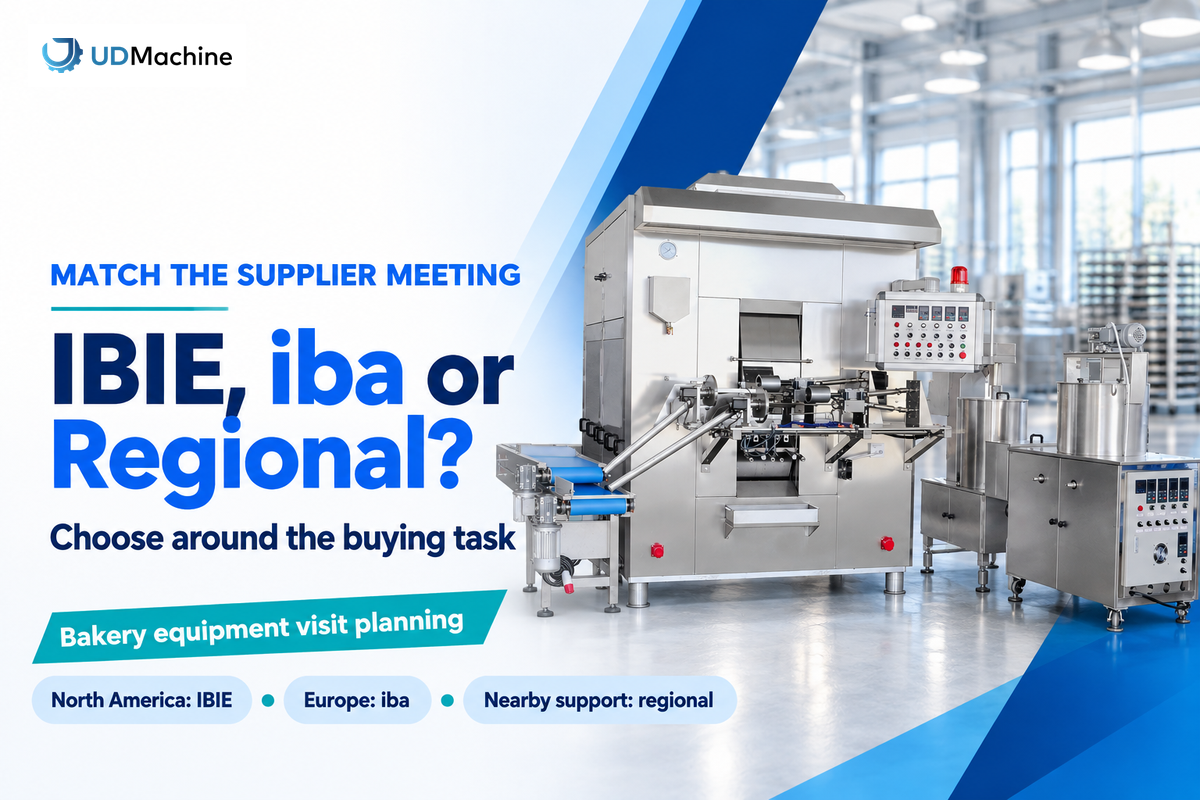
Use IBIE for an industry visit in North America, iba for a European baking supply visit, and a regional show when nearby suppliers and support are the priority. A specialist wafer-roll project needs a relevant supplier meeting. A large general exhibition can be useful without running your exact product.
IBIE is an American, industry-owned event in Las Vegas. Its organizer says it’s the largest grain-based food trade event in the Western Hemisphere. That broad scope brings together suppliers across the baking world. While a regional fair may reduce travel and bring local service discussions to the visit, trade fairs continue to attract international participation.
The iba 2027 organizer’s visitor FAQ says ticket sales, exhibitor details and the programme will be released later. In the meantime, create a shortlist based on the event’s focus, and make specific appointments as the edition’s programme develops.
Plan Your Visit Before You Book
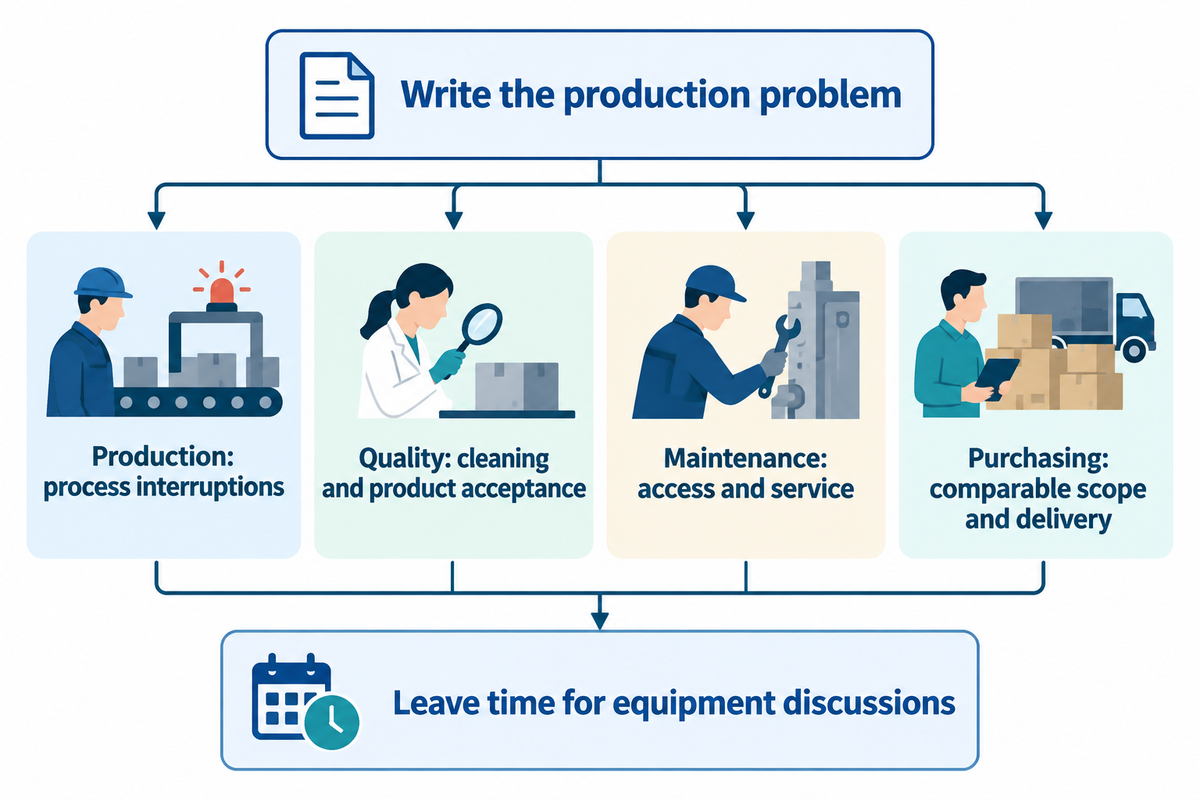
Write down a production problem and pre-schedule meetings around it. Assign members of the production, quality, maintenance, and purchasing departments to look at the problem, and add the education sessions to the visit itinerary. This often leaves time in the schedule for equipment discussions.
“All departments, manufacturing, packaging, sanitation, maintenance, food safety, get together and identify our pinch points.”
This method can be used to divide the work. Consider an interruption in the process from the perspective of production. Quality can discuss cleaning and product acceptance. Discuss access and service with maintenance. Ask purchasing to collect proposals with a similar scope and delivery terms.
Provide a photo of the product, target dimensions, recipe constraints, and current output unit, along with a simple layout. Samples’ cooled texture and pack formats are useful. For a waffle project, the product brief will look very different from one for an automatic egg-roll machine.
Leave space between meetings and sessions. In an older Fresh Loaf discussion, a visitor shared how an unexpected seminar shortened the time available to look for an oven. A planned route should account for time to move halls, compare notes, and return to a supplier to ask a follow-up question.
International guests also need the event’s badge and letter sequence in their itinerary. IBIE’s FAQ says visitors register before requesting the visa invitation letter. For that event, specialty courses and workshops are added separately from the general education included with registration.
What to Look for in a Bakery Equipment Demonstration
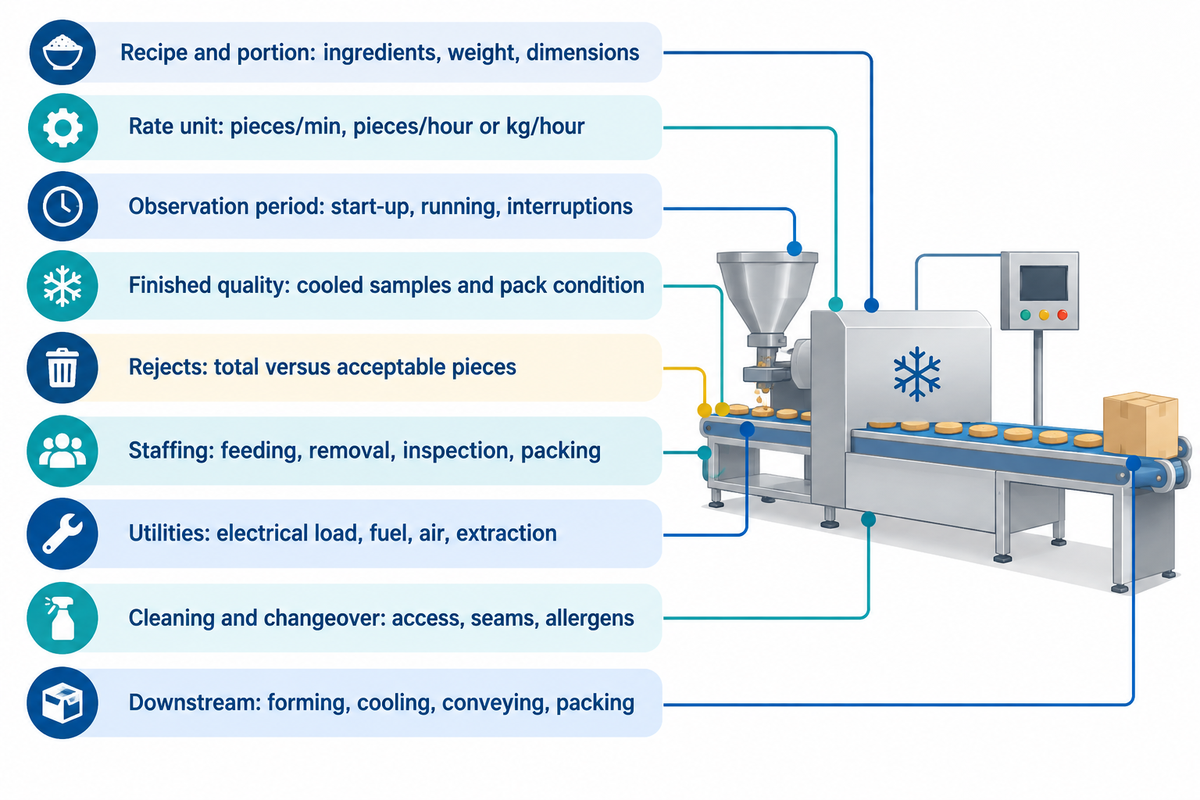
Compare cooled baked goods under the same recipe, operating and staffing conditions. Note the output unit, time observed and what happens post-bake. For a rapid demonstration, a mechanism in a process may be seen; to understand a production line in its entirety, one needs to look into rejects and what happens downstream and upstream.
| Condition | Record at the demonstration | Consequence for your factory |
|---|---|---|
| Recipe and portion | Batter or dough, filling, piece weight and dimensions | A different recipe can change forming and baking behavior |
| Rate unit | Pieces/min, pieces/hour or finished kg/hour | Rates need the same time and product basis |
| Observation period | Start-up, stable running and interruptions | Start-up footage and a sustained run answer different questions |
| Finished quality | Cooled samples, dimensions, color, texture and pack condition | Warm appearance alone misses handling and packing behavior |
| Rejects | Total pieces and acceptable finished pieces, with reject reasons | Gross production differs from saleable output |
| Staffing | Manual feeding, removal, inspection and packing work | Labor remains wherever the demonstrated scope ends |
| Utilities | Electrical load, heating fuel, air and extraction | A connected-power rating is different from total energy consumption |
| Cleaning and changeover | Food-contact access, seams, recipe changes and allergen-cleaning procedure | Cleaning access and residue control affect the usable production schedule |
| Downstream scope | Forming, cooling, conveying and packing included in the run | A slower downstream stage can restrict finished output |
In applicable United States food-production facilities, 21 CFR 117.40 addresses cleanable equipment, cleaning and maintenance access, and food-contact seams that limit residue accumulation and allergen cross-contact. Include these in the technical discussion, and note speed and look of the product.
Example: A buyer is looking at a compact machine and a continuous wafer-roll line. UDTECH lists about 600 pieces/hour for its compact YT12 family and 220 pieces/min for the UD05-2 continuous system. The first conversion is 600 ÷ 60 = 10 pieces/min. That makes the time units comparable, but the machines still serve different production scales. The plant manager needs to get the matching roll dimensions and recipe conditions. Quality requires an acceptable cooled sample. Finance requires the complete scope, including the people and equipment that handle the product after baking. The buyer needs to compare the model families and requirements for the finished product, then make decisions about alternative production choices.
The UDTECH wafer-roll specifications state that the UD05-2 continuous system runs at 220 pieces/min with an electrical load of 9.7 kW, while the UD05-3 system runs at 330 pieces/min with an electrical load of 12 kW. LPG or natural gas is listed separately for heating. Keep those supplies separate in the utility comparison. The 3 kW figure in the specs for the feuilletine production line is scoped to the electricity of the baking unit, with fuel and downstream equipment handled separately.
Trace the route from baking through forming and cooling to packing. For an industrial waffle machine, that route includes handling the finished waffle. A shortfall at cooling or packing can leave the baker waiting even when the baking section runs at its stated rate.
| Handoff | What to observe | Action for the trial |
|---|---|---|
| Baking to forming | Accepted baked pieces reaching the forming stage | Record recipe, piece size and rejected sheets |
| Forming to cooling | Completed rolls and manual handling interruptions | Include forming and removal labor in the run |
| Cooling to packing | Cooled product condition and any accumulation | Review cooled samples and the available transfer space |
| Packing to finished output | Accepted packs, material changes and stoppages | Use the intended pack material and count finished output |
Exhibition and supply procedures aren’t the same. In the United Kingdom, HSE’s exhibitor guidance allows some non-compliant products to be demonstrated only under restricted conditions, including safety measures and a notice. When considering the design and arrangements for supply, a display machine must be considered separately.
How Much Does a Bakery Show Visit Cost?
Published admission ranges from free trade entry at SNACKEX to NT$200 for a regular onsite Taipei ticket. A full visit includes travel and stay, any separately charged courses, and time away from the workplace for staff. Build a trip budget from the itinerary and selected activities at the event rather than using an average of all bakery show visits.
At SNACKEX, only industry visitors are allowed. The visitor page for the Taipei event has different arrangements for the identity check and ticket preregistration for overseas buyers. Select the arrangements for visitor access that apply to your case.
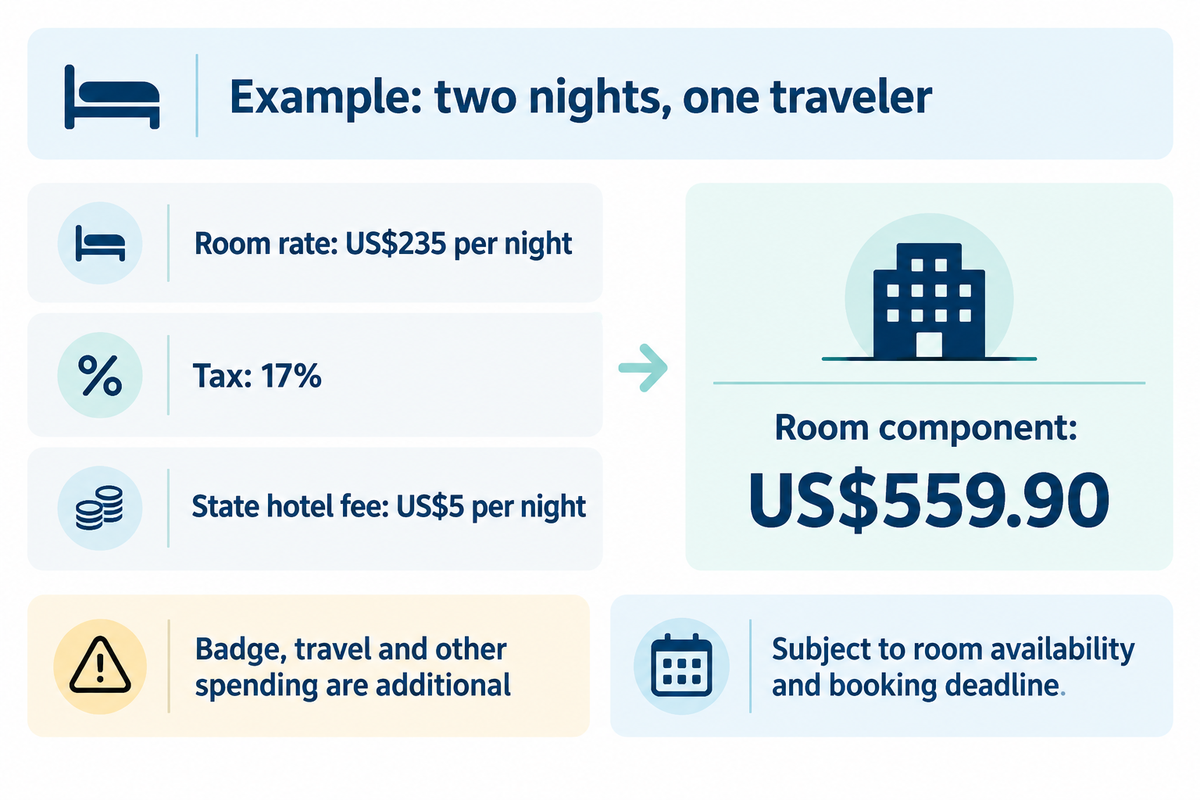
Example: two nights of accommodation for one traveler. ASB’s BakingTECH 2027 hotel page publishes a group room rate of US$235 per night, plus 17% tax and a US$5 nightly state hotel fee. Using those inputs, the room component is 2 × [(235 × 1.17) + 5] = US$559.90. This covers the assumed two-night stay; the visit budget still needs the delegate badge, travel and other spending. A colleague sharing the room changes the per-person allocation, while another room changes the accommodation total. Finance can compare those choices before approving the trip. The published group rate is subject to availability and the organizer’s February 6, 2027 booking deadline.
Use the following calculation for your itinerary: visit cost = badges + travel + rooms and taxes + local transport + meals + courses + staff time. Only count costs already included in the delegate package once. BakingTECH states its delegate registration includes the educational sessions, the Formulation Floor, receptions and luncheons.
Keep the return question concrete: which equipment choice, product launch or technical problem should the trip advance? A trip to advance a project gives the owner a clearer spending decision than a list of general networking benefits.
Turn Show Conversations into a Supplier Shortlist
Send the same product brief to each shortlisted supplier and request a written proposal with equipment boundaries. Compare production scope, utilities and service and the next trial on the same basis. Use the exhibition to narrow the discussion, then give production, quality and finance a shared set of information for the buying decision.
Art Thomas’s supplier-selection guidance on the NIST website recommends reviewing quality systems and production and inspection documentation, employee training and preventive maintenance. For a machine project, the ability of the supplier to provide installation support and support ongoing operation should be considered alongside the purchase price.
Put the follow-up in this order:
- Send the production brief. Include the product, target output unit, dimensions, recipe constraints and factory utilities.
- Compare the written scope. Identify included equipment, manual work, delivery terms, installation, training, spare parts and service responsibilities.
- Arrange the next product trial. Agree on samples, observation conditions, cleaning and changeover work, and the acceptable finished product.
When supplier responses include unresolved issues, keep them with the response. A lower machine price may leave conveying or packing equipment separate; a broader proposal may include work that’s left for your factory to do in the first quote. Differences like these belong in the commercial comparison before an order is placed.
What Is Changing on the Bakery Show Floor?
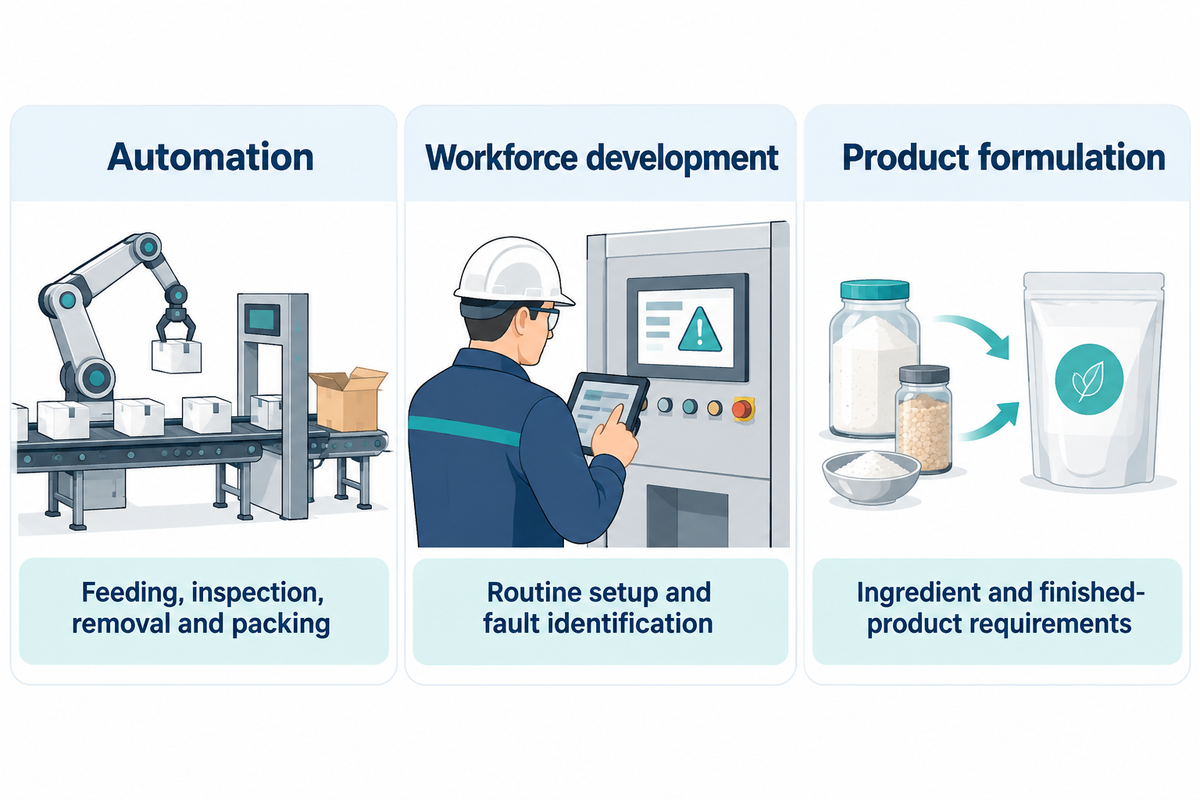
Automation, workforce development and product formulation are themes that lend themselves to the bakery show visit. IBIE’s pre-2025 programme discussions highlight these subjects, while BakingTECH 2027 combines technical education with formulation exchange. Turn each theme into a production question rather than assuming a new machine will bring a particular saving.
On automation, look at the work done around the core processes (feeding, inspection, removal and packing). In its technical feature on bread-line packaging capacity, Baking & Snack discusses product differences, packaging materials, changeovers and operator training.
For workforce development, consider the personnel who will operate and maintain the equipment. A controls demo shows routine process setups and how an operator identifies a fault. In the case of a new recipe, discuss with the process specialist the ingredient and finished-product requirements.
Key takeaway
Choose the bakery show that advances a defined production or buying task. Take a product brief, meet the relevant people and return with comparable written proposals and a clear next trial.
For a wafer-roll, waffle or feuilletine project, send UDTECH your product and production requirements to discuss the machine family and trial preparation before planning a visit.
Frequently Asked Questions
Is a bakery show open to the public?
Some bakery shows admit the public, while others restrict access to industry visitors.
Taipei lists regular onsite tickets and business-buyer registration options. SNACKEX is for trade professionals and excludes the general public and visitors under 18. IBIE is designed for the trade, with an Allied/Other registration category for people outside the industry. Use the chosen event’s admission category when planning a business or family visit.
Are bakery shows useful for a small bakery?
Yes, a small bakery can use a show to source ingredients, learn skills and compare equipment for a specific expansion.
Start with your menu and the next purchase. An owner developing pastries will need different stands from one replacing an oven. Reserve time for the relevant craft or business sessions, and bring product photographs, available space and utility details to equipment meetings. A shorter, focused visit can suit a clearly defined task.
Can I buy bakery equipment at an exhibition?
Yes, an exhibition can begin an equipment purchase and provide a place to discuss a written quotation.
Before ordering, compare the specified model, utilities, included handling equipment and installation responsibilities. A show-floor sample may use another recipe or finishing process from yours. For a larger line, arrange a product trial and agree on acceptable finished output, cleaning, training and service. Keep those terms with the final commercial proposal.
Do exhibitors always run a live machine?
No. A stand may use a static machine, samples or video. Put a live demonstration appointment into the supplier discussion before choosing travel dates, including the product and configuration you need to see.
What should I send before a wafer-roll machine demonstration?
Send the finished roll specification, recipe constraints, required output and available factory utilities.
Include a photograph, roll length and diameter, filling requirements and the intended pack. Describe the texture you want after cooling, along with any handling problems such as cracking. State whether the output target means gross baked pieces or acceptable packed product. Include electrical supply, available heating fuel, installation space and the downstream equipment already in place. If the current process has an uneven bake, the guide to uneven thin-wafer baking can help structure the defect description. The supplier can then discuss a relevant machine family and the materials needed for a trial.
Are IBIE and iba the same event?
No. IBIE takes place in Las Vegas, United States, while iba 2027 is scheduled for Munich, Germany. They’re separate industry events with their own programmes, organizers, registration and exhibitor arrangements.
Can an exhibition demo replace a factory trial?
No. Use the exhibition demonstration to inspect the process and narrow the machine choice. A factory trial should address your recipe, sustained running, cleaning and the finished product handling needed for the proposed installation.
Related production guides
- Pancake production line guide
- Sachima production line guide
- Sachima and specialty snack lines
- Uneven thin-wafer baking: process questions to bring to a supplier
References & Sources
- Official event dates and visitor information: organizer links in the calendar and iba visitor FAQ.
- IBIE: Shop Talk, Perspectives from Baking Industry Leaders, pre-2025 edition interviews.
- ASB: BakingTECH 2027 hotel and travel; delegate registration inclusions.
- IBIE: 10 Trends Shaping the Future of the Baking Industry, pre-2025 edition discussion.
- Michelle Smith, Baking & Snack: How to determine packaging capacity for bread lines, June 11, 2024.
- 21 CFR 117.40: Equipment and utensils.
- United Kingdom Health and Safety Executive: Exhibitor guidance.
- Art Thomas: 8 Ways to Improve Your Supplier Selection Process, NIST Manufacturing Innovation Blog, May 30, 2023.