Get in touch with UDTECH Company

Wafer Stick Machine: A Practical Guide to Line Stages, Capacity, and Supplier Checks

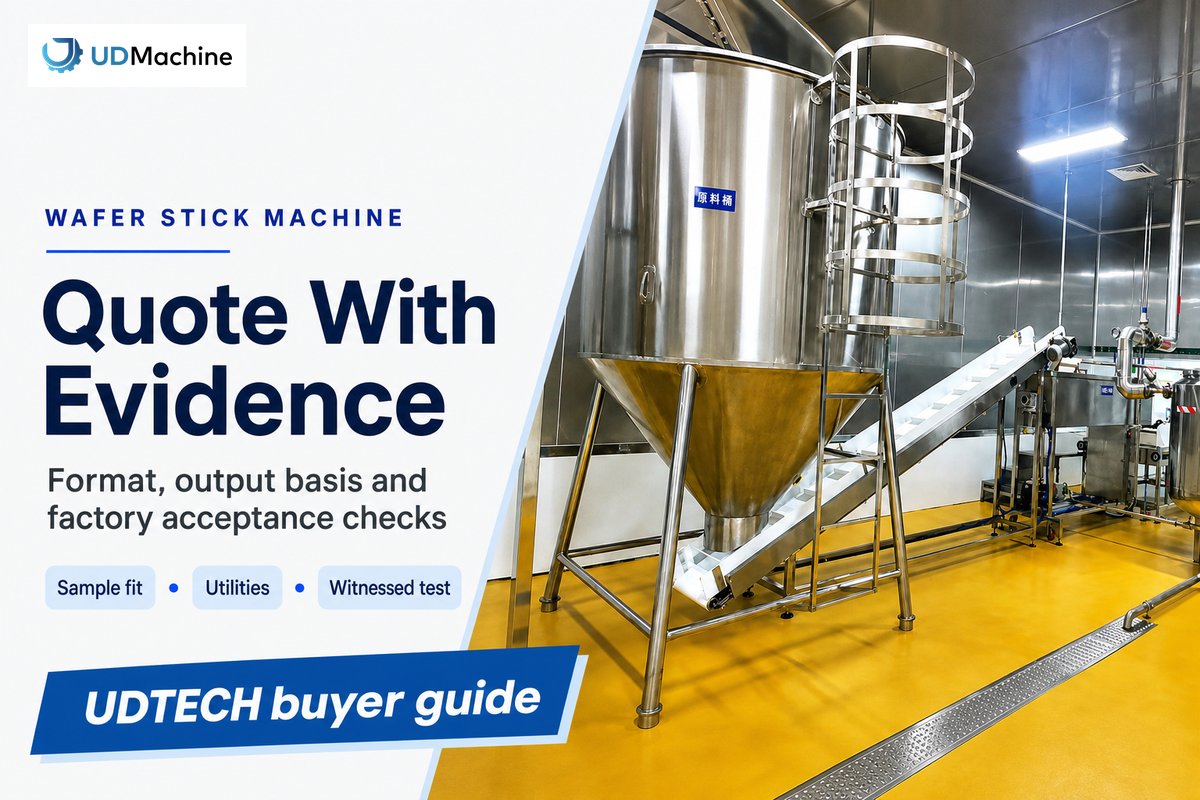
A wafer stick machine turns a batter into a crisp rolled wafer, with optional cream filling and downstream cutting. For a snack producer, an automatic page is only a starting point; compare quotations using product formats, lane counts, output units, recipes, and runtime assumptions. Align two quotes with different product formats, lane counts, output units, recipes, and runtimes before interpreting the numbers. The quote given usually doesn’t match the production need. This document describes the process and provides a structured format to request the production evidence you require.
An automatic wafer stick machine still needs the same product definition and acceptance basis as a semi-automatic line. The phrase may also create confusion with semiconductor wafer equipment or small home appliances. The focus here is food machinery for hollow, filled and rolled wafer sticks and related roll products; a wafer stick making machine may be configured as automatic wafer stick making equipment with a separate filling machine and food machine scope, so define the boundary before comparing quotes. If your focus is on a different product format, evaluate that before you compare models.
What does a wafer stick machine actually produce?
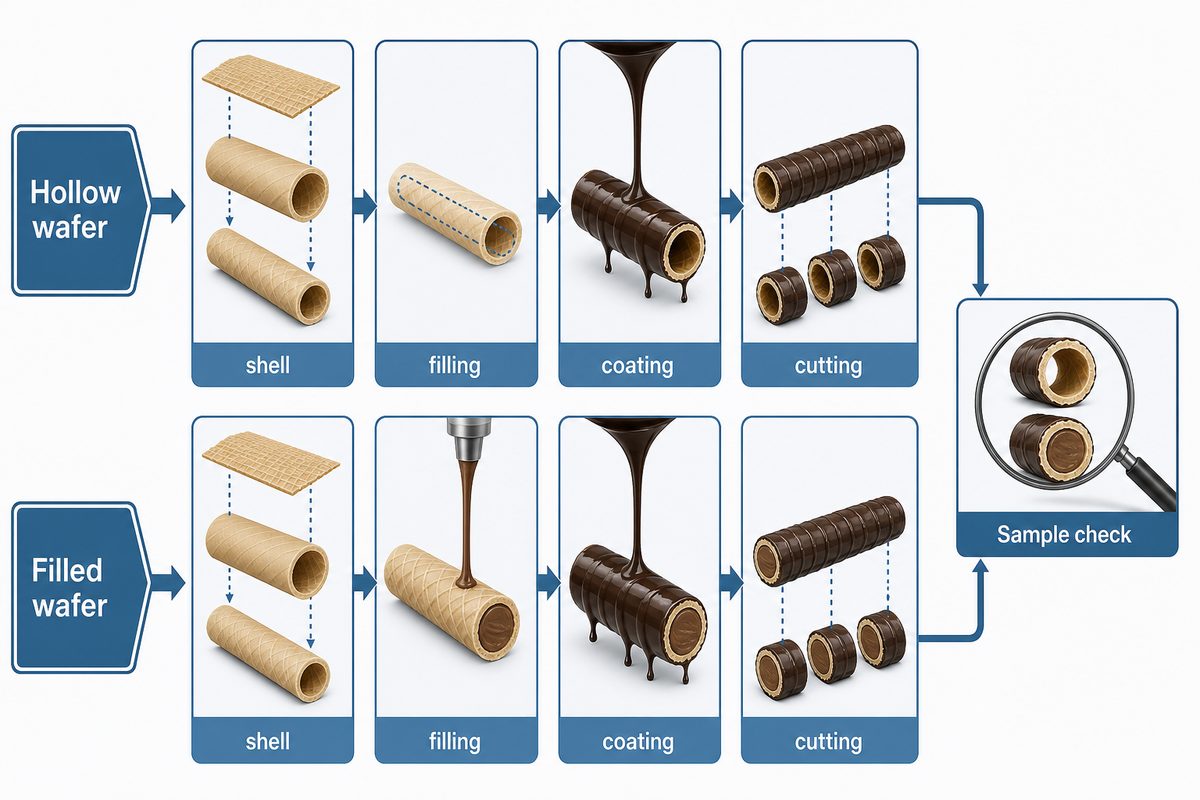
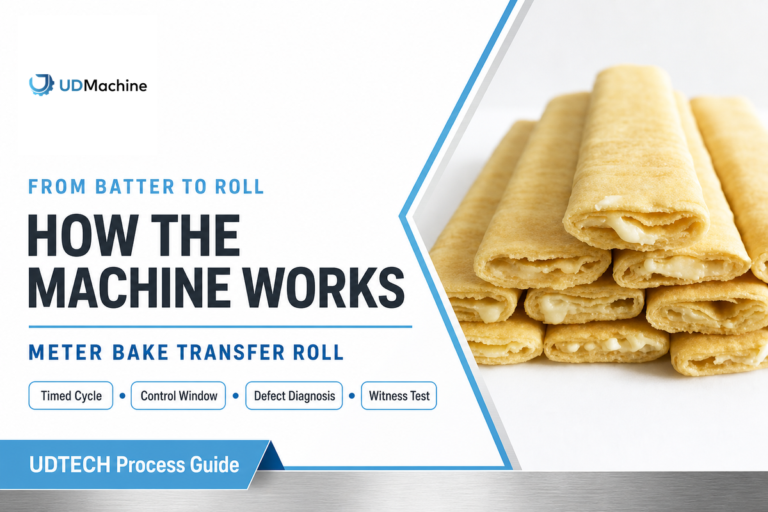
In food processing, a wafer stick machine produces a thin baked wafer that’s rolled around a mandrel while still warm and pliable. The wafer can be filled, hollow, spiral filled, or coated on the inside; the recipe determines whether the line produces a filled wafer roll or other wafer products, while the sample should be a crispy wafer used in producing wafer sticks; any chocolate-coated wafer sticks or high-quality wafer sticks claim should be checked against samples on the proposed configuration. Other lines may also produce different formats of wafer, but those products should be considered as a separate sample requirement. For a supplier-described baking, rolling, filling and cutting sequence, the Sanco Indonesia wafer stick process reference was not independently readable at review time; use the accessible HG wafer-stick production-line reference and confirm the exact stages for the proposed model.
That distinction matters because “wafer stick” is a product description for a cylindrical snack, not a universal machine specification. A hollow stick and a center-filled stick may share a baking section but use different filling, mandrel, cutting, and changeover arrangements. The supplier should state which product they based the capacity number on.
How a wafer stick production line works from batter to packed product
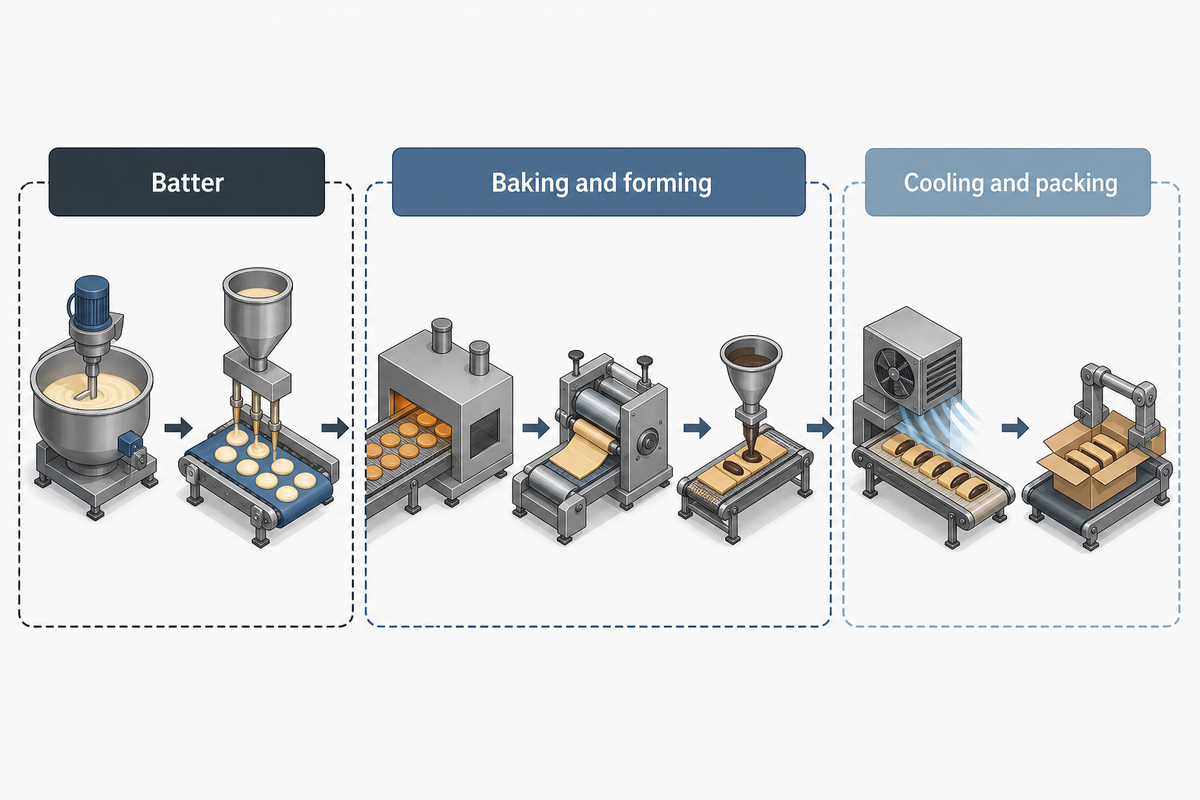
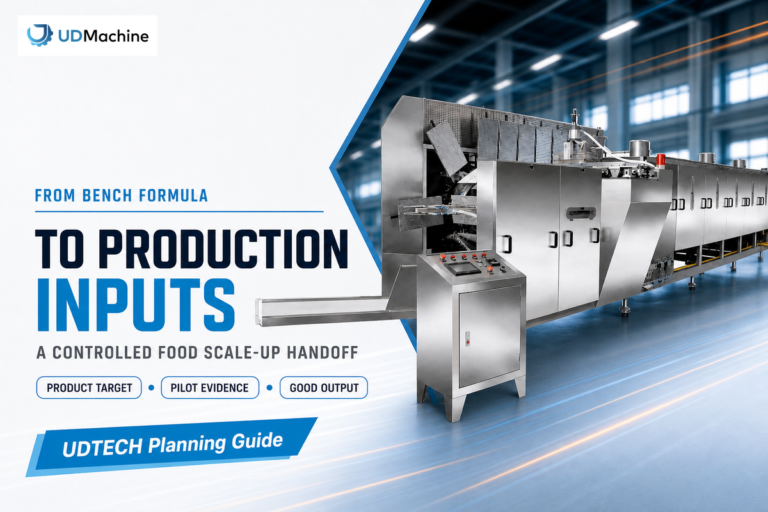
A line, or sequence, is a chain of controlled steps. A machine supplier sells a main unit that incorporates several steps (i.e. baking, rolling, filling and cutting) or a turnkey unit that includes other steps such as mixing, conveying, cooling, inspection and packaging; compare a full automatic configuration as an entire production line or turnkey project against the actual stages and utilities before accepting turnkey solutions. Determine where the supplier’s quoted “line” begins and ends. The HG food machinery production-line reference lists mixing, baking, forming, filling, cooling, cutting and packaging as separate stages.
Batter and depositing
The raw materials—flour, sugar, fat, water, eggs, and flavor ingredients—are mixed to a consistent batter, and a food production trial records whether the slurry-like batter feeds consistently before the bakery snack recipe is approved for efficient production. The viscosity and temperature of the batter will determine how evenly it is metered onto heated plates. A good process control sampling plan includes recording the version of the recipe batter, the temperature of the batter, the weight of the batter deposited, and the number of lanes running.
Baking, rolling and filling
The wafer sheet is cooked and cooled to the forming temperature. To achieve the proper forming temperature, the wafer sheet must be flexible enough to be wrapped around a mandrel. A filling system may inject cream as the wafer rolls, after the shell is formed, or in a later station; confirm the multi-nozzle filling arrangement with nozzle maps and a changeover test before treating the scope as a turnkey project. Because a demonstration provided by the supplier doesn’t guarantee that the product formed is the same product you expect and want, request a video of the finished product or a test at the factory.
Cooling, cutting and inspection
Cooling the product firms up the shell and the filling. The product is then cut to size for the intended popular snack format. Take finished-product samples to evaluate good-product yield and identify defects such as open or cracked shells or misplaced filling.
Wafer-Format Fit Grid: match the machine to the product
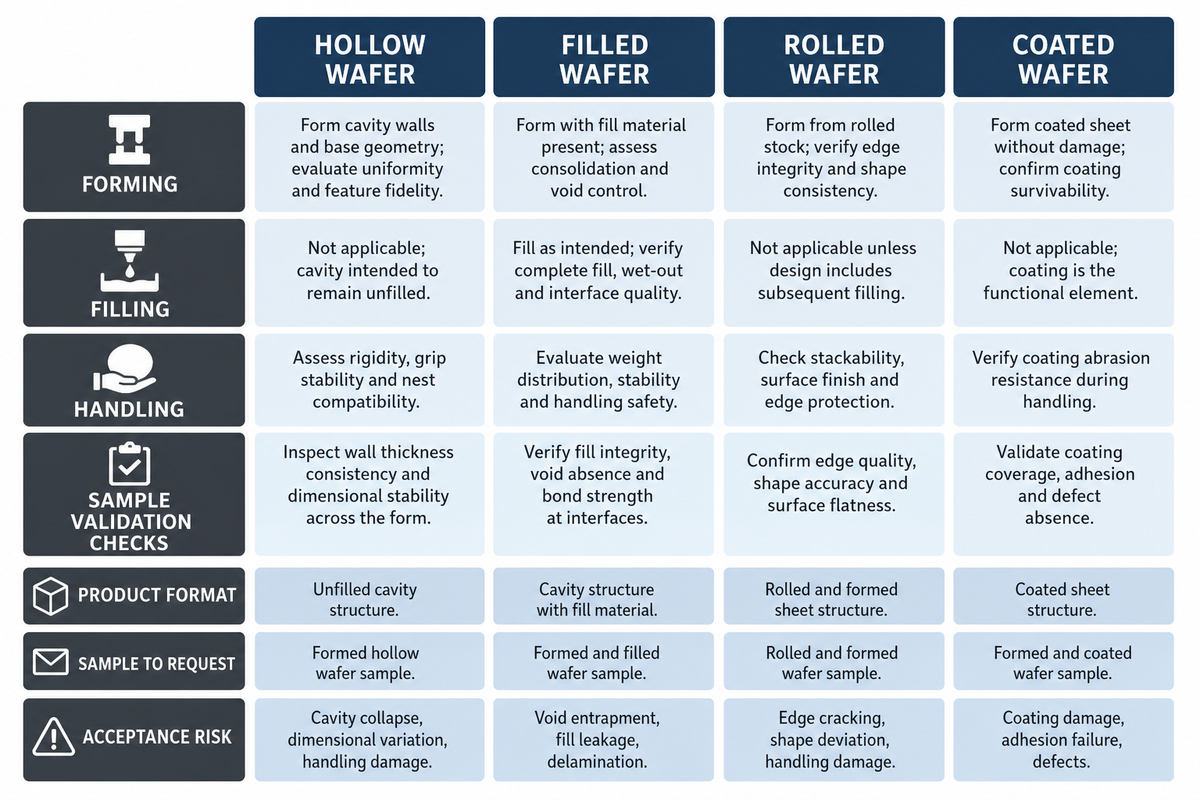
| Product format | Forming and filling focus | Sample to request | Acceptance risk |
|---|---|---|---|
| Hollow wafer stick | Shell thickness, mandrel and cutting timing | Unfilled sticks at the target length | Cracks or collapsed ends |
| Center-filled stick | Nozzle position, cream viscosity and fill ratio | Cross-section samples at start and end of a run | Uneven filling or blocked nozzle |
| Multi-color or multi-ribbon stick | Separate batter paths and lane synchronization | All colors running at the quoted speed | Color drift and lane imbalance |
| Flat or specialty wafer | Different forming, release and handling tooling | Finished shape after cooling | Tooling mismatch and changeover loss |
This Wafer-Format Fit Grid shows more than a picture of the product. In your request for quotation (RFQ), include the product format, dimensions, filling, coating, target weight, and packing handoff. When a supplier doesn’t know which tooling and station are responsible for your sample, the quotation is too general to compare. For a process comparison, see the Sanco process page only as an unverified lead because it was not independently readable at review time; for category-level options, see UDTECH’s egg roll and wafer roll machines hub and the egg-roll and wafer-roll process guide, then request a test sample for the exact format.
How to compare capacity when suppliers quote kg/h, pieces/min or ribbons
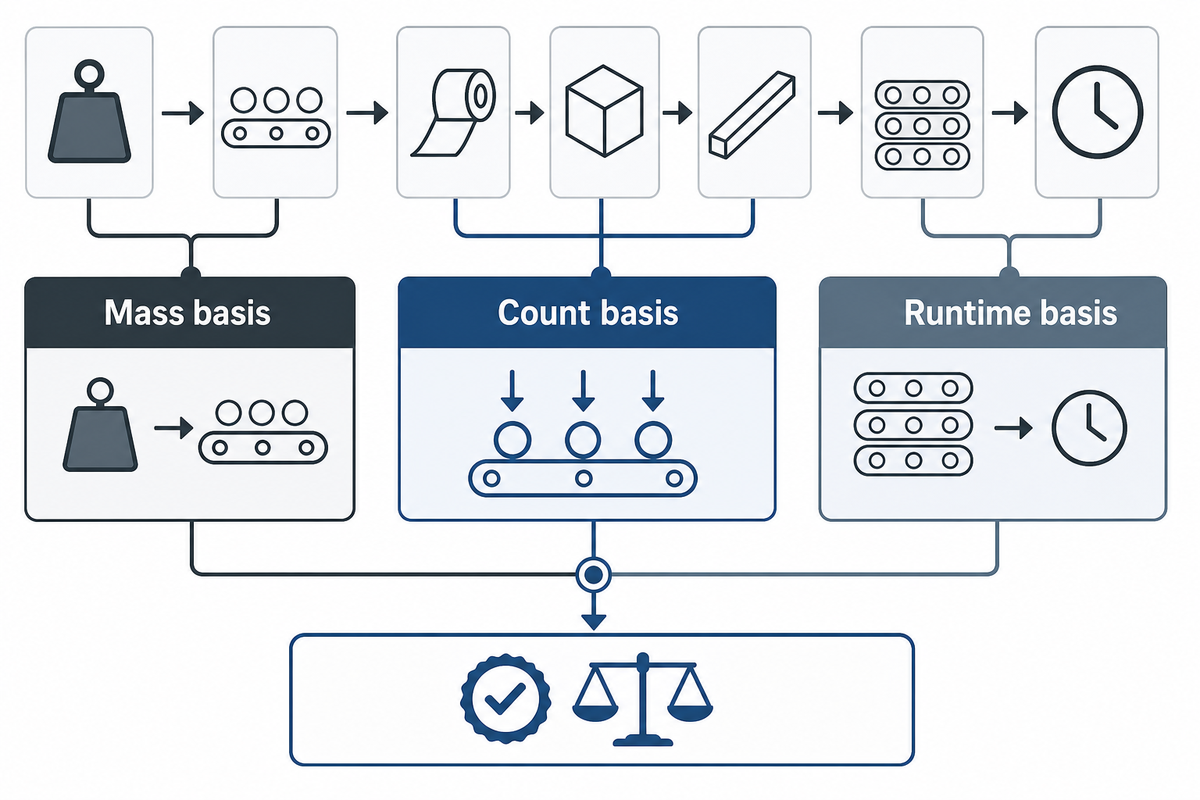
When comparing capacity, the first number buyers see is usually the first number that misleads them. Kilograms per hour is a measure of mass. Pieces per minute is a measure of count. Ribbons or lanes is an indicator of how many streams are parallel. None of these units is complete without product weight, stick length, recipe, operating time, and good-product yield. Sanco reports capacity in pieces per minute with product-size and length qualifiers, but its page was not independently readable at review time; use the accessible HG wafer-stick line reference when comparing output bases and confirm product weight, stick length, recipe, operating time, and good-product yield.
Use the Wafer Output Basis Check for every quote:
- Record the finished stick weight and length used for the supplier’s number.
- Record the number of ribbons or lanes and whether every lane was active.
- Separate gross output from good product after cracks, open ends, and start-up waste.
- State the shift length, planned uptime, changeover time, and recipe.
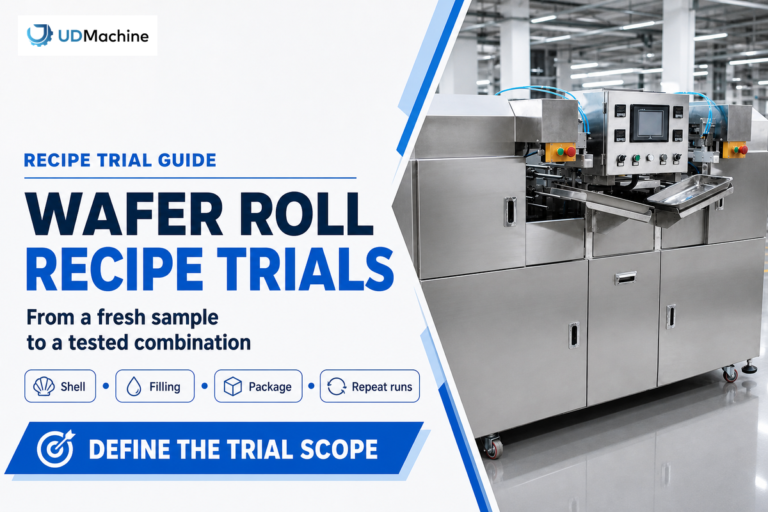
- Ask for the same data from your sample during a witnessed factory test.
For instance, a line quoting kilograms per hour for a filled stick that’s heavy may yield fewer pieces than a line quoting pieces per minute for a hollow stick that’s light. The numbers, although different, aren’t contradictory. A fair comparison is to fix the product and runtime, and then convert both quotes.
Which utilities, controls and hygiene details belong in the RFQ?
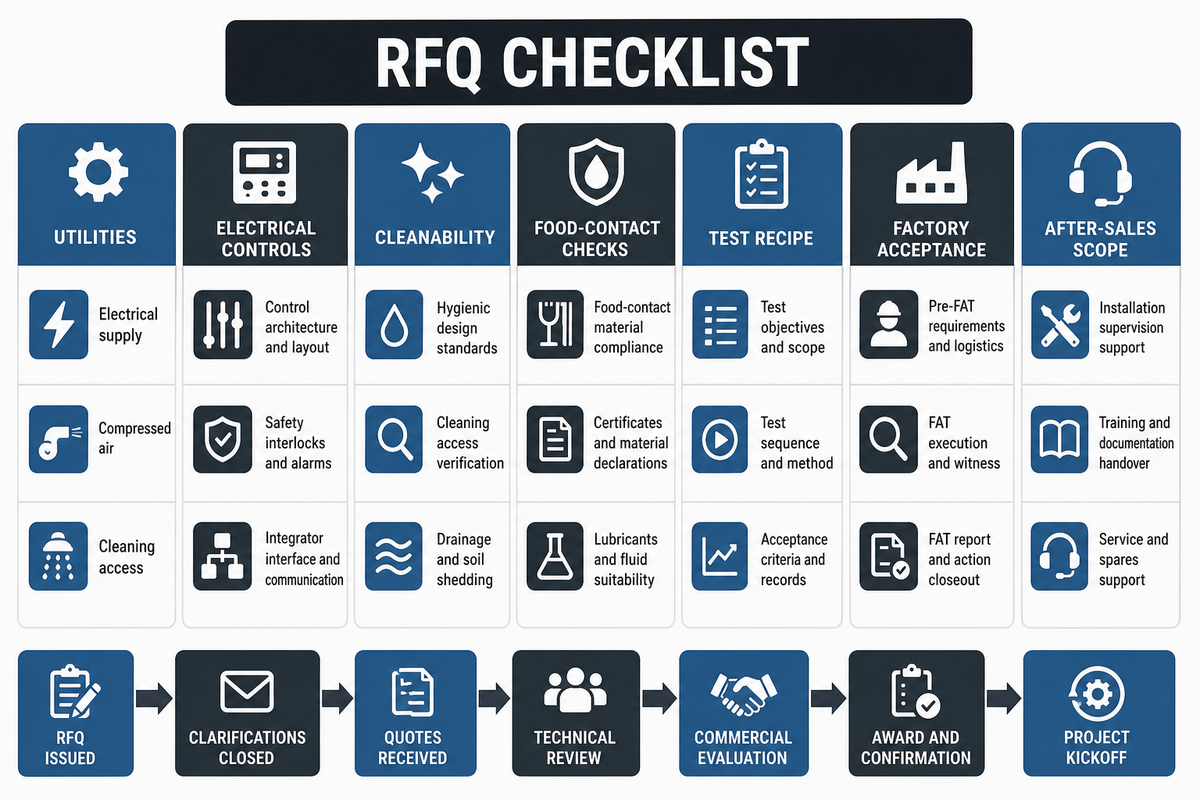
A production line quoted as a working installation should include the available electrical supply, type of heating (gas or electric), quality of compressed air, exhaust, cooling, available floor space, access for cleaning, and packaging handoff. It should also include the function of the HMI and PLC, including alarms, temperatures, recording, and recipes, as well as password protection.
Food-contact surfaces, dead legs, removable guards, drains, lubrication points and changeover cleaning time should all be part of the hygiene discussion. The supplier should identify food-contact surfaces, the allowable cleaning chemicals and the wear parts. If extrusion or ball mills, or other unrelated equipment outside the wafer line is mentioned in the proposal, request a separate scope so the production process remains clear and identify the industrial food equipment boundary separately. The destination market may add machinery, electrical, food contact and/or documentation requirements; check these with the importer and the responsible compliance professional. For a China or Indonesia project, ensure the applicable factory, electricity, food and warranty documents are included in the RFQ, as a general package isn’t enough. The conveyor system, temperature controls, and food-processing surfaces should be named in the installation boundary. The HG line reference lists control and downstream stages; confirm each item for the proposed model.
UDTECH’s public machine range and what to verify before selecting a model
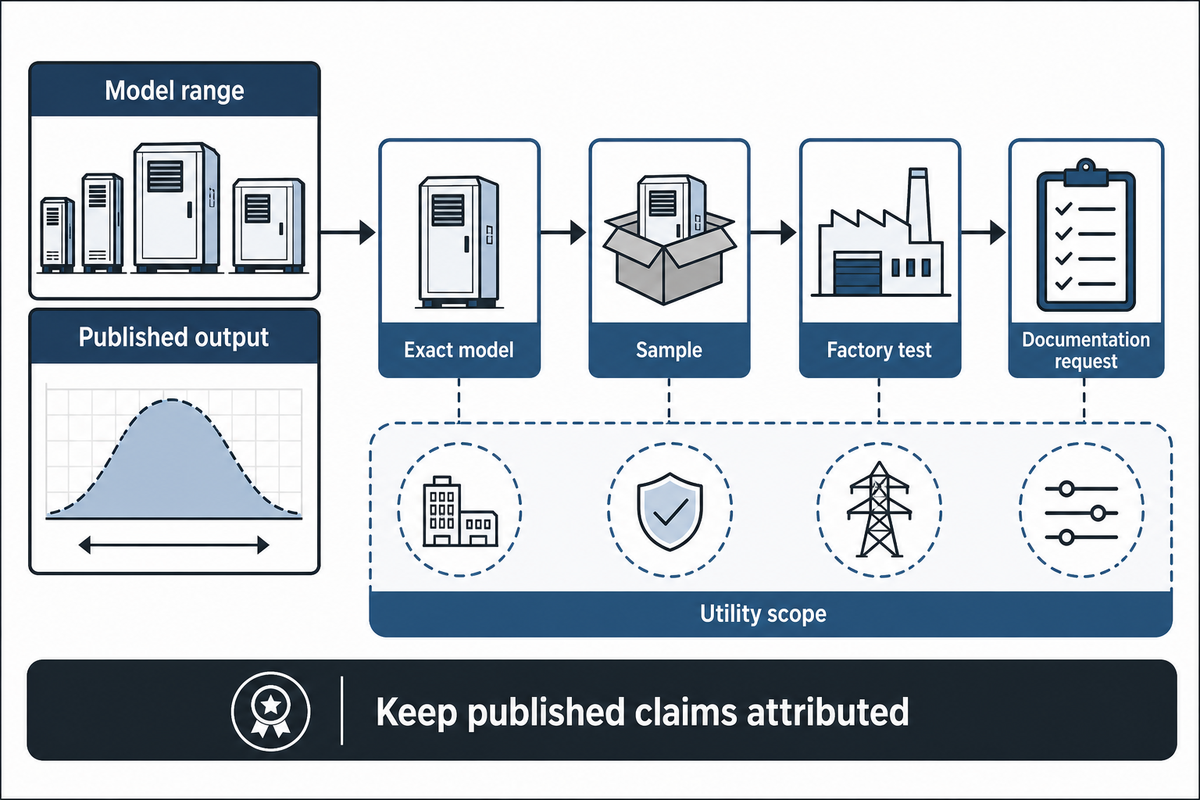
UDTECH’s public webpages named the company as Suzhou UDTECH Technology Co., Ltd., and detailed machinery for wafer and egg roll, in addition to waffles and pancakes, sachima, biscuits, and mini buns. In an RFQ, request the machine manufacturer to name the factory test, warranty limit, and service contact for the model under consideration. The homepage publishes a range of 13 models and an output range of 18 kg/h to 1,000 kg/h; treat these as first-party food machinery figures, and ask the supplier to document any Shanghai project or factory planning claim separately, with model-specific evidence for any food machinery manufacturing or technology development claim before using it in a quote. The models and outputs cited are first-party advertised figures, not independent performance benchmarks.
Starting with the wafer roll machine product page is a good reference. Then request UDTECH to identify the specific model, tooling, filling arrangement, utility and test recipe for your product. Sample-based quotes are useful. Review the company background on the About Us page, and attribute company claims to those pages.
Quote-to-Output Evidence Table: a ten-step supplier acceptance routine
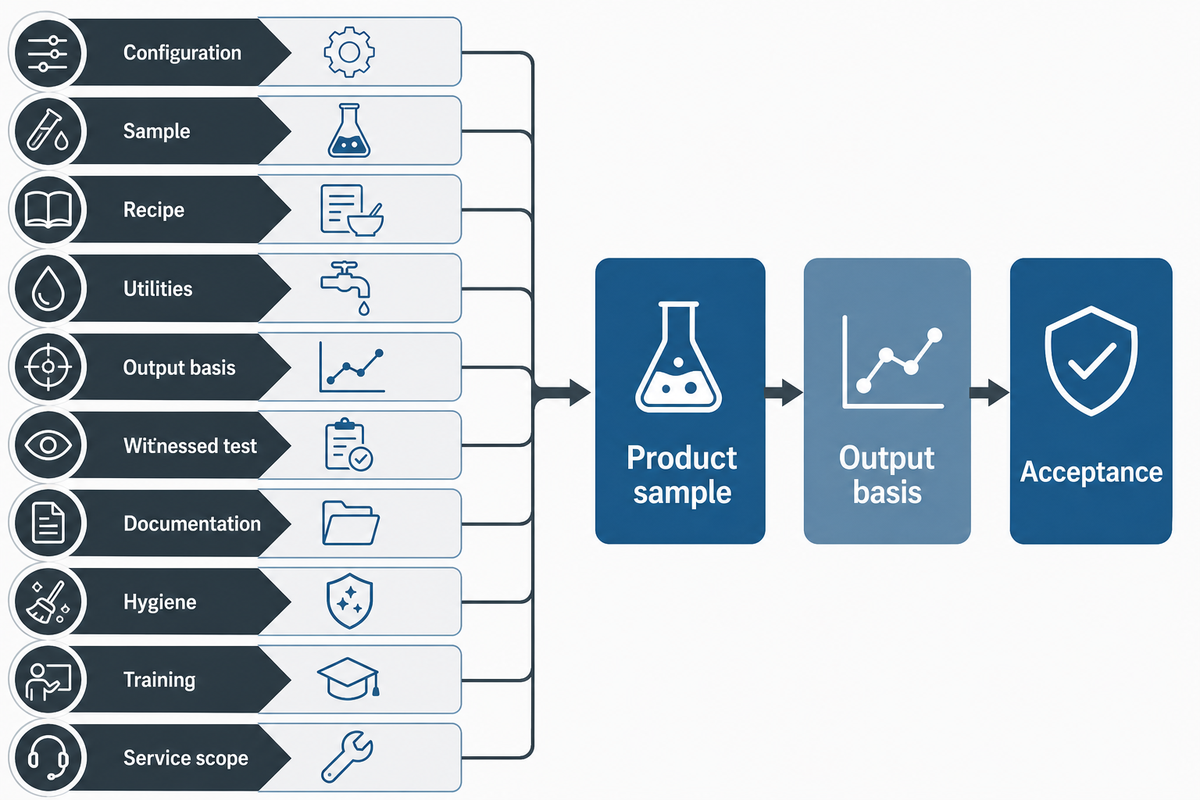
| Category / step | Buyer evidence | Supplier response to request |
|---|---|---|
| 1. Product sample | Recipe, shell, filling, weight and length | Tooling and process route |
| 2. Output basis | Good pieces, kg/h, lanes, uptime and shift | Written calculation and exclusions |
| 3. Utilities | Power, gas, air, exhaust, cooling and floor plan | Load list and installation drawing |
| 4. Factory test | Witnessed run with retained samples | Run duration, settings and output log |
| 5. Hygiene and safety | Cleaning access and destination-market documents | Material list, guards and manuals |
| 6. After-sales | Training, spares, remote support and response time | Named scope, exclusions and service terms |
| 7. Conveyor and cooling | Transfer temperature, cooling time and conveyor space | Cooling profile and conveyor layout |
| 8. Controls | PLC, HMI, alarms, recipes and access roles | Control-system list and backup procedure |
| 9. Documentation | Manuals, electrical drawings and spare-parts codes | Document index and delivery date |
| 10. Acceptance | Defect limits, yield and retest rule | Signed FAT/SAT criteria and remedy path |
The Quote-to-Output Evidence Table frames price. While equipment costs may appear low, tooling, utilities, and packaging interfaces may considerably increase the total cost. Service calls, spare parts and training may also be included; a private-label bakery should compare production cost, complete production scope, and mass production assumptions before choosing an automatic bakery configuration. Compare the stated scope with the HG production-line reference before treating a quote as complete.
How to reduce breakage and output variation after installation
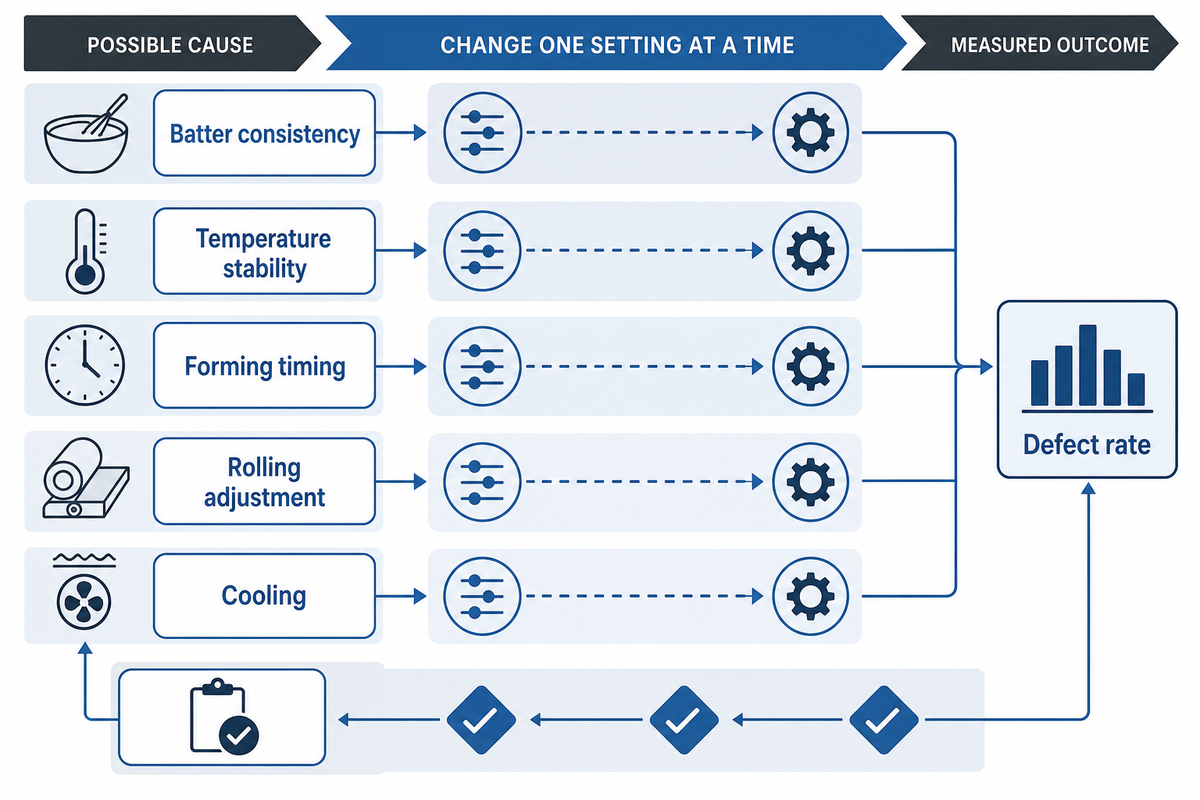
Address the process stage where the defect occurs. Batter variation points to mixing, temperature, or deposit control. Cracking of the shell during rolling may point to insufficient baking, sheet flexibility, forming timing, or mandrel alignment. Poor alignment of the rolling mandrel may affect forming; check filling defects separately. Treat over-rolling the product as a test variable only; change one setting at a time and record whether it reduces defects at the process stage. Cracks may be due to mechanical stress, from poor handling, or cutting from the conveyor at too high a temperature. Record the recipe and settings before modifying a single variable.
Use the same inspection fields during commissioning and routine production to determine shell appearance, length, weight, filling position, breakage, and good-product yield. This process turns an operator complaint into a traceable adjustment instead of a series of guesses. The HG process reference provides a supplier-side stage list; use your samples and defect limits for acceptance.
What is changing in wafer stick automation in 2025-2026?
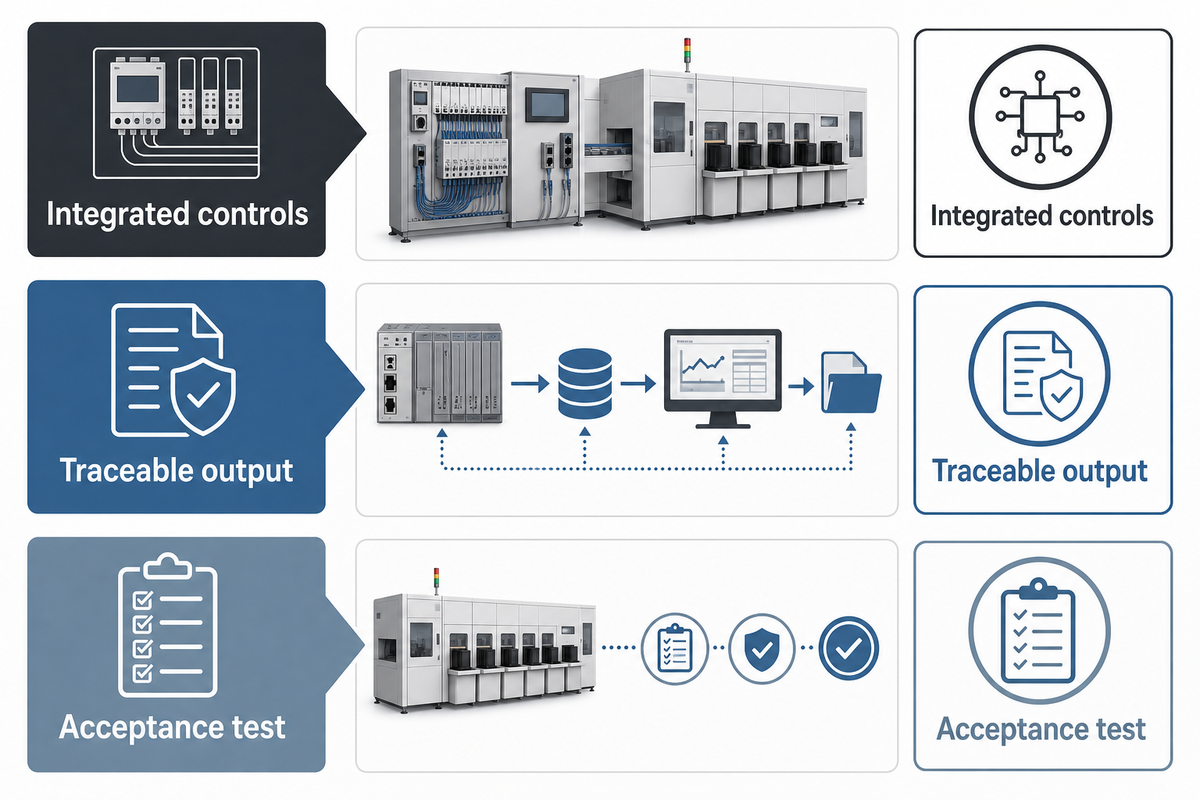
Supplier pages and trade coverage describe integrated controls, multi-format flexibility, traceable output and reduced manual handling; treat these as features to verify rather than proof of performance. Whilst these are commendable design features, they aren’t absolute performance guarantees. This supplier example does not establish a prevailing industry trend; connect the machine, the recipe, the process controls and the production record in a bounded acceptance test. For a concrete supplier example, review the HG automatic wafer stick line description and verify its claims on the proposed configuration; any automated wafer stick line claim about snack food, high output, or reliable performance should be tied to electrical components, stage evidence, and a clearly bounded equipment manufacturing scope.
Frequently Asked Questions
What is a wafer stick machine?
A wafer stick machine is food-processing equipment that bakes a thin wafer and forms it into a stick. In a bakery factory, the batter, heat, and cooling conveyor are part of the production process, not optional marketing language. On a tested configuration, it may also inject filling, cool the product, and cut it to length. The term here refers to snack and bakery machinery; it doesn’t refer to semiconductor wafer tools or a small home waffle appliance.
What capacity should I specify when buying a wafer stick machine?
Specify the finished product weight and length, hollow or filled format, number of lanes or ribbons, recipe, target good-product output, planned uptime, shift length, and acceptable waste. Then ask each supplier to quote kg/h or pieces/min against that same basis. Without those fields, two capacity numbers can describe different products and can’t be compared fairly.
Can one machine make both hollow and filled wafer sticks?
Some lines can support both formats, but the answer depends on forming tooling, filling hardware, changeover time, and the supplier’s tested recipe range. Ask for hollow and filled samples made on the proposed configuration, a written changeover sequence, and the output basis for each product. A general statement that the machine is multifunctional isn’t a substitute for that test.
What utilities does a wafer stick line need?
Typical requirements include electrical power or gas heating, compressed air, exhaust, cooling, floor space, cleaning access, and a packaging handoff. The exact load depends on the model and recipe. Request a utility schedule, floor plan, exhaust route, exhaust and cooling route, and installation boundary before placing the order. Confirm electricity, heat, warranty, and spare-parts assumptions in writing.
How do I compare wafer stick machine suppliers?
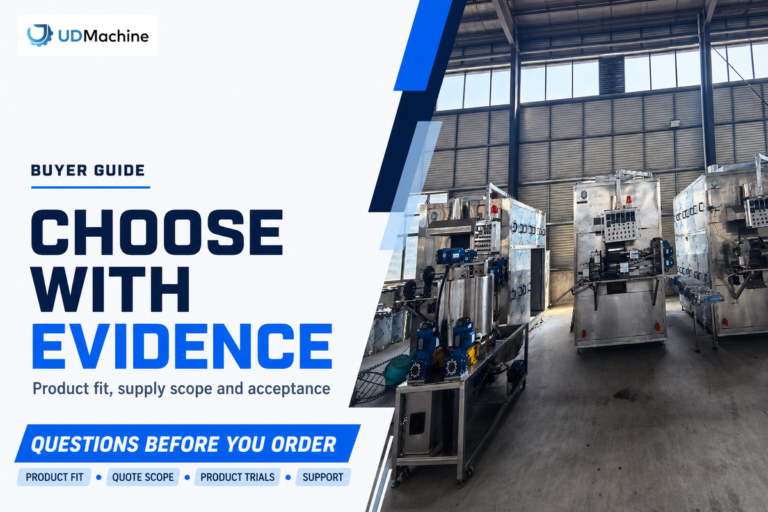
Compare the same sample, output basis, utility scope, factory-test evidence, hygiene documentation, spare-parts list, training plan, and service response. Price matters, but it should be read beside the Quote-to-Output Evidence Table so missing scope doesn’t make one quotation appear cheaper than another.
Why do wafer sticks crack after forming?
Check batter consistency, baking balance, sheet flexibility, forming timing, mandrel alignment, cooling transfer, and cutting pressure. Change one variable at a time and record the product sample, recipe, settings, defect rate, and good-product yield. If the defect follows a mechanical station after settings are stable, ask the supplier to inspect alignment and wear parts.
Send a sample and a measurable output basis
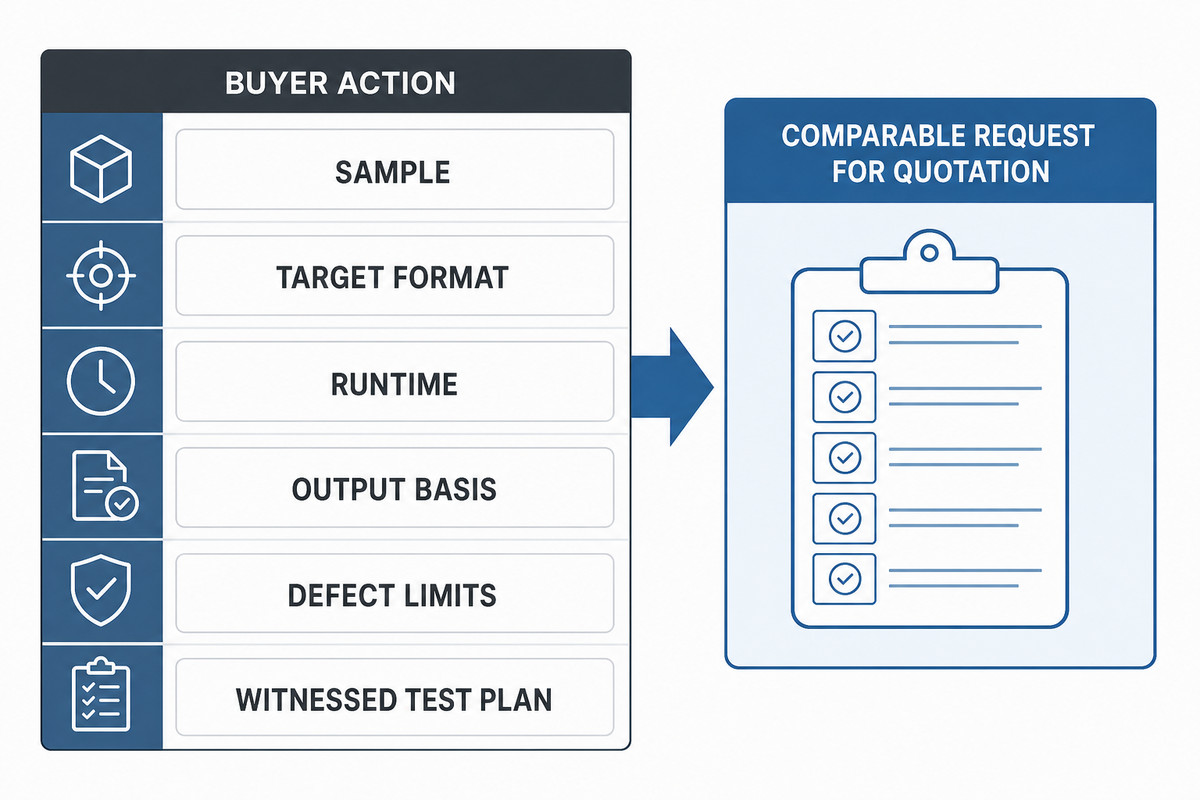
To request a useful proposal from UDTECH, send the product format, target weight and length, filling, desired good-product output, available utilities, destination market, and packaging interface. You can start with the contact page and the wafer roll machine page. An RFQ based on samples helps both sides make an informed decision regarding a machine purchase; a professional food buyer can keep the acceptance basis tied to the sample and named scope.
References & Sources
- UDTECH homepage (first-party product categories and published range).
- UDTECH About Us (first-party company and product-scope information).
- Sanco wafer stick machine (competitor process reference from Indonesia).
- HG automatic wafer stick production line (competitor process reference).
- Gondor wafer-stick production explainer (not independently verified at review time; do not use as acceptance evidence).
- FDA food guidance (food-contact, HACCP and CGMP topic reference; not machine certification).
- EUR-Lex Regulation (EU) 2023/1230 (machinery conformity and declaration context).
- NIST (measurement and verification context).