Get in touch with UDTECH Company

Feuilletine Production Line
Plan your Feuilletine production line with the UD Company, a food automation equipment manufacturer. Take your recipe, desired output, and your factory layout. We will assess the baking equipment and process scope for your project.
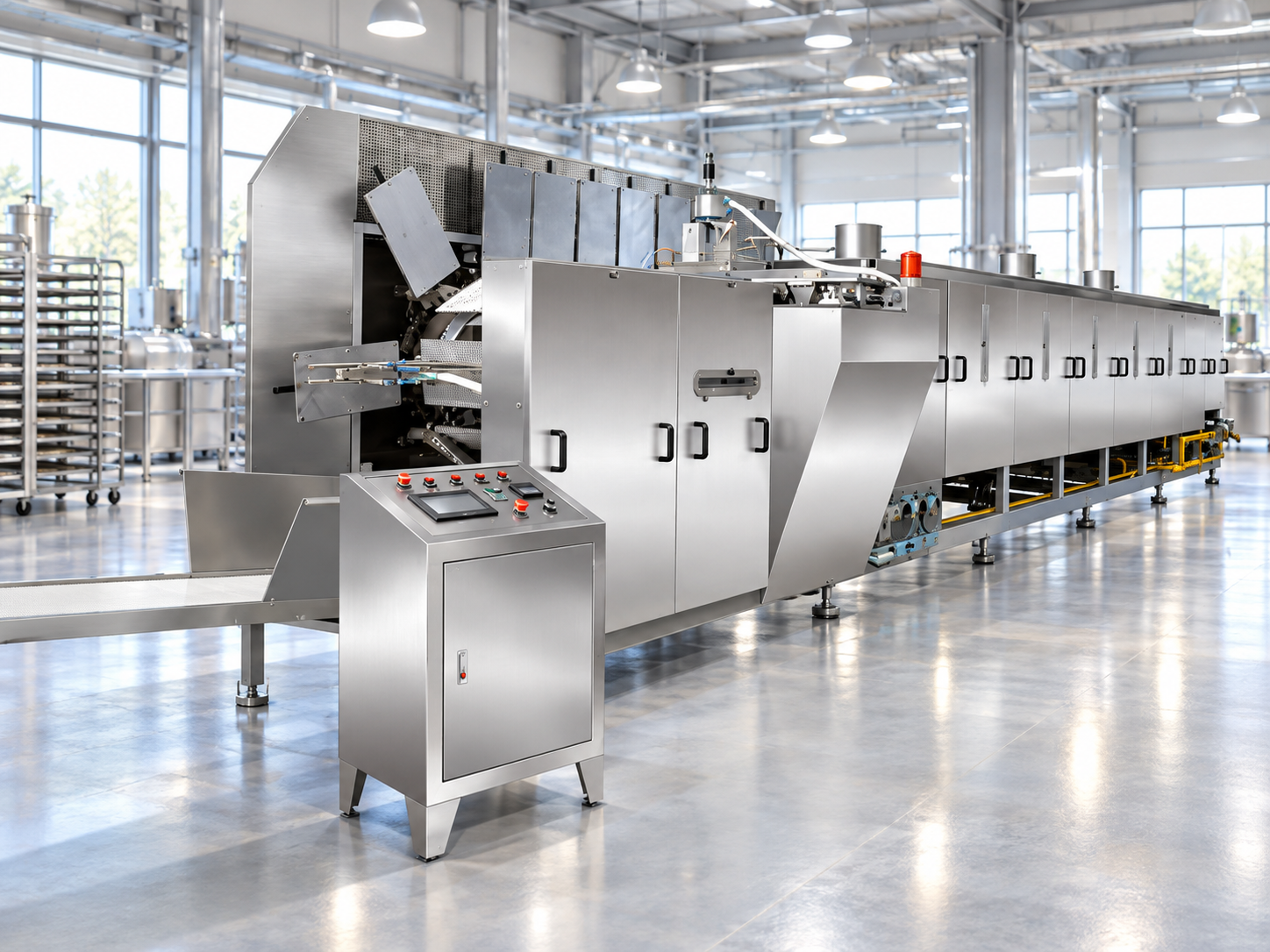
YT-10 baking unit specifications for equipment planning
- Recipe, texture and finished-flake acceptance discussed together
- Utilities and downstream handling defined in the quotation
Baking Model
YT-10
Baking Molds
60 molds
Unit Length
9.8 m
Unit Width
1.6 m
Unit Height
1.9 m
Electrical Power
3 kW for the baking unit
Feuilletine Production Planning and Baking Capabilities
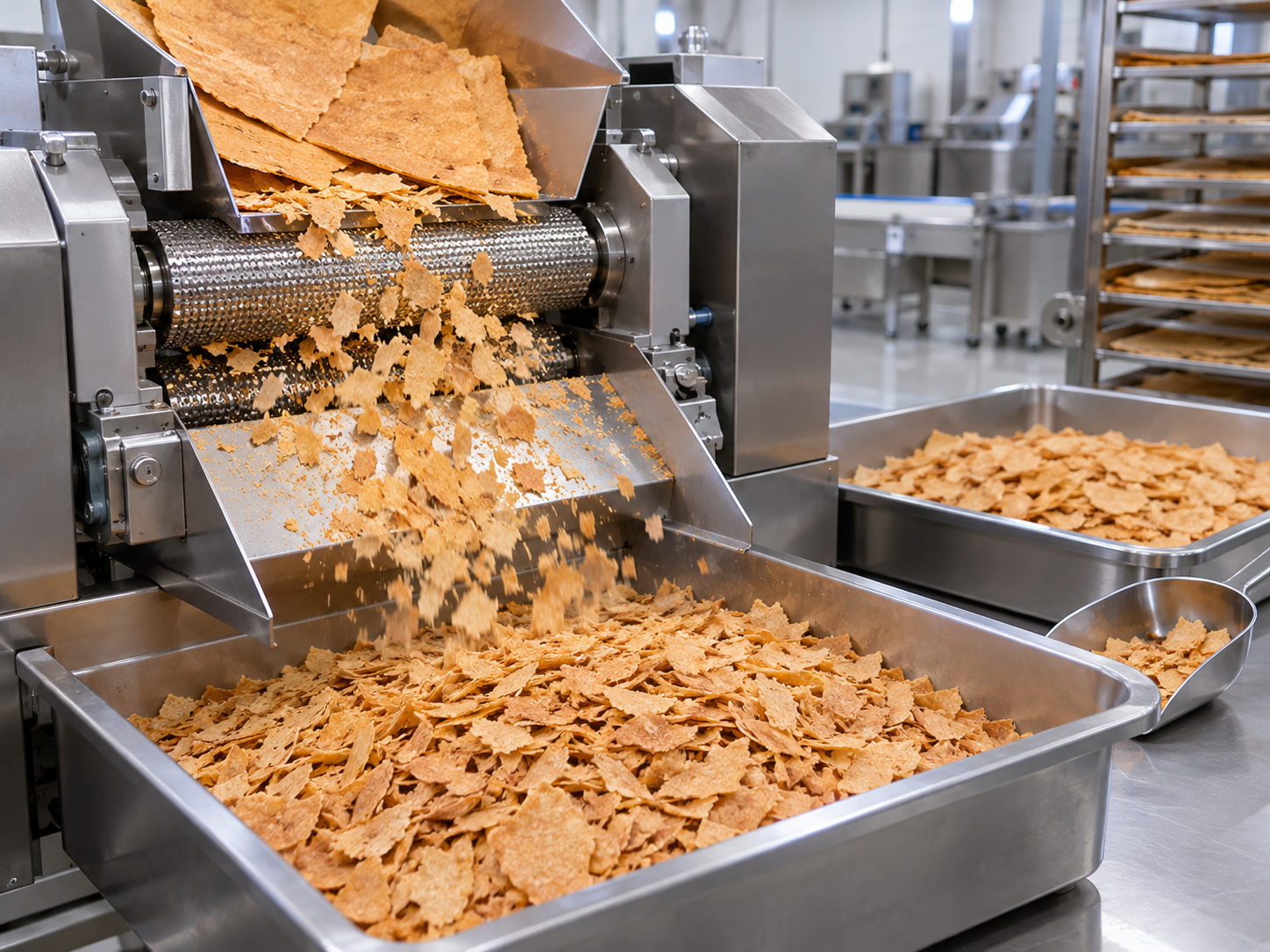
When baking feuilletine, everything begins with the end in mind; we start with the finished flake that the customer requires and work backwards. Thin feuilletine batter is baked thin and cooled to crispness, then crushed to the ideal size to form flakes. The process determines the route the product takes to achieve flakiness.1
Baking equipment selection
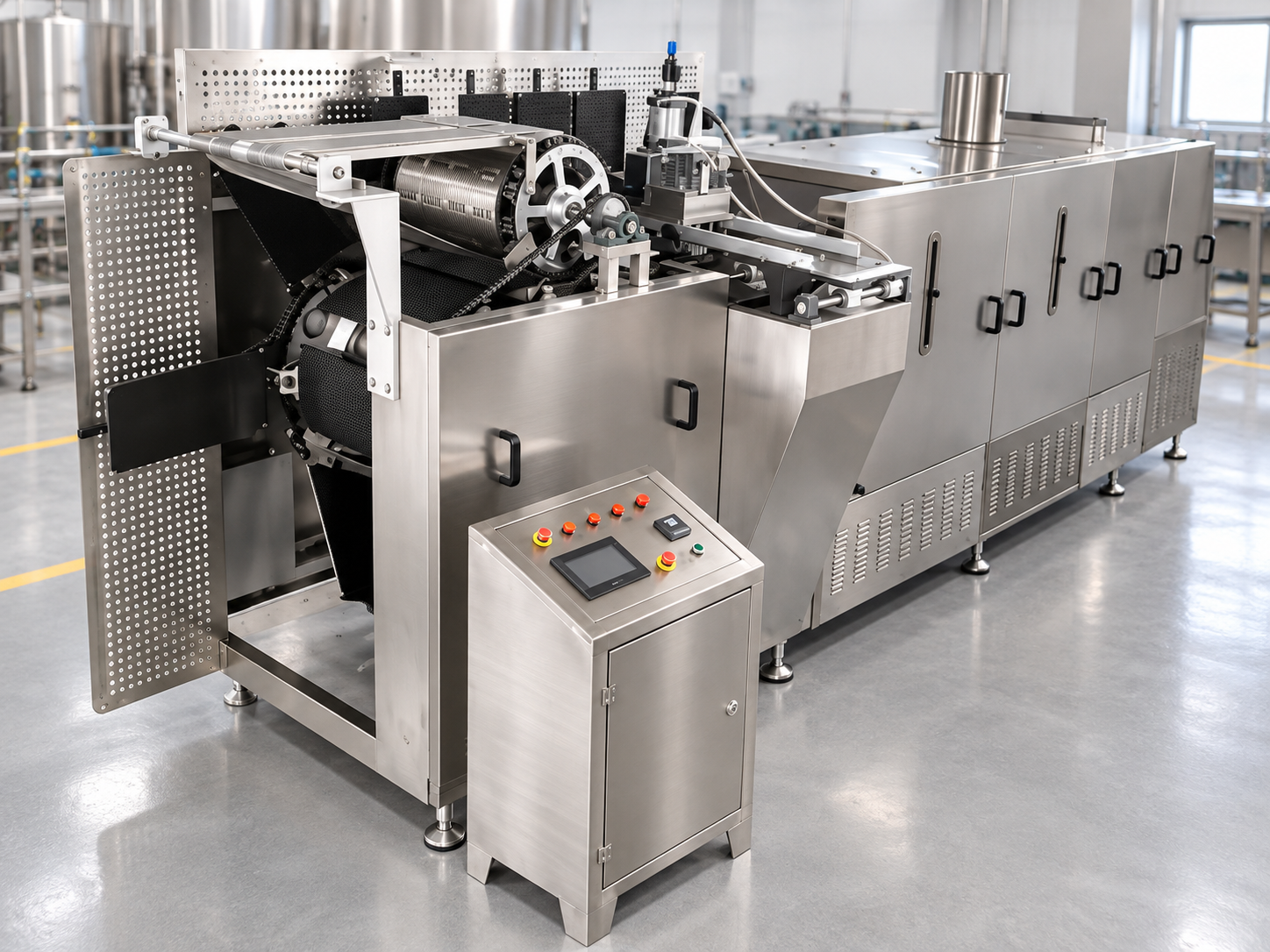
Use the YT-10 as a baking-unit reference during project review. Confirm the batter deposit, release behavior, heat profile and product form against your crêpe dentelle recipe before selecting the equipment scope.
- Recipe and target sheet thickness
- Bake color and release from the mold
- Accessible surfaces for cleaning between runs
Downstream process definition
A higher baking rate doesn’t always produce more acceptable flakes at packing. Crushing, screening, transferring and packing can become the constraint when fines and breakage increase.
- Define the cooling and flaking sequence
- Separate saleable flakes from fines
- Record the outlet where output is measured
The Equipment Scope in Your Proposal
Request a detailed list of equipment that identifies the baking unit, each handling step and the connections between them. This keeps the scope of the production line tied to the finished product, rather than to a single unit operation.
- Food-contact layout: Access for inspection, cleanable joints and product transfer paths; 21 CFR 117.40 describes the relevant equipment principles for US food operations.2
- Process settings: heating controls, timing and the recipe conditions used during acceptance.
- Factory interfaces: gas supply, electrical service, exhaust, aisle space and the downstream packing point.
Batter and Ingredient Compatibility
Your ingredient list controls batter flow, baking, release and the ease with which the equipment cleans. Wheat flour, sugar, salt, butter, egg, and milk belong in the recipe review; substitutions change process conditions and allergen management.2
| Recipe input | What to document | What to check at the bake |
|---|---|---|
| Wheat flour and other dry ingredients | Grade, lot, gluten requirement and solids loading | Batter spread, thin layers and sheet strength |
| Butter or other fats | Fat type, concentration and preparation temperature in °C (record format: 20°C) | Mix stability, mold release and finished flavor |
| Egg, egg white and milk ingredients | Whole milk, milk powder or other declared ingredients | Deposit consistency, browning and allergen changeover |
| Sugar, salt and flavors | Particle form, sweetness target and vanilla or other flavor additions | Color, sticking and the balance between crispness and bitterness |
| Emulsifier or raising agent | Exact ingredient and dose used in your approved recipe | Flow, structure and repeatability through a production run |
Hand-spread biscuit recipes and automatically deposited batters are not the same. To get the texture you are trying to sell, submit the formula and a sample.
- Record batter preparation, hold time and temperature.
- Check a repeatable deposit before comparing bake settings.
- Keep changes linked to the acceptance sample, such as recipe or ingredients, etc.
Food-contact equipment must be cleanable and maintained to prevent allergen cross-contact. Review the product path, seams and access points alongside your plant’s cleaning procedure, especially when wheat, milk, egg, soya or peanut ingredients share equipment.2
Flake Texture and Handling Requirements
Flake Texture and Handling Requirements
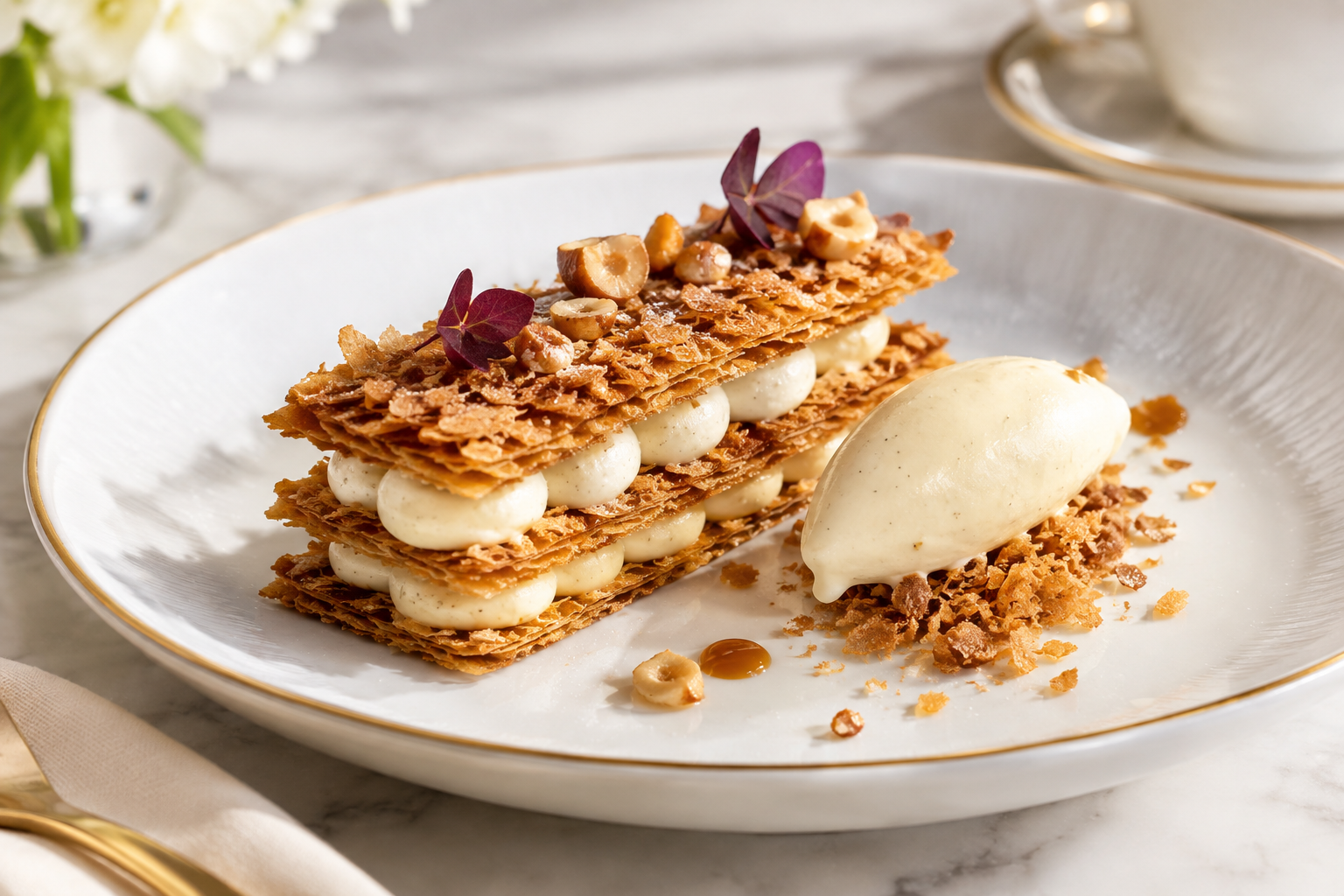
Contact with water-based fillings softens the flakes, which makes the end application part of the equipment brief. Pailleté feuilletine used as chocolate inclusions has a different exposure to moisture from croustillant layers placed directly next to wet cream fillings.
Finished-Flake Acceptance Map
One acceptance map should suffice for the final product specification: size distribution, bake color, water activity and moisture content, fines and texture. A map based on a final-product specification will provide criteria at acceptance for the product at packing, compared with a baking-only specification. Unlike a nameplate rate, a map based on a final product specification will specify sampling and testing requirements for transport breakage, and will incorporate fines in the acceptance criteria.
Acceptance item
Test definition
Procurement decision
Flake size and fines
Agree the sieve method and fractions to report
Match crushing, screening and handling to the required grade
Color and taste
Use approved reference samples and recipe conditions
Check bake settings before changing the flaking stage
Water activity and moisture
Report each separately, with measurement conditions
Set recipe-specific acceptance limits
Application crunch
Test the complete filling, coating or frozen dessert
Approve the usable product, including its storage conditions
Qualified output
Weigh accepted flakes at the agreed packing outlet
Separate baking output from saleable production
Separate Moisture and Water Activity Checks
Moisture and condensation affect the finished crunch, but moisture percentage alone does not describe how water behaves in a food. Water activity and moisture content are not interchangeable; formulation and structure affect texture, so a common assumption that one generic threshold suits every recipe can lead to the wrong acceptance test.34
- Agree the measurement temperature and sample conditioning.
- Test the finished flake after cooling and handling.
- Evaluate retained crunch during the buyer’s application and storage period.
Chocolate & praline
For milk chocolate, white chocolate, couverture, gianduja or a hazelnut praline, test the complete mix and fat phase. Flakes must keep their strength during folding, blending or spreading without breaking. The flakes must also keep their desired size.
Chilled & frozen
Ice cream mix-ins need an application test. Mousse, ganache, tiramisu and mascarpone desserts bring different moisture exposure, so a successful dry-flake sample should be followed by a complete dessert trial.
YT-10 Baking Unit Specifications
Plan the baking footprint and utilities with the YT-10 unit dimensions below. Add service access and the selected downstream equipment to the factory layout before confirming the complete installation envelope.5
Specification
YT-10 baking unit
Planning use
Model
YT-10
Baking equipment reference
Length
9.8 m / 9,800 mm / about 385.8 in
Equipment body footprint
Width
1.6 m / 1,600 mm / about 63.0 in
Equipment body footprint
Height
1.9 m / 1,900 mm / about 74.8 in
Equipment body height
Baking molds
60 molds
Baking-unit layout
Listed electrical power
3 kW
Electrical supply for the baking unit
Natural gas consumption
14.5 m³/h
Natural gas configuration
LPG consumption
8 kg/h
LPG configuration as an alternative fuel
Comparing Utilities
Estimate Utility Cost
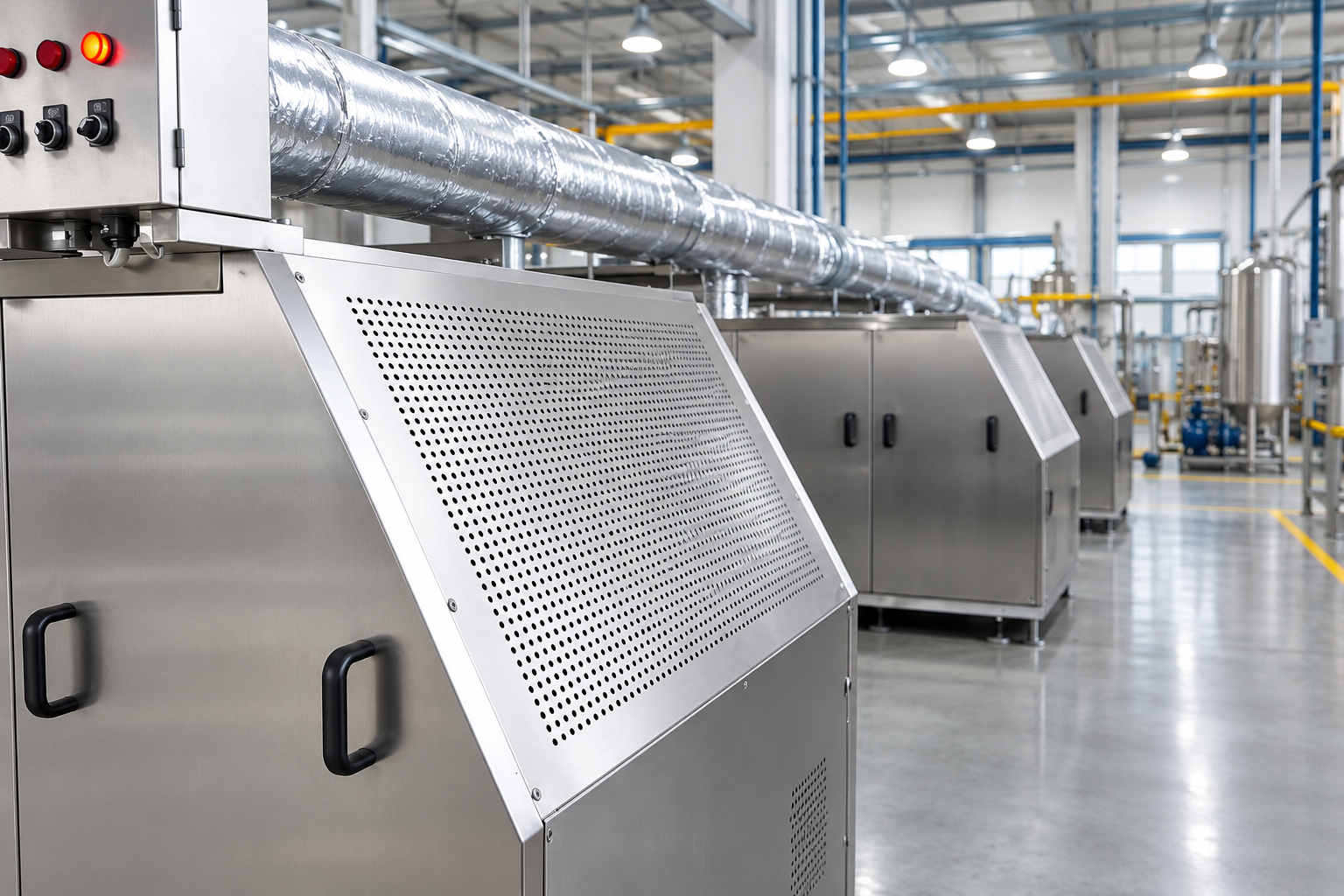
Utility bills include gas and electricity. The listed 3 kW electrical power is separate from the baking fuel; natural gas and LPG are alternative configurations, and each downstream motor or handling stage belongs in the project utility schedule.
- Use the actual local gas tariff and electricity rate.
- Record supply pressure and site connection requirements during review.
- Agree the production conditions used when checking consumption.
Enter data regarding electrical demand, your chosen fuel, and your local tariffs in the energy calculator. To compare costs, use the same accepted output and the same operating hours.
Calculate gas and electricity
Feuilletine Machine Price and Lead Time
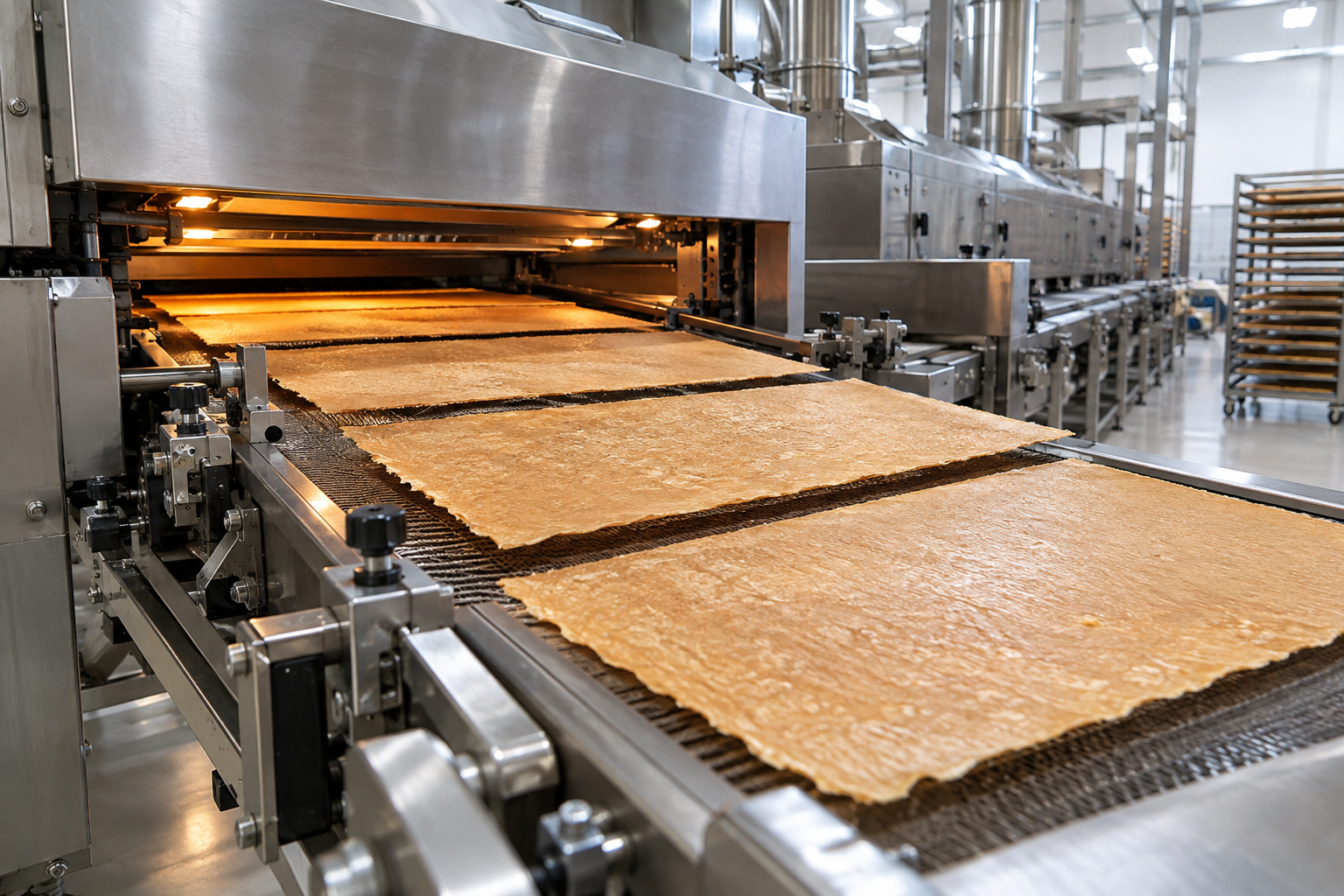
Your quote is based on the equipment scope, recipe, output target, controls, and installation interfaces. We review the baking unit and the requested handling stages so the proposal reflects the production system you’re going to operate.
| Price driver | What changes the scope | What to send |
|---|---|---|
| Product and recipe | Batter preparation, deposition and bake requirements | Formula and a finished reference sample |
| Finished output | Qualified flakes, fines separation and packing outlet | Daily demand, grade and operating schedule |
| Automation and controls | Transfers, recipe handling and operator access | Desired operating sequence |
| Factory interfaces | Fuel, electricity, exhaust and usable floor space | Utility information and factory layout |
| Project services | Installation, commissioning, training and acceptance scope | Destination and support requirements |
Project Schedule and Start Conditions
Request a dated schedule with your quotation showing recipe review, scope confirmation, manufacturing, acceptance and shipment. Indicate the start condition and the agreed responsibilities for factory readiness, transit and site commissioning.
- Confirm the equipment list before comparing delivery dates.
- List what must be approved to release manufacturing.
- Ask for payment, shipment and acceptance terms in the written proposal.
Quality Assurance and Process Acceptance
Define the acceptance test before equipment is ordered. A test is useful when it relates the recipe, settings, run conditions, and sample results to the scope of the equipment being supplied.
Approve the product target: record reference sample, flake grade, color and intended application.
Confirm the process: document batter preparation, bake settings, cooling and transfer conditions.
Check usable output: measure accepted flakes and fines at the agreed outlet.
Review cleaning and access: check food-contact surfaces and the agreed changeover procedure.
Close deviations: assign each open item, correction and repeat test before acceptance is signed.
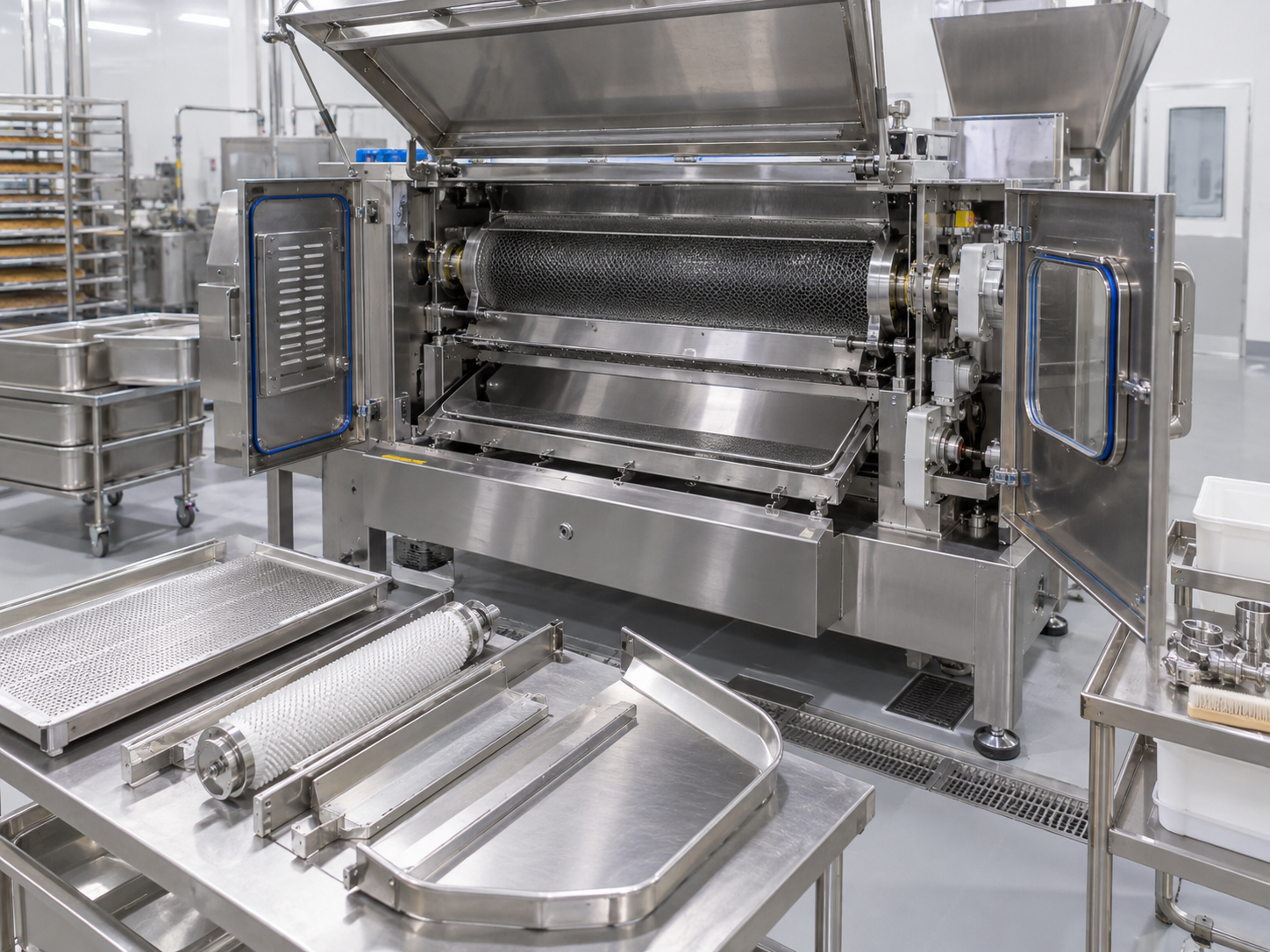
Cleaning access and food-contact design
Cleaning and maintenance require access to equipment surfaces and joints to verify contamination has been removed, or to gain access for cleaning. Equipment surfaces, joints and conveyors need to be accessible for the selected cleaning method to reduce contamination risk; 21 CFR 117.40 connects equipment design with sanitation and maintenance.
“All plant equipment and utensils must be so designed and of such material and workmanship as to be adequately cleanable”
21 CFR 117.40(a)(1), equipment and utensils2From product testing to plant sanitation
Finished-product testing doesn't replace a sanitation program. Plan allergen changeovers, cleaning verification and environmental monitoring with the food safety team, using the plant's product and process risk assessment.
Powder handling and dust control
In a fine state of division, flour, sugar and starch can be a source of combustible dust. Dust collection, housekeeping and ignition control should be covered in the factory review as part of the safety assessment, rather than treating the baking unit as the entire review.8
- Maintain the visibility of cleaning routes and maintenance access on the layout.
- Identify powder transfer and dust collection interfaces.
- Have the plant's qualified team review the installed system.
How We Work: Project Planning and Equipment Delivery
UD Company designs and builds automation equipment and provides project services including installation, commissioning and training. Use a combined project scope to connect the machine proposal with your factory’s readiness and your acceptance of finished products.
01
Send your brief:
recipe, reference flakes, daily demand and application.
02
Review the process:
baking route, handling stages, grade and packing outlet.
03
Plan the site:
dimensions, access, utilities and installation interfaces.
04
Confirm the proposal:
equipment list, price, schedule and acceptance responsibilities.
05
Run the agreed checks:
Settings, usable output, cleaning access and outstanding corrections.
06
Prepare operation:
commissioning, training and the support scope recorded for the project.
Daily demand and capacity planning
Work backward from the saleable daily demand to the hourly baking feed. Several factors influence the outcome, including operating hours, productive time and the accepted-flake yield. Increasing one assumption can mask a constraint elsewhere.
- Keep planned hours separate from productive operating time.
- Include rejected flakes and fines in the yield assumption.
- Check packing capacity against the same qualified output target.
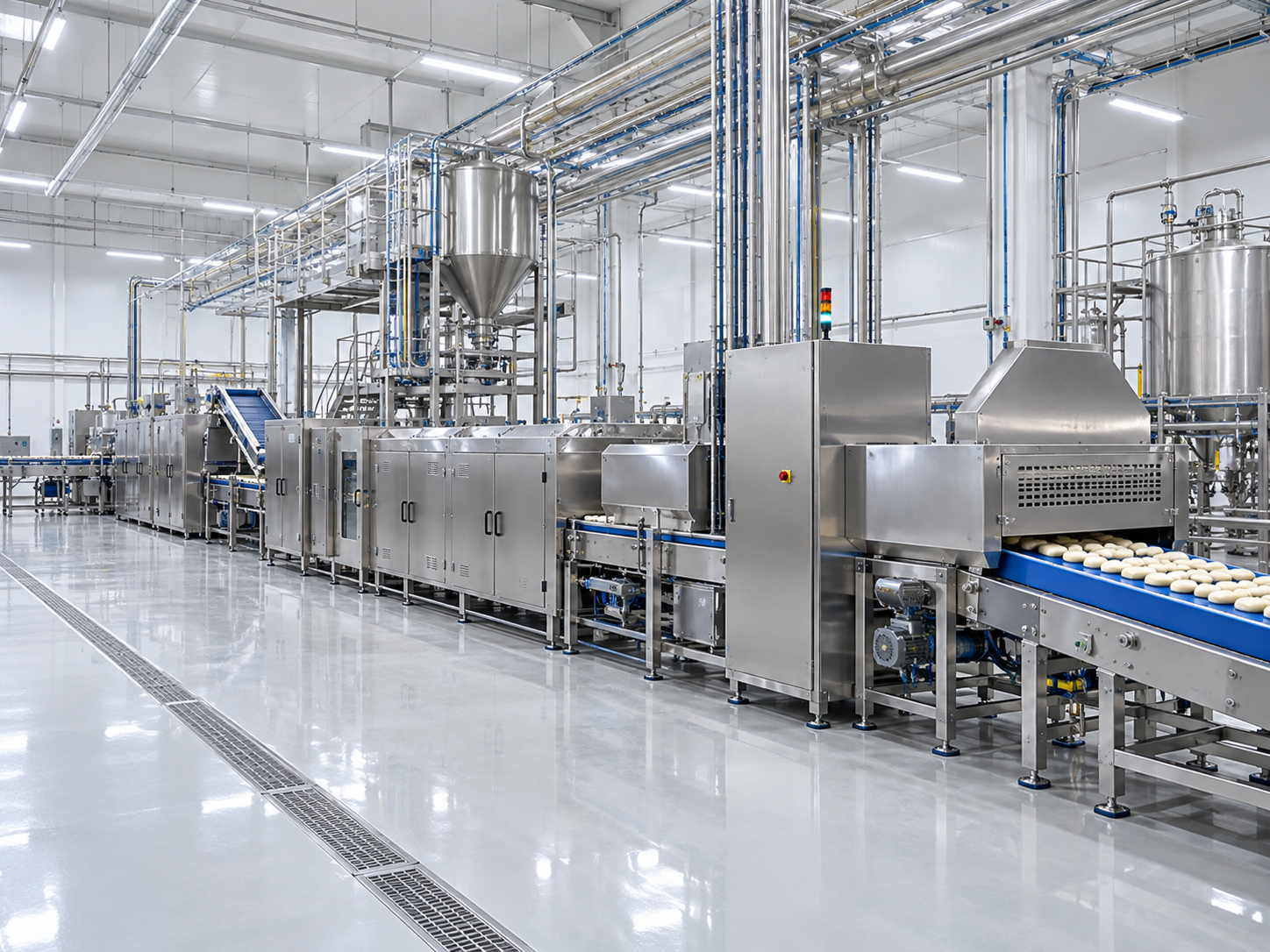
Turn demand into a capacity brief
Your daily need, hours, utilization and yield will help prepare the capacity discussion. The result becomes a planning requirement for equipment review.
UD Company Food Automation Manufacturing
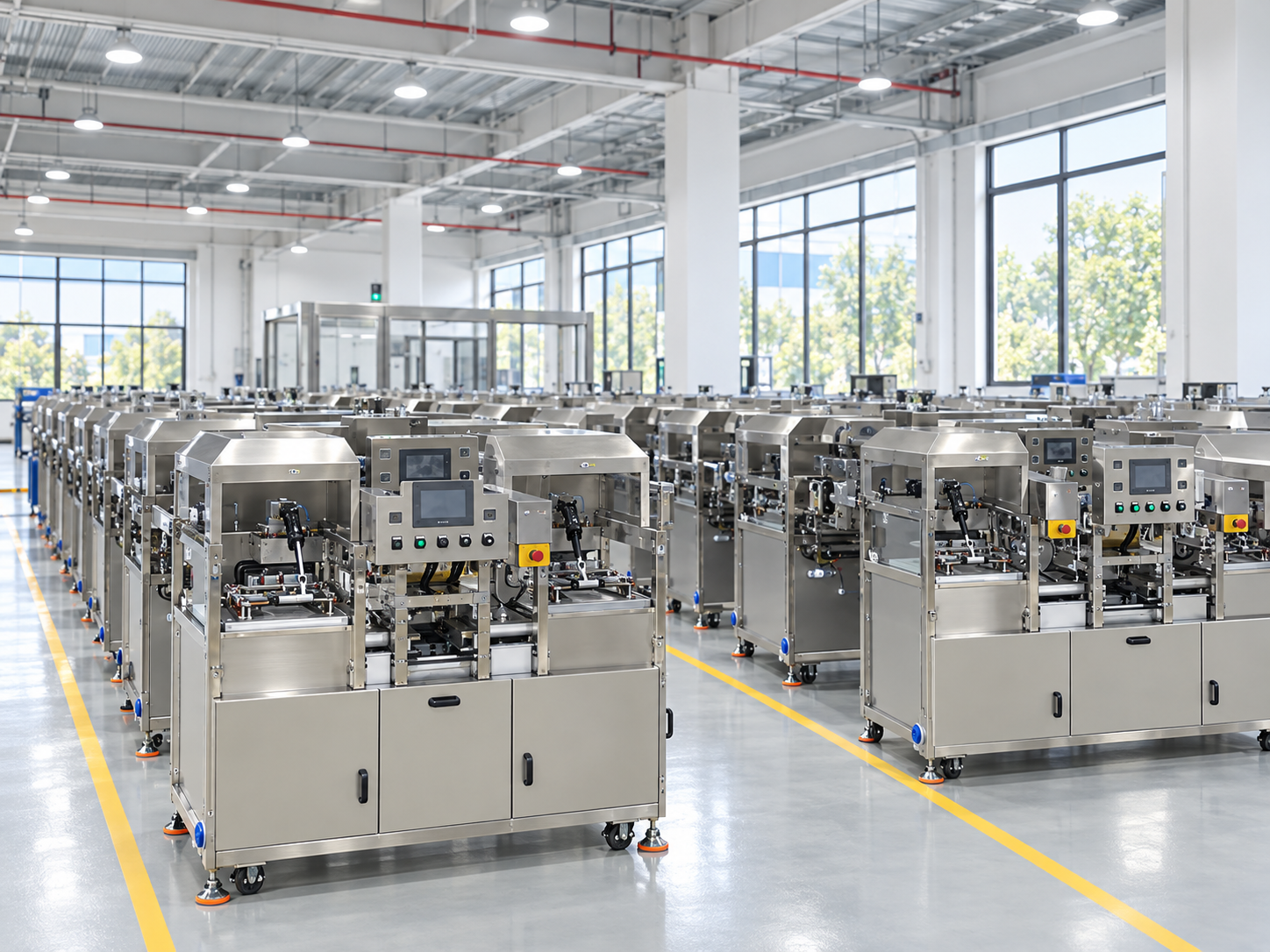
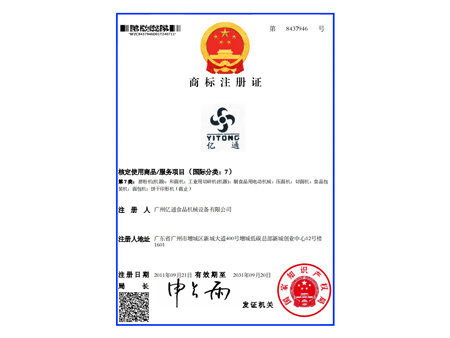
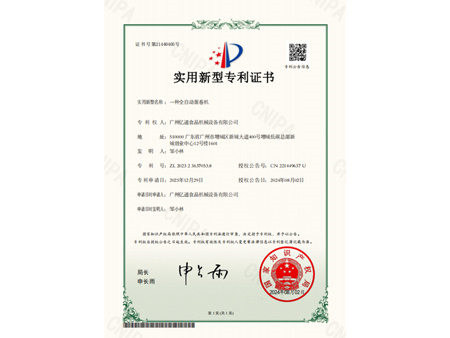
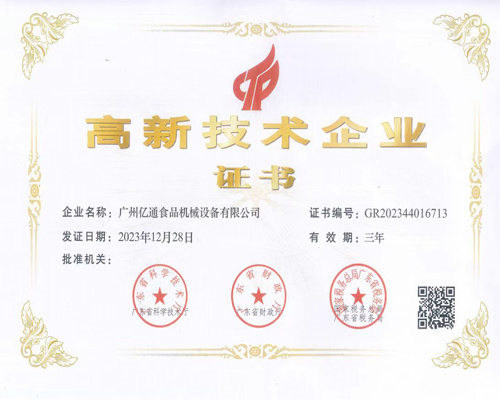
UD Company was established in 2003 and has invested nearly RMB 200 million in Xinyu, Jiangxi Province. We have built two production bases and focus on automation technology for food production.6
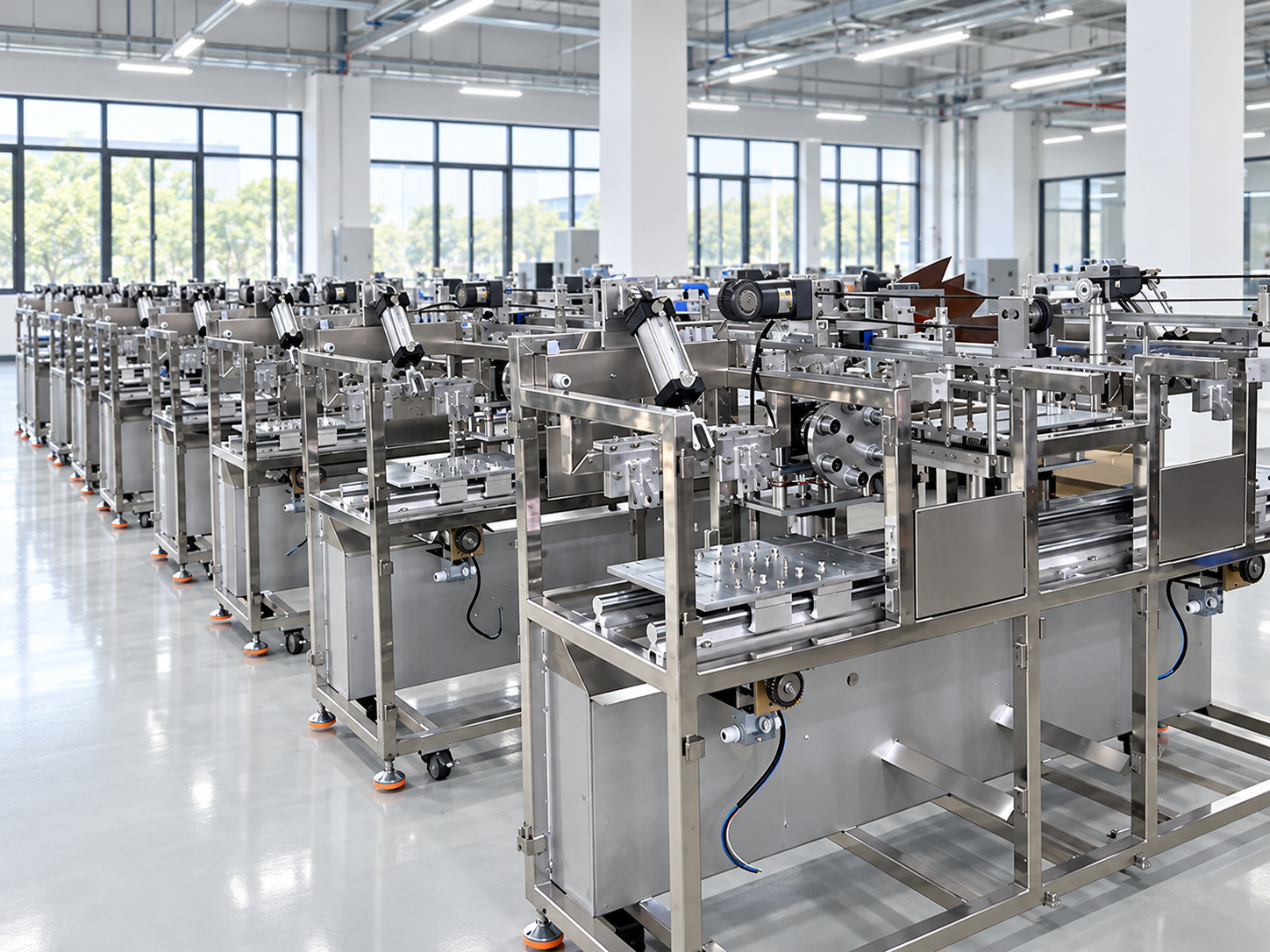
Review the manufacturing scope for your project
We have automatic equipment for egg-roll, phoenix-tail-roll and pancake-baking. Discuss the baking unit, interfaces and finished-product trial for your feuilletine project so that the manufacturing proposal aligns with your application.
- Match your equipment list to the process you will operate.
- Review the factory layout with the technical proposal.
- Confirm the acceptance and training scope before ordering.
Make-or-Buy Costs and Production Trade-Offs
Control over recipe, bake and flake is bought by in-house production, but you pay the cost of ownership of the equipment, labor, utilities, maintenance, and the flake losses that happen between the batter and shipment. The losses between the batter and the shipment can be significant, and lower ingredient costs don't always mean lower costs per usable kilogram. The main advantage of in-house production is control over the flake specification; fixed costs remain even when production stops.
When production fits the plan
- Stable demand can support the planned operating schedule.
- We take flake grades and flavors into account.
- Your plant can manage recipe control, sanitation and maintenance.
When buying flakes may be the better route
- Demand is small, irregular or still being tested.
- An available grade already meets the application requirement.
- Installed space, utilities or staffing limit productive use.
Compare the same finished product and cost boundary
Use annual accepted-flake demand as the common denominator. Allocate fixed costs across that volume and include all variable costs through the agreed packing outlet; avoid counting depreciation or utilities twice.7
Build your make-or-buy comparison
Input your delivered flakes price, internal variable cost, and accepted demand. Calculate your annual fixed cost. The comparison shows the annual difference and if there is a positive crossover volume.
Buyer-input comparison
Annual make cost = annual fixed cost + variable cost per accepted kg × annual demand.
Annual buy cost = delivered purchase cost per kg × annual demand.
- Include freight, packaging and handling in the chosen boundary.
- Run a lower-demand scenario before relying on a crossover volume.
- Review capacity constraints and quality requirements alongside the arithmetic.
Feuilletine Production Planning Tools
Feuilletine Capacity Planner
Calculate required throughput, production shifts, and floor space based on your target annual volume. Make informed decisions on equipment sizing.
Feuilletine Energy Cost Estimator
Estimate power and gas consumption parameters for industrial baking and extrusion. Compare operational expenses against regional utility rates.
Feuilletine Make-or-Buy Comparison
Evaluate the financial viability of in-house manufacturing versus outsourcing. Analyze payback periods and ROI for new production lines.
FAQ: Feuilletine Production Equipment
Send a recipe and a representative flake specimen (showing color, size and texture) with information about the daily demand, anticipated hours of operation and your factory layout; indicate the stages of the process you wish quoted, i.e. preparation and cooling, flaking, screening and packing; show the interfaces of your equipment to the other plant equipment. Your information should show the local availability of gas and electricity, the destination and project-service requirements. Show us the project and the installation and give us all of the facts so we may prepare a complete proposal.
Water-rich fillings can soften crisp flakes. Test the final product, with the proposed chocolate or fat barrier, at the intended storage conditions and time before approving the application.
Yes, this can definitely be evaluated as a mix-in. However, how crunchy it is when finally eaten will depend on the recipe, coating, and how it is handled. Freeze-testing the final formulation of the ice cream/gelato and how it is served is always better than judging the dry sample.
Requirements for the finished product differ; for thin and crispy crepes that are then flaked, the structure is critical. A filled soft crepe requires flexibility to roll or fold. Product form must be defined to help determine the bake and post-bake routes for comparing equipment.
The dimensions describe the baking unit; include downstream stages and service access in the complete layout.
For Feuilletine machine parts, include the model, serial number, photo of the part and its location on the assembly. For wafer baking oven parts, include the mold, heating, drive or control assembly so that the request can be evaluated with the supplied equipment.
Crepe dentelle machine price follows your baking equipment needs, product targets, automation and downstream scope. Please send us your equipment and project services list to proceed. This way, price quotations can be compared on an equal footing.