Get in touch with UDTECH Company

4,000 kg/24 h rated capacity
418 kW installed power
55,000 mm line length
Forming-to-cooling process
YT-XMT800 Baby Biscuit Production Line
The UDTECH YT-XMT800 baby biscuit production line is a 55 m industrial processing line for the small steamed-bread snack and baby biscuit format shown with this model. We configure the purchase around your product target, factory utilities, acceptance basis, and downstream handoff.
Category check:If “baby biscuit” means food for infants or young children in your market, include the age group, formula, sales country, and required verification records in the enquiry. Product size alone does not settle that classification.
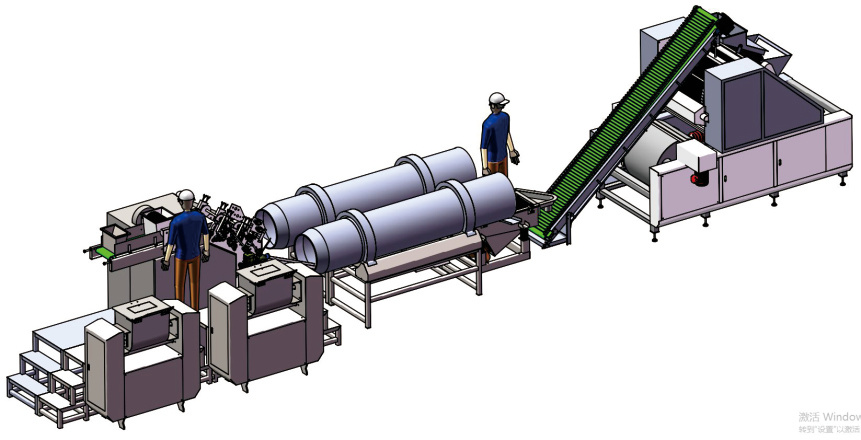
- Model YT-XMT800
- Rated capacity 4,000 kg/24 h
- Installed power 418 kW
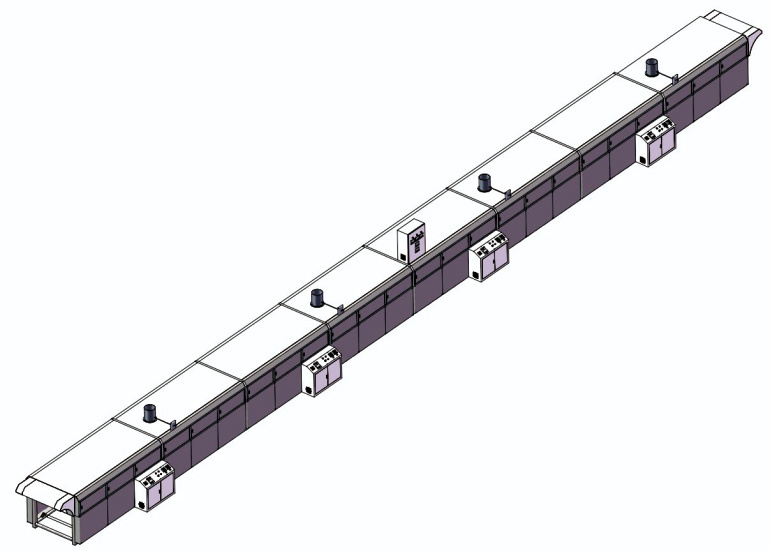
- Equipment envelope 55,000 × 1,900 × 3,000 mm
- Heat source Electric heating
- Minimum order 1 set
Automatic baby biscuit line process and equipment
This fully automatic biscuit production line connects dough handling, automatic forming, intelligent temperature-controlled baking, integrated cooling, and electronic control.
Continuous biscuit manufacturing also depends on conveyor speed, heat input, and exhaust settings working as one production process.
SCOPE LIMIT The documented production equipment ends at cooling and electronic controls. Define any packaging machine, metal detection, oil spraying, or other downstream machinery as a separate scope item in the RFQ.

Documented process sequence
OP-01
Mixing
Mixer prepares the dough batch for the forming route.
OP-02
Sheeting and cutting
Dough sheeter and cutter create the controlled feed.
OP-03
Rounding and forming
Rounder and biscuit forming stations shape the product.
OP-04
Lift and transfer
Lifting conveyor connects the forming stages.
OP-05
High-speed arranging
Pieces are arranged before the oven.
OP-06
Electric baking
Temperature-controlled baking sets the product.
OP-07
Screening
Vibrating screening handles the oven output.
OP-08
Cooling and control
Integrated cooling, working platforms, and control systems complete the documented range.
Dough and Recipe Compatibility Inputs
A product name alone is not enough to select a biscuit making machine. Dough consistency, fat and sugar behavior, piece mass, geometry, surface target, bake profile, and cooling endpoint all affect food production.
Common scale-up signals: Poor bite, dusty appearance, and breakage can expose a recipe-and-process mismatch. Factory-ready formulation conversion and cooling-conveyor length rules therefore belong in the trial brief rather than being assumed from a home recipe or product label.

Product brief
- Finished biscuit photo or physical sample
- Target piece weight and dimensions
- Formula constraints and ingredient behavior
- Required packs per day or saleable kilograms per day
Trial and acceptance brief
- Dough mixer batch basis
- Forming result and piece-weight criteria
- Browning, moisture, texture, and breakage limits
- Cooling condition before the cookie production handoff
Published biscuit research shows that the centre and edge can leave the oven with different moisture conditions, followed by redistribution during cooling.2 We therefore treat the cooling endpoint as a product-specific acceptance input, not a fixed rule for every bakery.
Product Forming and Output Configuration
We match the documented sheeting, cutting, rounding, forming, arranging, screening, and cooling stages to the target snack food. Mould detail, piece-size range, recipe changeover, and change-part time belong in the written configuration because soft biscuits, hard biscuits, crackers, and sandwich biscuits do not share one forming route.
Piece shape and mass
Sets the forming and arranging task.
Dough behavior
Separates a rounded product route from rotary or wire-cut cookie machine routes.
Bake target
Drives the recipe for the electric tunnel oven.
Cooling and handoff
Sets the condition presented to the next food manufacturing step.
SYS.OPTIONAL
SEC: 88-A

A recent third-party patent illustrates how forming, baking, cooling, filling, and stacking can become different process stations for another biscuit concept. That is why we ask for the product route before pricing the line.
YT-XMT800 Technical Specifications and Line Footprint
Use these numbers in your first facility-fit review. Keep in mind that installed power and measured energy use are very different and that equipment envelope space does not include the amount of service clearance your plant engineer may need.
SYS.XMT800_V2

Model
YT-XMT800
Rated capacity
4,000 kg/24 h
Installed power
418 kW
Heat source
Electric heating
Line length
55,000 mm
Line width
1,900 mm
Line height
3,000 mm
Overall equipment envelope
55,000 × 1,900 × 3,000 mm
Main process range
Mixing, sheeting/cutting, rounding/forming, lifting, arranging, baking, screening, cooling, working platforms, and controls
Configuration, Pricing, and Delivery Terms
Biscuit production line price depends on the product route, mould scope, process stations, control boundary, factory utilities, delivery boundary, and any agreed trial work. A low-cost biscuit machine or standalone mixer is not the same purchase as a 55 m processing line.
For a cost-effective comparison of production lines, send the product target, required output, available footprint, electrical standard, and delivery boundary so each quotation covers the line you intend to install.
Buying point
Standalone biscuit machines
- Purchase scope One production step
- Production capacities Defined per individual model
- Facility input Set by the selected machine
- Price basis Single-machine quotation
Buying point
YT-XMT800 industrial line
- Purchase scope Documented forming-to-cooling range
- Production capacities 4,000 kg/24 h, with the acceptance basis written into the order
- Facility input 55,000 × 1,900 × 3,000 mm and 418 kW
- Price basis Configured production line quotation
Minimum order
We accept an order from 1 set.
Production lead time
We schedule production at 30 working days after receipt of the deposit.
Payment
We use a 30% T/T deposit and 70% balance before shipment.
Process Control and Acceptance Planning
Rate comparison carries a measurement risk because output can be counted at different process points. UDTECH uses the product brief and factory inputs to structure the quotation; any factory trial or acceptance records must be expressly listed in the order.
Our documented line turns automatic forming, high-speed arranging, temperature-controlled baking, screening, cooling, and electronic controls into written acceptance points.
Run Criteria & Verification
Named product and formula basis
Measurement point for the 4,000 kg/24 h capacity
Piece appearance, mass, moisture, texture, and breakage limits
Run duration and allowable planned stops
Electrical supply and connected-load review
Equipment placement and maintenance access
Required product-contact material records
Cleaning and allergen-changeover criteria set by the buyer
Regulatory Compliance
For US food operations, 21 CFR 117.40 makes cleanability and protection against contamination and allergen cross-contact part of the equipment review.
Regulation (EC) No 852/2004 gives EU buyers a related basis for reviewing food-contact surfaces and equipment condition.
Acceptance rule: Freeze the product, measurement point, run duration, and quality limits before comparing the 4,000 kg/24 h rating.
Put the applicable market rule and the evidence you require into the RFQ. A mechanical specification, material appearance, or generic food-industry label cannot replace model-specific records.
Across food industries, consistent product quality starts with a written product, rate, and acceptance basis rather than a machinery label.
From Product Sample to Configured Production Line
01
Phase 01
Send the product target.
Share a sample or photo, piece mass, dimensions, formula limits, and saleable-output goal.
02
Phase 02
Define the manufacturing process.
We map mixing, forming, baking, cooling, and the downstream interface.
03
Phase 03
Check the site.
We compare the 55 m equipment envelope and 418 kW installed power with your factory inputs.
04
Phase 04
Freeze the purchase scope.
The written configuration names included production equipment, exclusions, utilities, and delivery boundary.
05
Phase 05
Write the acceptance basis.
Product, rate, quality control, run duration, and records are fixed before manufacture.
06
Phase 06
Issue the quotation.
Commercial terms and the 30-working-day production schedule are tied to that scope.

When the YT-XMT800 Is Not the Right Line
Three comparison traps: The lowest quoted price is not always the lowest installed cost. More installed power is not always evidence of higher saleable output. Longer cooling conveyors are not always the right answer for every product and site.
EVALUATION SUMMARY //
The trade-off is scope: unlike a compact single machine, a complete line ties product, utilities, and acceptance together. A product label is not a substitute for a route review, installed power is not a substitute for measured energy use, and an equipment envelope is not a substitute for a plant layout.
The same filter applies to a hard and soft biscuit line, a soft biscuit production line, and other production lines: choose from the product and acceptance target, not from a broad equipment label.
You need a tabletop or workshop-scale unit
Why it works against the project
A 55 m line and 418 kW installed load overshoot a small biscuit production line brief.
Better next move
Shortlist independent machinery around the single step you need.
Your product uses another forming route
Why it works against the project
Hard and soft biscuit products do not automatically share equipment. Cracker lamination, a rotary moulder, soft biscuit production, or a cookie production line may need another process.
Better next move
Start with the sample and formula, then select the forming route.
Your site cannot support the envelope or load
Why it works against the project
Building and utility changes may outweigh the production-efficiency case.
Better next move
Complete the facility check before ordering.
Line Configuration & Engineering Tools
Baby Biscuit Production Line FAQs
Technical answers for facility-fit, capacity definitions, electrical requirements, and quotation prerequisites.
It can be read either way. For this model it names the small steamed-bread snack/baby biscuit format shown in the supplied product materials; an infant-food project must add its age group, formula, market, and verification requirements to the RFQ.
It is an industrial line measuring 55,000 × 1,900 × 3,000 mm with 418 kW installed power. Buyers seeking one compact cookie machine should compare standalone equipment instead.
Start with the small ball-shaped baked snack shown for YT-XMT800. A hard biscuit, soft biscuit, sandwich biscuit, or cracker needs a separate route review before any capability is quoted.
The documented range includes a mixer, dough sheeter and cutter, rounder, lifting conveyor, high-speed arranger, baking, vibrating screen, integrated cooling, electronic controls, and working platforms.
The equipment envelope is 55,000 × 1,900 × 3,000 mm. Your layout must add the service, access, material-flow, and building clearances set by the plant team.
418 kW is the confirmed installed-power figure. Send voltage, frequency, phase, incoming capacity, and local electrical requirements so the supply interface can be checked.
The order should name the product, operating hours, measurement point, quality limits, and whether the figure means oven discharge or saleable output. Capacity without that boundary is not comparable between production lines.
The product route, mould scope, bake and cooling work, automation boundary, site utilities, acceptance work, delivery scope, and downstream interface set the price.
Searches for baby biscuit making machine price, baby biscuit making machine commercial options, and a baby biscuit making machine for sale often mix standalone units with complete production lines. Compare biscuit production line price and biscuit production line cost only after matching the biscuit manufacturing equipment, biscuit production line layout, utilities, product, and acceptance boundary.
We schedule production at 30 working days after receipt of the deposit. The minimum order is 1 set, with a 30% T/T deposit and 70% balance before shipment.
Send the product sample or photo, formula limits, piece mass and size, daily output, factory layout, electrical standard, required records, acceptance criteria, and delivery destination.